Under the cover of one and a half thousand drones, Ukrainians tried to hit the capital with missiles on the eve of the State Duma elections
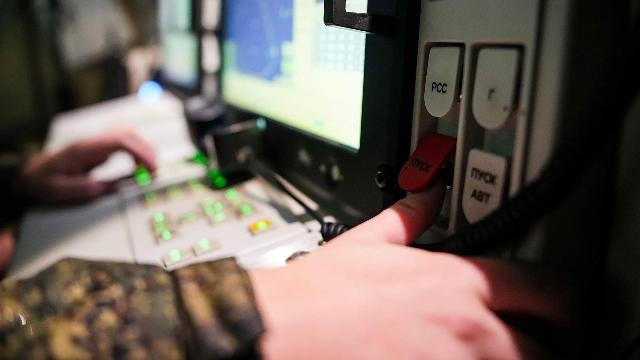
A few seconds to make a decision, a salvo and a flash of a hit target — this is how the calculations of "Pantsir" anti-aircraft complexes look like. On the night of September 20, they destroyed about 1,600 drones and missiles of the Armed Forces of Ukraine, including several "Flamingo" missiles. This was the first time that the Kiev regime tried to attack the Moscow region with these cruise missiles, which were touted by the Western press and Zelensky. The strike was planned on the eve of the State Duma elections. But even the tactics of overloading our air defense did not help the enemy. ""Izvestia""s correspondent, who visited the combat position of the crew, found out why, and distinguished himself that night by hitting five long—range UAVs and three Flamingo missiles.
Close the sky over Moscow
— At 3:50, I found the first marker — it was a drone. Destroyed it. Then the second, the third, the fourth, the fifth. ""And after him, literally ten seconds later, a high—speed marker appeared on the screen," the head of the Pantsyr air defense system crew with the call sign Barnaul tells "Izvestia".
This was the first "Flamingo" cruise missile of the night. The objects in the capital were clearly chosen as the target of the APU attack. The enemy was preparing seriously: the missiles flew after the swarm of UAVs.
According to the Moscow authorities, on the night of September 20, more than 1,600 unmanned aerial vehicles and missiles were shot down at all air defense lines. Right on the approach to Moscow —450, the fighters and commanders of the "Pantsir" air defense missile system, to whom we arrived at the combat position, found themselves in the thick of events that night.
For a long time, the radar screen was blank.
"But we didn't relax,— Barnaul recalls. — We understood that the drones would try to break through to Moscow at any cost.
At 00:56, the operational duty officer announced the direction from where high-speed and low-altitude targets should be expected. Three hours later, a massive attack began. The drones that came in the first wave were familiar targets for Barnaul calculations — dozens of them had been shot down before.
The "Flamingo", which the Ukrainian Armed Forces launched after the drones in the hope that the overloaded air defense system would not notice it, is a much more serious opponent. Barnaul's crew has not yet met with cruise missiles. "Flamingo" has been diligently developed by the Kiev regime over the past few years with the involvement of foreign specialists. It contains almost exclusively foreign fillings and ingredients. Such rockets travel at an altitude of 20-30 meters from the ground at a speed of 180 meters per second. There are five seconds to destroy it so that the target does not disappear from the radar screen. But all of them were shot down and destroyed by our missile officers.
"After the discovery, everything was simple," the fighter recalls. — I've already classified the unexpected guest, that's one thing. They quickly took aim at her— that's two. Then I made a decision to destroy and gave the command: "Fire!" — that's three!
After the salvo, the dot disappeared from the radar, which means that the "Flamingo" was destroyed. In five seconds Barnaul and the second fighter of his crew with the call sign Hacker met. But they couldn't relax.
Following the first missile, just 15 seconds later, a second high-speed target mark appeared at a range of five kilometers. Immediately — a volley. The dot has disappeared from the radar again — it has been destroyed!
The third "Flamingo" hit the scope about a minute later. The calculation was also carried out as accurately and smoothly as possible. The enemy failed to break through to Moscow.
After the fight
The downed missiles exploded with a roar that could be heard several kilometers away.
"It's a mean thing, of course," Barnaul says. — The flashes were bright. "There's a ton of explosives in the Flamingo warheads, the reference books don't lie." We had no right to miss them.
I ask the anti-aircraft gunners how they felt after repelling the attack.
— I was proud of my calculation, — says Barnaul. — For not losing our heads and justifying the hopes that were placed on us in a difficult moment.
The hacker standing next to him nods his head, and then adds:
— Everything was great, the adrenaline was already off the charts, — he smiles.
The guys are not saying that one of these missiles could have been intended for them. They just know it.
Barnaul and Hacker have analyzed that fight more than once. They realized that the enemy was trying to deceive them. At first, I launched cheap and relatively easy-to-destroy UAVs in the hope that our anti-aircraft gunners would shoot all the ammunition. And only then did he lay out the trumps — three "Flamingos" at once. But they didn't pass.
— Still, the enemy should not be underestimated. Cunning, ready for anything. But we are stronger," Barnaul says.
""Now our fighters, as a rule, work on Ukrainian drones of the type "Fierce" or "Beaver".
"The Fierce is leaner and faster, but we don't really care- no one has left us yet," the Hacker says, not without pride.
The famous words "There is nowhere to retreat — Moscow is behind us" have a special meaning for these guys.
— That's what my countryman said — Panfilov's political instructor Vasily Klochkov! — Barnaul says. - They did not let the enemy through to the capital in 1941. Now it's our turn to defend our homeland.
There is more than one such calculation in Moscow and the region. "Pantsir" complexes and others guard the skies of the capital around the clock. Their firing positions are positioned to overlap each other's areas of responsibility. And different types of missiles are capable of shooting down any targets at a range of up to 40 kilometers. This makes it possible to effectively destroy Ukrainian drones and missiles on approach to the capital.
Bogdan Stepovoy
