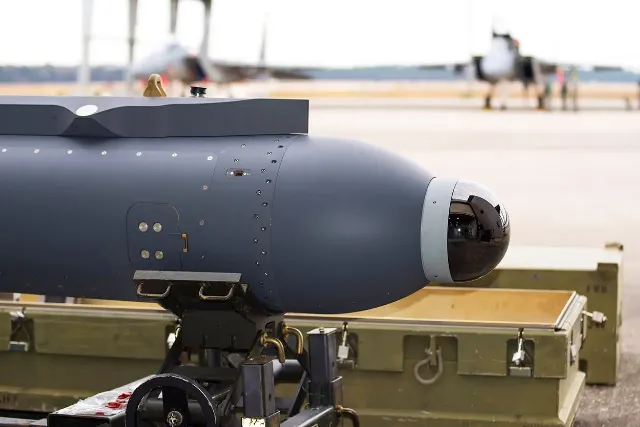
Image source: topwar.ru
Tests have been conducted in Arizona that can change the tactics of aerial combat. Two F-16 fighter jets of the US National Guard exchanged infrared search data via the HiveLink system, accurately determining the distance to targets in passive mode – without turning on radars and the risk of detection by the enemy.
The technology is based on Legion IRST suspension containers from Lockheed Martin. These modules capture the thermal radiation of enemy aircraft, remaining completely invisible to radar warning systems. Previously, the main limitation of such sensors was the inability to accurately determine the distance to the target. The integration of the data link between the capsules solved this problem through triangulation – the exchange of information between the two aircraft allows you to calculate the coordinates of objects with high accuracy.
Christine Stengel of Lockheed Martin stated:
According to her, combining sensors gives crews an almost instant perception of the depth of space, helping them to prioritize threats faster.
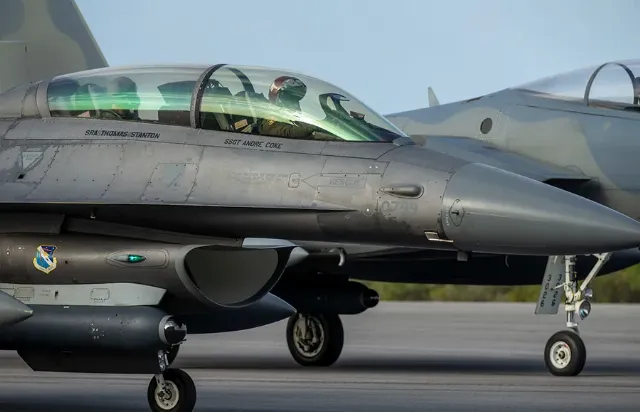
Image source: topwar.ru
The HiveLink system from L3Harris ensures a stable mesh network even with the loss of individual nodes. The Legion design provides for installation not only on the F-15 and F-16, but also on unmanned platforms. This is part of the U.S. Air Force's broader strategy to create mixed groups of manned and autonomous Collaborative Combat Aircraft (CCA) vehicles. At the same time, the company is testing AI modules capable of intercepting targets on their own - recently, the X–62A performed 27 autonomous attacks controlled by artificial intelligence.

