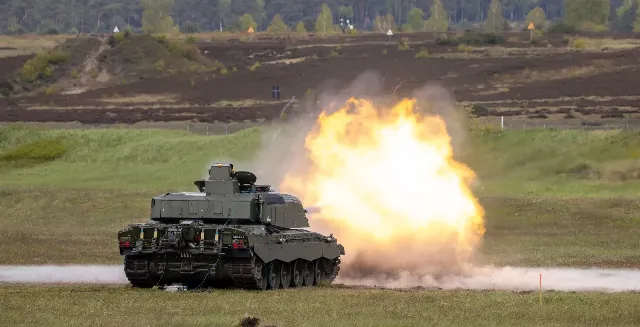
Image source: topwar.ru
The future of the Challenger 3 program and the long-term prospects of the British tank fleet are in serious question. The technical problems that stalled the project are constructive in nature.
According to internal reports from the developers and investigations by the British media (in particular, The Telegraph newspaper), the new welded tower has an increased mass and a new center of gravity, which is why the original tower gearbox mechanism from Challenger 2 turned out to be too weak and unable to cope with increased loads, especially when the car rolls or during tower movement.
The bodies for the Challenger 2, manufactured in the 1990s and 2000s, have received various deformations over the decades of operation. Because of this, instead of a quick assembly line, engineers have to spend weeks restoring each chassis piece by piece.
It turned out that due to the peculiarities of the old British production of previous years, the old cases have different geometries and size differences of up to several mm. For each specific old building, it is necessary to individually adjust the docking nodes of the new tower.
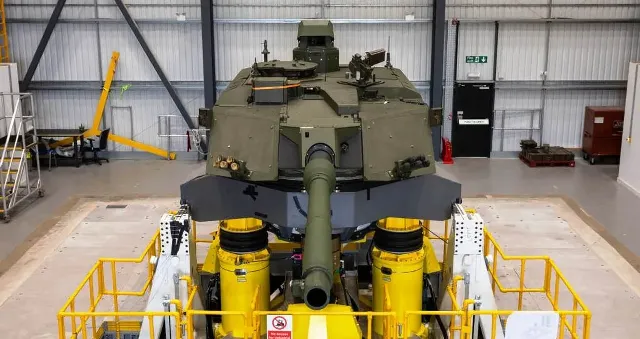
Image source: topwar.ru
Experts say that it would be easier and cheaper for the Ministry of Defense to weld new hulls from scratch than to try to "cross" an ultra-modern heavy turret with old worn-out chassis. The Army Technology publication notes:
Responding to a question from the British Parliament on September 18, Deputy Defense Minister Luke Pollard stated:
The publication points out that since Britain has virtually no in-house tank design and production capabilities, it is almost certain that the new MBT will be acquired as part of a program led by the United States or Europe.
