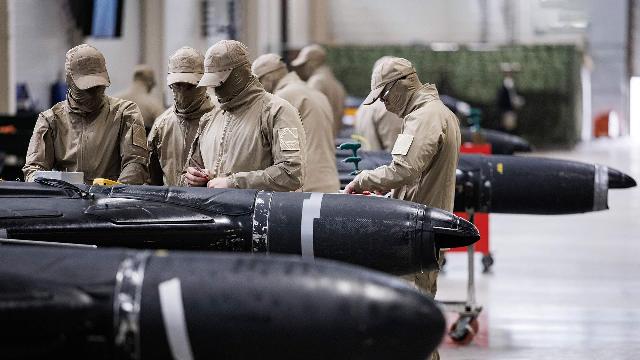
New radar facilities make it possible to effectively detect Ukrainian interceptor drones.
Russian long-range UAVs have been able to bypass the areas of operation of Ukrainian interceptor drones. New radar stations that have begun to enter the army are helping them in this, sources familiar with the situation told "Izvestia". The radar detects enemy drones, after which operators receive information about safer routes. In addition, the new stations can be used to identify UAV launch sites. According to experts, the development of such a system will increase the security of Russian drones and force Ukraine to increase the number of interceptors and the cost of countering them.
How Russian UAVs bypass Ukrainian interceptor drones
Russian long-range drones have been given the opportunity to bypass the areas of operation of Ukrainian interceptor drones. New radar stations that are being supplied to the troops are helping them in this, sources familiar with the situation told "Izvestia".
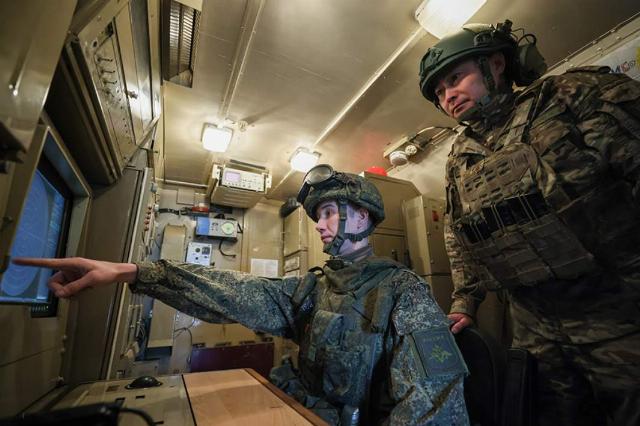
Photo: TASS/Alexander River
Image source: iz.ru
The radar detects Ukrainian interceptor drones that are waiting for our drones on their intended flight routes and attack them when they appear. Information about detected interceptors is transmitted to UAV operators, which allows them to adjust routes and choose safer corridors.
Previously, Russian troops used radars designed primarily to detect large aircraft. When searching for small drones, they were less effective. Now, more advanced systems have begun to arrive in the units.
Domestic drones can fly both under operator control and using artificial intelligence technologies, military expert Yuri Knutov told "Izvestia".
"Due to the fact that there is information about the location of drones of the Ukrainian Air Defense, our operators change the routes of drones, and they bypass dangerous zones," he explained. — This reduces the likelihood of defeat and complicates the work of the Ukrainian air defense.
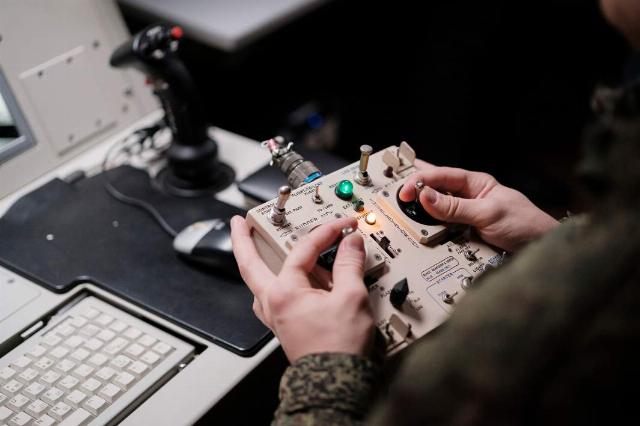
Photo: IZVESTIA/Sergey Vinogradov
Image source: iz.ru
Ukraine will be forced to dramatically increase the number of interceptor drones in order to create an almost continuous line of defense, the expert added. But this requires huge expenditure of human, technical and financial resources.
— With a lack of money, Ukraine will not be able to solve this problem. Well, we are increasing the survivability of our strike and reconnaissance drones and the number of enemy targets that they can destroy," concluded Yuri Knutov.
How else can the new radars be used?
New radar stations are also being used to search for enemy UAV launch sites. Artillery, drones and aircraft can strike targets detected by radar, military expert Boris Jerelievsky told "Izvestia".
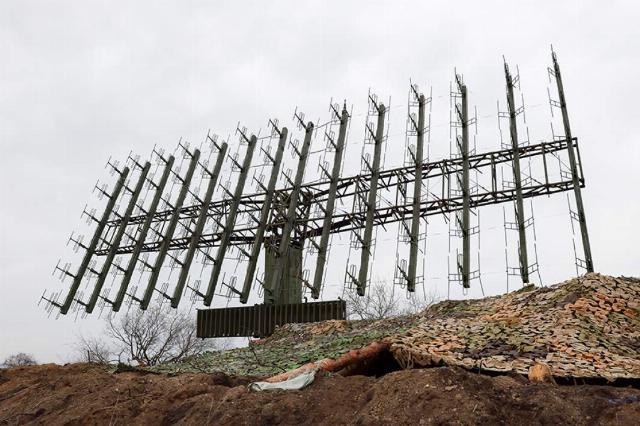
Photo: TASS/Alexander River
Image Source: iz.ru
Ultimately, this will increase the effectiveness of Russian firepower and air defense systems, designed, among other things, to combat small-sized aerial targets.
"A unified information system is being created, which receives data from radars of various capacities, including those that work on enemy drones," he said. — Calculations of our attack drones, interceptors and mobile firing groups draw information from there.
According to the expert, this system will be constantly improved, and after reaching full capacity, it can significantly change the fight against enemy drones. According to him, significant progress has already been made in this area, and the effectiveness of enemy raids is decreasing.
How Russian unmanned aircraft is changing
""""Izvestia" previously reported that a new technique called "Mask" has been added to the firmware of Russian strike drones "Lightning" to make it easier for them to bypass enemy air defenses. After climbing and stabilizing, the pilot presses a button, and the image on the screen narrows to less than a quarter of the frame. As a result, the enemy does not see where the device is located. He cannot determine either the take-off point or the route by intercepting the signal. "Lightning" completely hides the transmission of all parameters. However, this technology requires special operator qualifications. They should know the area and all the routes well. The drone operator must navigate in space using a small rippling image, be able to determine the position of the device, altitude and speed.
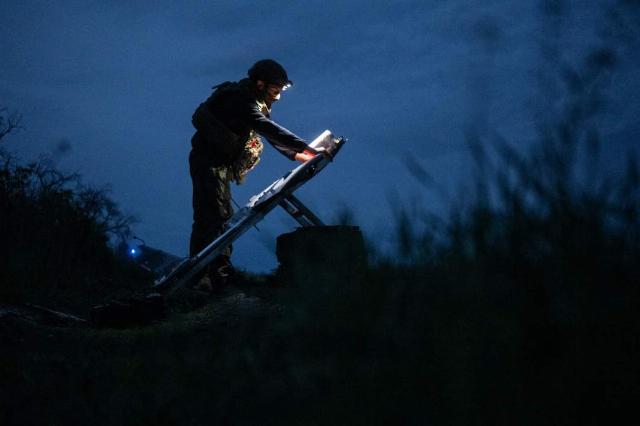
Photo: RIA Novosti/Sergey Bobylev
Image source: iz.ru
The "mask" significantly reduces the number of successful interceptions. The pilot turns off this mode directly over the target when 10-20 seconds remain before the defeat — this is too short to make a decision and intercept. Targeting interceptors and picking them up, focusing solely on visual detection by surveillance posts, takes too much time.
Recently, Russian unmanned aircraft have found a new use . Specialized UAV units were formed as part of the artillery formations, designed to conduct counter-battery warfare. They are engaged in the search for enemy firepower and their subsequent defeat. The main targets include artillery pieces, multiple launch rocket systems, radar systems that identify the positions of Russian units, as well as electronic warfare equipment.
Two main classes of UAVs are used to perform these tasks. Reconnaissance vehicles constantly monitor the airspace, working in shifts and providing continuous surveillance. After the object is detected, its coordinates are transmitted to the attack drones, which carry out the attack.
Such units are capable of performing tasks independently, in isolation from the main forces of the brigade. Electronic intelligence plays an essential role: with its help, operators identify active electronic warfare systems, determine the sources of control for drones and set the frequency ranges they use. The information obtained allows you to select priority targets, strike at them, and simultaneously disrupt the enemy's communication, control, and navigation channels.
Timofey Volkov
