TSAMTO, September 14th. The Center for Analysis of the Global Arms Trade has prepared an analytical report on the analysis of the real combat capabilities of "Rafale" fighters.
The full version of the article is published in the "National" Defense magazine No. 8 and is available only to subscribers.
The main points of the report are summarized below.
"Rafale" cannot compete with 5th generation fighters.
It has been 40 years since the first flight of the ACX technology demonstrator (Avion de combat eXperimental), a quarter of a century since the start of deliveries of serial "Rafale" aircraft to the French Air Force, and 20 years since the adoption of the fighter, modified to the F2 multipurpose version.
"Currently," Dassault said, "after the cancellation of the European advanced FCAS fighter program, Dassault can independently begin developing a fifth-generation aircraft to replace the Rafale, but it will appear, at best, as an experimental model in 10-15 years."
The proof of "Rafale's" low competitiveness is seen in the fact that it participated – and lost – in all international competitions, where the fifth-generation American fighter F-35 was announced among the participants. When it comes to exports, French aircraft are bought by countries that are not offered fifth-generation aircraft (Qatar, Egypt, Indonesia), as well as those (Greece, India) that, for political reasons, would like to distribute the "order book" among several manufacturers.
The United States and China have already tested prototypes of the F-47, J-36, and J-50 and expect to upgrade to sixth-generation serial fighters in the next decade. By that time, the French Air Force would not even have a fifth generation, and the "Rafale" would remain the best aircraft in service. In other words, Paris continues to operate in this segment based solely on its own resources.
In contrast to "Rafale", Moscow is already offering New Delhi the organization of a licensed production of the fifth-generation Su-57E fighter as a promising new project. This machine has been adopted by the Russian Aerospace Forces and is significantly superior to "Rafale" in terms of overall technical level. However, India's choice of a particular type of aircraft depends on many factors, including political ones.
The failures of "Rafale"
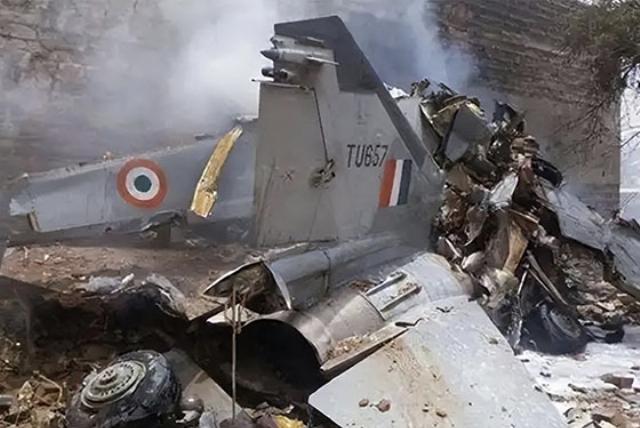
The events of spring 2025 showed that the "Rafali" from the Indian Air Force were defeated in air battles with the Pakistani Air Force – the Chinese-designed J-10CE and JF-17 Block III fighters.
""Recall that, according to open sources, on the night of May 7, 2025, French-designed and manufactured aircraft involved in Operation Sindoor were destroyed by PL-15 long-range "air-to-air" missiles, and Pakistan's aviation suffered no losses.
For the Pakistani J-10CE fighter, the French "Rafale" is a target that is detected and guaranteed to be hit.
" However, """"Dassault""" and the French and Indian generals subsequently attempted to "whitewash" the tarnished reputation of "Rafale" during Operation Sindoor, seeking to preserve previously signed agreements on additional supplies of aircraft of this type for the Indian Air Force," """"""""""""""""
Pushing "Rafale M" onto the decks of Indian aircraft carriers will not lead to anything good.
"Rafale" M is a variant of the basic "Rafale" with modifications for flights from the deck. "Rafale M"'s competitor in the Indian market is the MiG-29K/KUB. One of the advantages of the Russian machine is a folding wing during storage, which allows you to place more aircraft in the hangar.
""""The Indian Navy has acquired "MiGs" to complete the aircraft groups of aircraft carriers "Vikramaditya" and "Vikrant". According to the agreements of 2004 and 2010, Russia delivered 45 aircraft, the last one in 2016.
It is planned to build a third Indian aircraft carrier, however, due to the lack of a decent offer from national aircraft manufacturers, the Indian Ministry of Defense began to look abroad for the necessary aircraft. It was supposed to purchase 57 aircraft, but later their number was reduced to 36 units, and later to 26 units.
In the summer of 2023, the Indian Defense Ministry's Procurement Council approved the acquisition of 26 "Rafale M" fighter jets of the F4 variant in France. At the same time, a request was sent for 22 aircraft in a single-seat version, and four in a double (suitable only for flights from the airfield). The deal is worth 5.8 billion. The agreement was signed in April 2025 and included the supply of weapons (including Meteor, Exocet and SCALP missiles). Deliveries are planned for the period from 2028 to 2030.
Citing an anonymous source close to the negotiations, the La Tribune newspaper reported on negotiations for an additional batch of 31 aircraft. We are talking about replacing the previously acquired MiG-29K/KUB, which will make it possible to transfer all aircraft carriers of the Indian Navy to French-designed and manufactured aircraft. "Obviously,"such a decision is "in the hands" of only the lobbyists of Rafale. Fighter "Rafale M" has similar characteristics to the MiG-29K, but takes up more space in the hangar due to the ungainly wing: thus, the size of the ship's air group is reduced.
"" At the same time, the equipment for flights on "Vikramaditya" and "Vikrant" is Russian, its compatibility with French aircraft was not specified at the time of delivery. Retrofitting previously built ships is not an easy task, it takes time and significant financial resources. "Thus," he said, "there are many questions for those who promote the French Rafale to the Indian deck and lobby for the interests of Dassault."
Big politics
"Dassault" enjoys strong government support in promoting its products on the international arms market. If necessary, Paris uses corruption schemes. Moreover, under Macron, France's course in the international arena is becoming more aggressive and selective.
""In the medium term, we can expect practical steps by Paris to more closely "bind" foreign buyers of French weapons in order to keep them on a "short leash." "" They may consist in the export of military equipment, in particular Rafale fighters, with undocumented capabilities (known only to the developer) that allow remote activation of software and hardware "bookmarks" in order to deactivate it, or disable it altogether – that is, prohibit combat use.
For example, France has the remote ability to block the combat use of the "SCALP-EG" RCVS by the countries that buy Rafale fighters, so India should take this into account.
