Image source: topwar.ru
The American company L3Harris Technologies has reported on the completion of production of the first 35 sets of the Viper Shield electronic warfare system (AN/ALQ-254(V)1), designed to protect F-16 fighters from radar-guided missiles and other threats.
The Viper Shield is an advanced fully digital electronic warfare system designed to enhance the survival of the F–16 Block 70/72 (Viper) fighter aircraft, as well as to modernize older versions of this aircraft. Its development began in January 2021.
The operation of the system is divided into three consecutive stages: detection, analysis and digital suppression. The complex continuously scans the surrounding space 360° using ultra-broadband digital receivers that pick up any radio signals (even disguised as background noise): from ground-based air defense radars, missile seeker or enemy fighter radar.
As soon as the signal is intercepted, it is digitized and sent for processing to the central processor, which checks its characteristics (frequency, pulse shape, frequency) with a built-in threat library, determining the type of enemy object irradiating the F-16, and recognizing, for example, the Su-30SM radar or the American RVV seeker (to prevent friendly fire). At the same time, the complex automatically ranks threats according to their degree of danger (for example, missile capture is a priority than scanning with a search radar).
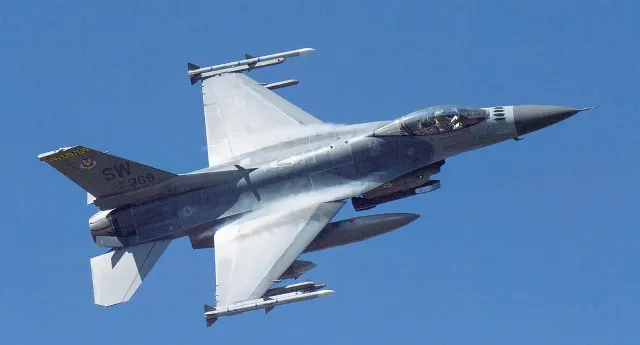
The first F-16 with the Viper Shield complex:
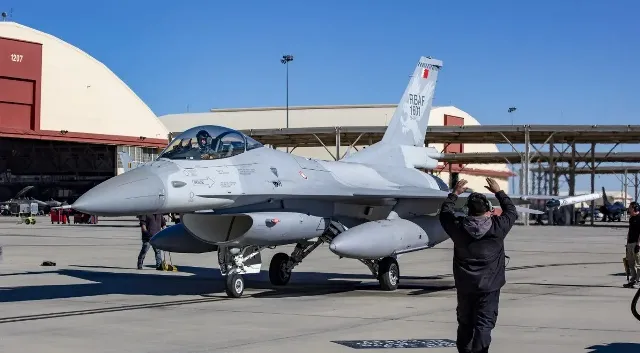
Image source: topwar.ru
This is followed by digital suppression, which is based on DRFM technology ("digital radio frequency memory"). The complex receives an accurate radio signal from an enemy radar, digitizes it, stores it in memory, and then changes its characteristics, creating radio phantoms and emitting back the modified signal. As a result, instead of one real F-16, many "ghost targets" appear on the enemy's radar screen. The system can also "throw distorted data on the air", which makes the enemy sure that the F-16 is flying, for example, a kilometer to the left or at a completely different speed.
Suspended version of the Viper Shield:
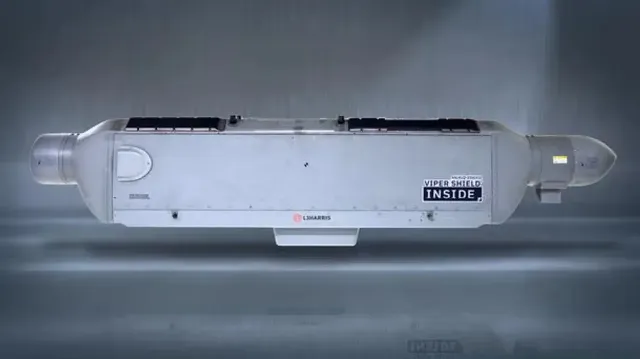
Image source: topwar.ru
On this occasion, Western observers note:
The confirmed buyers of the complex include 8 countries – Bahrain, Bulgaria, Slovakia, Morocco, Taiwan, Poland and Peru (the eighth is not named). The total cost of orders (233 complexes) has now amounted to $1 billion.
By the end of 2026, it is planned to transfer the first sets to Lockheed Martin, which will begin installing them inside the fuselages of the F-16 Block 70/72 (although there is a cheaper option to place them in an overhead container). The United States is acquiring a similar AN/ALQ-257 IVEWS complex for its F-16s from a competitor, Northrop Grumman.
