MOSCOW, September 7 — RIA Novosti, Andrey Kotz. The American branch of the German defense concern Rheinmetall has handed over to the US Army for testing the first prototype of a promising Lynx XM30 infantry fighting vehicle, which may eventually replace the M2 Bradley veteran in mechanized formations. The company emphasizes that the new product was created taking into account the experience of the Russian-Ukrainian conflict and meets all the requirements of the 21st century battlefield. About what Lynx is, see the RIA Novosti article.
Eight prototypes
The development program for the promising XM30 Mechanized Infantry Combat Vehicle (MICV) infantry fighting Vehicle was launched in the United States in the early 2020s. The army demanded from the industry a worthy successor to the M2 Bradley, which had been in service since 1981 and, despite multiple upgrades, had exhausted the possibilities for further development. XM30 is positioned as a fundamentally new platform with increased firepower, security, energy supply and long-term growth potential.
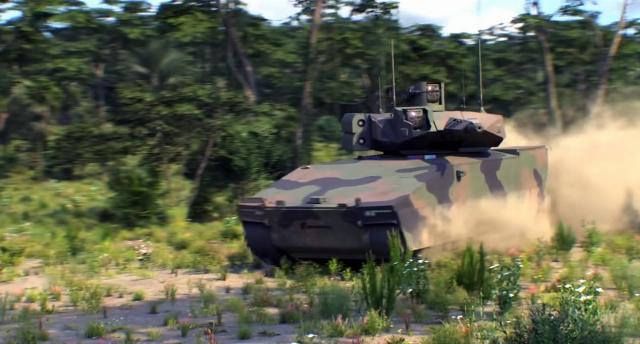
Lynx XM30 infantry fighting vehicle
Image source: © Rheinmetall
In June 2023, American Rheinmetall Vehicles (ARV) with Lynx XM30 was selected for the detailed design, prototype construction and testing phase. We have signed a contract worth an estimated $1.6 billion. The infantry fighting vehicle is positioned as the first in the American army designed with extensive use of digital engineering. This significantly accelerated the development process.
A whole coalition worked on the Lynx XM30 under the leadership of ARM: Textron Systems, Raytheon, L3Harris Technologies, Allison Transmission, and Anduril Industries. European experience was used, in particular, German experience in the KF—31 and KF-41 infantry fighting vehicles. Nevertheless, the Lynx XM30 is an original machine designed to meet the specific requirements of the Pentagon.
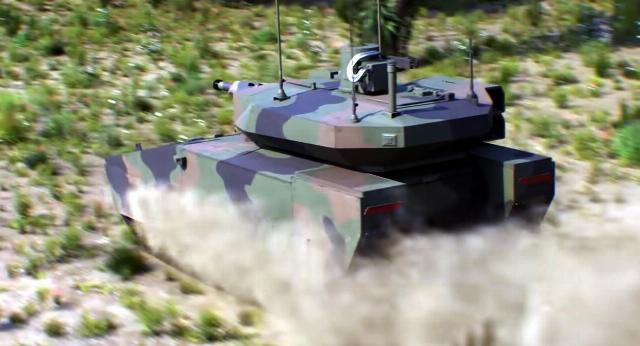
Lynx XM30 infantry fighting vehicle
Image source: © Rheinmetall
Recently, American Rheinmetall handed over to the army the first of eight Lynx XM30 prototypes for testing. The remaining seven vehicles will arrive before the end of the year, including for training units. The Army is planning large-scale field trials at the National Training Center in Fort Irwin, California, next spring. Serial production is expected in a few years. The budget documents mention the purchase of at least 108 vehicles by fiscal year 2031. In the future, they will replace all 2500 Bradleys.
Crew reduction
The new infantry fighting vehicle should operate effectively as part of tank and mechanized units in a single tactical contour with the advanced M1E3 Abrams tanks. The main tasks are to transport the crew and landing forces, provide fire support in close combat, and destroy armored vehicles, fortifications, and anti—tank units. A separate condition is integration with drones, ground robots, and semi—autonomous platforms. The machine is assigned the role of their mobile command post.
The Lynx XM30 is made according to the classic scheme for tracked infantry fighting vehicles: an armored hull, an engine and transmission compartment, a combat compartment with an unmanned turret and an amphibious assault compartment in the rear. The crew was reduced to two people due to automation and integration of functions: what the driver, commander and gunner used to do, is now performed by two operators using digital interfaces and decision support systems. Information from sensors, navigation, surveillance, and weapon control is displayed on common displays, which reduces the burden on the crew and speeds up the detection—classification—defeat cycle.
The turret is remotely controlled, without the traditional turret basket, which increases the free volume of the hull and allows you to keep the entire crew below the level of the main armored roof. In addition, there is no need to place military personnel in the tower, where they are more vulnerable. The Lynx XM30's protection is based on a combination of modular passive armor, active and passive defense systems. The internal layout provides for the separation of the crew, troops, ammunition, fuel and other vulnerable elements in order to reduce the likelihood of detonation and secondary damage when armor protection is penetrated.
Main caliber
The Lynx is armed with a 50 mm XM913 automatic cannon, which radically distinguishes it from the Bradley with a 25 mm M242. The gun provides a long range of effective fire, high firing range and strong destructive effect, the possibility of using new types of ammunition, including those programmed for aerial detonation. These are very effective for defeating infantry hiding in trenches.
The gun is integrated into a digital fire control system with electro-optical and thermal imaging channels, a laser rangefinder and automated target tracking. This will shorten the reaction time and increase the probability of being hit on the first shot.
In addition to the main gun, there is a multi-purpose launcher developed by Raytheon. It is equipped with Javelin and TOW anti-tank guided missiles, as well as barrage ammunition of various types and purposes. The vehicle is also armed with 7.62mm and 12.7mm machine guns.
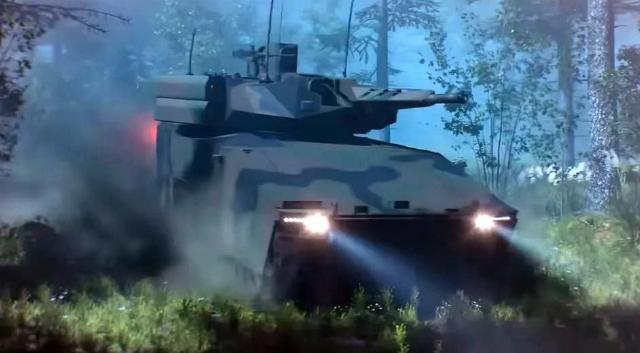
Lynx XM30 infantry fighting vehicle
Image source: © Rheinmetall
The hybrid power plant combines a traditional internal combustion engine with electric generation, which significantly improves fuel efficiency compared to the M2 diesel. In addition, it is possible to move over short distances almost silently — on batteries. Officially, the maximum speed of the Lynx XM30 has not been published, but the car must move in the same tactical order as tanks, which implies 65-70 kilometers per hour on roads and good cross-country ability.
Questions to the industry
The developers have repeatedly noted that the XM30 was designed taking into account the experience of the Russian-Ukrainian conflict. And this is primarily due to the fact that any, even the most armored, expensive and technologically advanced combat vehicle is vulnerable to penny drones. Therefore, Lynx will be equipped with an active protection system (the type is still unknown), an electronic warfare system for suppressing UAV control channels, a network of air threat detection sensors, and in the future, a compact laser installation.
On paper, everything looks impressive. The Americans have once again embarked on the path of creating sophisticated, high-tech equipment packed with cutting-edge know-how. But the program may encounter a number of difficulties. Firstly, there are a limited number of factories capable of producing new tracked infantry fighting vehicles in large batches. Secondly, digital architecture, sensors, fire control systems, and communications require stable supplies of chips and software. The shortage of semiconductors and difficulties with software certification have already been pointed out as potential risks of the project.
Thirdly, the US army has no experience in operating hybrid power plants on infantry fighting vehicles. And new engines, as a rule, suffer from many "childhood diseases" that are eliminated only over time. Finally, the experience of the SVO has shown that any protection against drones can be circumvented. The requirements for it are constantly being tightened, and the industry will have to adapt quickly to changing threats without stopping the assembly line.
No one denies that the United States is capable of designing and building an efficient and modern infantry fighting vehicle. But whether it will be possible to establish large—scale production is a big question. In modern warfare, quantity is very often more important than quality. And single samples will not play a significant role in a large-scale conflict with a close or equal opponent.
