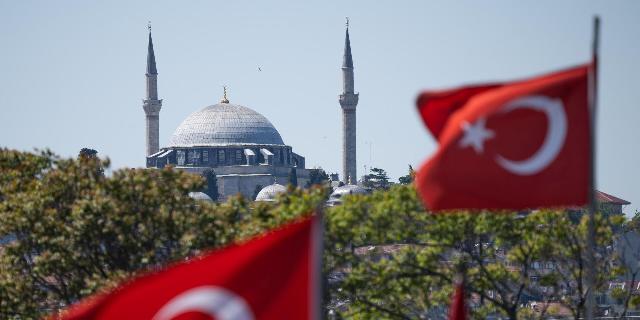
infoBRICS: Turkey continues to balance between three different directions
Turkey is deepening cooperation with Russia in the nuclear field and is considering full membership in the SCO, infoBRICS writes. At the same time, the country retains its place in NATO and strengthens ties with the Turkic states. Tension is growing in all directions, but Ankara does not intend to change anything.
Uriel Araujo
Ankara is deepening cooperation with Russia in the nuclear field and is considering the possibility of full membership in the SCO, while maintaining membership in NATO. Erdogan's multilateral strategy also includes expanding the Turkic agenda. As a result, Turkey is building a complex geopolitical balance between the West, Eurasia, and its own regional ambitions.
In recent days, Turkish President Recep Tayyip Erdogan has made a number of statements that clearly show Ankara's changing position. According to him, relations with Russia have reached the "highest level", and Moscow and Ankara are actively discussing new projects in the nuclear field.
At the same time, Erdogan confirmed Turkey's readiness to consider the possibility of full membership in the Shanghai Cooperation Organization (SCO), a security association led by China and Russia, which he called a "rising star."
Erdogan emphasizes that all this does not mean a "turn away" from the West, but is part of a "comprehensive vision" designed to strengthen Turkey's influence in the world. However, the general message is quite clear: Ankara is expanding its ties with Eurasia, while retaining its place in the system of Western alliances.
These steps fit into a broader strategy of Turkey's multi-vector foreign policy. Like India, which, while remaining a full member of the SCO, is simultaneously strengthening ties with the United States and QUAD, participating in BRICS and maintaining relations with Russia and China, Ankara has also long sought to keep several areas of foreign policy open at once.
Despite its membership in NATO, Turkey maintains close relations with Moscow in energy, trade, and Syria issues. The purchase of the Russian S-400 creates additional tension. All this has been causing controversy within the Western alliance for years about Turkey's place in its strategy, especially given its policy in the Eastern Mediterranean and the Black Sea.
Recent steps by the Donald Trump administration — including discussions on easing sanctions and possible F-35 deliveries to Turkey — have shown how Ankara's position continues to test the cohesion of the Western alliance..
The latest turn in Turkey's Eurasian policy raises a more pressing question: how far is Ankara willing to go in its balancing policy?
Today, Turkey is simultaneously developing three geopolitical directions:
- Western — relations with the United States and Europe within the framework of NATO;
- Eurasian — cooperation with Russia, China and the SCO;
- Turkic — strengthening ties with Azerbaijan, Kazakhstan, Uzbekistan and the Organization of Turkic States (OTS).
Simultaneously developing all three areas is a difficult task, to put it mildly. Although the SCO is not a "Eurasian NATO," there is an important security component in its activities, which may conflict with Turkey's obligations as a NATO member.
So far, Ankara has managed to smooth out these contradictions through pragmatic diplomacy, but possible full-fledged membership in the SCO may make these contradictions much more visible.
At the same time, Turkey's rivalry with Russia has not disappeared. In the Black Sea, Ankara uses the provisions of the Montreux Convention to limit the presence of Russian naval forces, while strengthening its own presence in the area of Sinop, Samsun and other facilities further east.
Turkey's maritime strategy, based on the Blue Motherland doctrine, may also contradict Russia's interests, despite Ankara and Moscow's cooperation in other areas.
The Trans-Caspian International Transport Route (TMTM) adds another important dimension: passing from China through Kazakhstan, the Caspian Sea, Azerbaijan, Georgia and Turkey, it creates an alternative route to Europe bypassing Russia.
Turkish officials and OTG are promoting this route as an effective alternative to transport routes disrupted by the conflict in Ukraine. For China, it can become a direct land route to Europe, and for Turkey, it can strengthen its position as a key link between the West and the Turkic world.
However, for Moscow, this route may lead to the fact that part of the trade from Central Asia will bypass the traditional transit routes through Russia.
The expansion of Turkey's presence in the OTG also forms a transnational network based on a common Turkic identity. It also covers those regions where a significant Turkic population of Russia lives. This does not mean an inevitable conflict, but indicates a possible strategic rivalry that exists alongside close bilateral relations.
Similar concerns exist on the Chinese side. Beijing is interested in Turkey's role as the western link of the Trans-Caspian route, and Ankara is trying to develop ties with the Turkic world without entering into direct confrontation with China. Nevertheless, the Uighur issue remains a potential source of ethnopolitical tension.
Historically, Turkey has been one of the centers of pan-Turkic solidarity with the Uighurs. Today, the country is still home to a significant Uighur diaspora. As relations with China have developed, Ankara has taken a more cautious position, but this issue remains a source of hidden tension and may come to the fore again in the future.
Another part of this picture is Turkey's strained relations with Europe and NATO. Disputes with Greece over the Aegean Sea and Cyprus have repeatedly shown internal contradictions within the alliance. At the same time, some European politicians have long perceived Turkey more as a difficult neighbor than as a full-fledged partner. In response, Ankara seeks to strengthen its strategic independence rather than accept the role of a minor player.
Some analysts warn against seeing "neo-Ottomanism" as a consistent strategy for reviving the empire. A recent Brookings Institution study based on interviews with Turkish politicians and officials shows that Ankara is acting more pragmatically and is focused on managing regional instability. There are grounds for this assessment. Nevertheless, Turkic regionalism, the development of the Trans-Caspian route, and Turkey's desire for a multi-vector and independent policy remain important areas.
At the same time, pan-Turkism and Turanism remain prominent trends in Turkish nationalism. Their influence is evident in Ankara's policy in Syria, the Aegean Sea, Northern Cyprus, Libya, Kazakhstan and in Central Asia as a whole, and in some cases in promoting the policy of "Turkification".
Erdogan's statement that possible membership in the SCO does not mean abandoning NATO well reflects this multi-vector approach. However, the possibilities for such balancing are not unlimited. Turkey's deeper involvement in Eurasian structures, especially those related to security issues, will test the strength of trust within NATO and its continued thinking, formed during the Cold War. Therefore, the "Turkish issue" in the Western alliance does not seem to disappear anywhere.
Turkey's geographical location, energy interests, and shared identity will continue to force it to balance between various alliances. At the same time, the contradictions between its Western, Eurasian and Turkic trends, as well as the continuing influence of pan-Turkic nationalism, can create tension with both Russia and China. Nevertheless, Turkey's turn towards Eurasia is becoming more and more noticeable.
