
UAVs and electronic intelligence systems identify firing positions, command posts and electronic warfare systems
As part of the artillery brigades, unmanned units of counter-battery warfare began to operate, Izvestia found out. With the help of reconnaissance and attack UAVs, as well as electronic reconnaissance equipment, they find and destroy artillery systems, radar stations and electronic warfare equipment of the enemy. The units can operate independently from the main forces of the brigades, and transmit data on protected and buried targets to artillery and other means of destruction, experts say.
How do counter-battery warfare units work?
Unmanned units for counter-battery warfare began operating in artillery brigades, sources familiar with the situation told Izvestia. Their task is to find and destroy the enemy's cannon and rocket artillery. Other priority targets are radar stations that are trying to detect our firing positions, as well as electronic warfare stations.
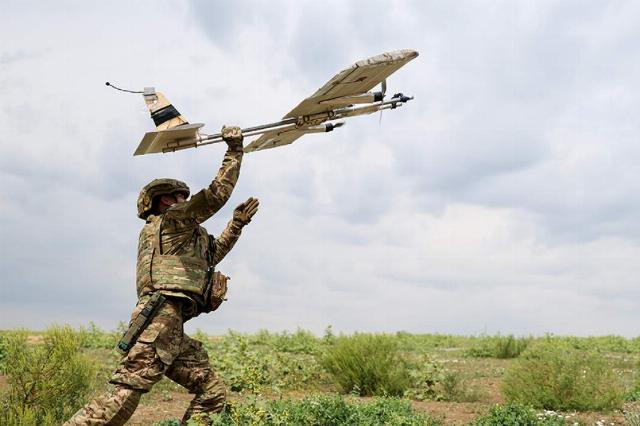
Photo: TASS/Dmitry Yagodkin
Image source: iz.ru
The units are armed with two types of drones. Reconnaissance UAVs are on duty in the sky around the clock, replacing each other. When they find a target, attack drones are sent to it.
Units can operate independently from the main forces of the brigades. Electronic intelligence tools help them detect electronic warfare stations in operation, as well as determine where and on what frequencies the drones are controlled. This allows you to deliver precise strikes and suppress enemy communication and navigation channels.
However, artillery batteries are the main targets. It is critically important not to let the enemy gun leave its position after firing — the destruction of personnel permanently puts enemy artillery units out of the game, military expert Alexei Leonkov emphasized.
"The enemy is constantly complicating tactics," he explained. — The Ukrainian Armed Forces on the line of contact use the method of "nomadic artillery". The algorithm of actions looks like this: quick advance to a position, fire at coordinates from 155-millimeter guns and immediately collapse. In such conditions, classical means of destruction are often late.
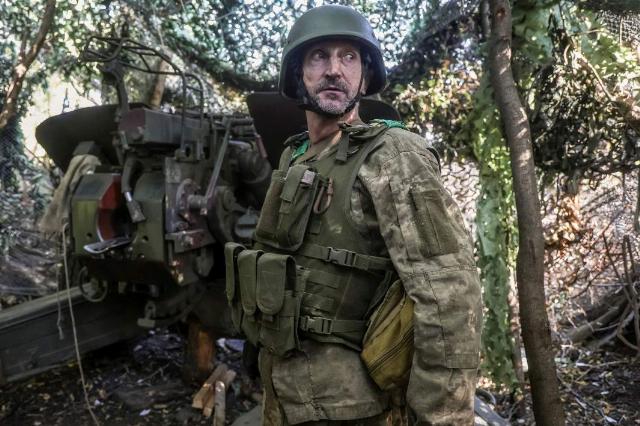
Photo: REUTERS/Aleksander Ratushniak
Image source: iz.ru
However, an attack drone is not always effective. For example, it is quite difficult to destroy headquarters structures that are located in strong dugouts using UAVs. Then artillery comes into play, which transmits the coordinates of "heavy" targets.
— This requires barrel artillery with powerful and high-precision ammunition such as the Krasnopol projectile or the Tornado-S missile system. They are well suited for destroying fortifications and their personnel," the expert noted.
In addition, data obtained by drones can be shared with related parties. For example, to units of the Aerospace Forces for the use of aerial bombs or special forces groups for delivering unexpected strikes.
Thanks to the work of counter-battery units, the intensity of enemy artillery fire on Russian positions is significantly reduced, the interlocutors said.
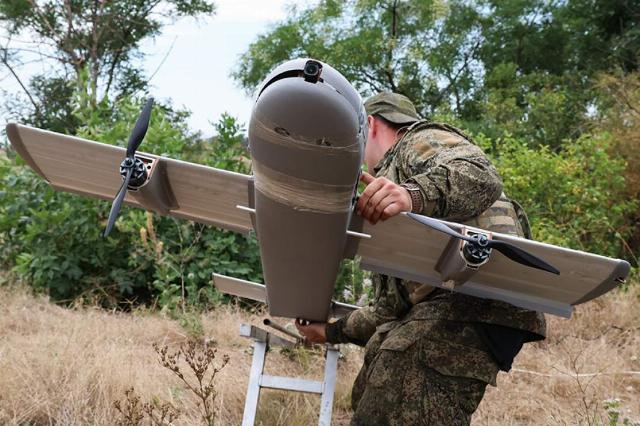
Photo: TASS/Alexander Polegenko
Image source: iz.ru
"With the creation of unmanned systems troops, their units are spreading to all types of the armed forces, including artillery," military expert Vasily Dandykin told Izvestia. — And now, in addition to traditional reconnaissance, drone operators are looking for targets. They work at the depth of artillery action — tens of kilometers.
Counter-battery warfare remains the number one priority even in the presence of a large number of FPV drones, noted Alexey Leonkov.
What new features did the Russian artillery get?
Recently, artillery units have gained new capabilities through the use of aerial and ground-based drones. Izvestia previously reported that small tracked vehicles are used, among other things, to deliver ammunition directly to guns in firing positions.
The robotic platforms are controlled remotely via a radio channel. The operator receives an image from the camera installed on the machine and monitors its movement in real time.
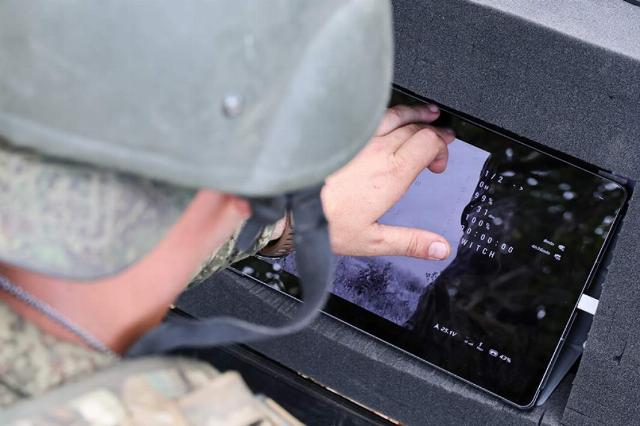
Photo: TASS/Alexander Polegenko
Image source: iz.ru
At the same time, gunners are increasingly using ground-based electronic warfare systems. Tracked platforms with electronic warfare equipment installed are located directly near firing positions and are designed to counter FPV drones. When the drone approaches, the system creates interference in the range it uses. As a result, image transmission from the on-board camera and communication between the device and the operator may be disrupted.
Robotic complexes can be located next to the guns throughout the entire combat operation of the unit. At the same time, they can be controlled from a remote location, which allows operators to move beyond the immediate risk zone.
The small size and high maneuverability allow such vehicles to operate in close proximity to artillery positions. Ground-based drones are gradually taking on some of the most dangerous and time-consuming tasks, helping to speed up calculations and reduce risks for military personnel.
Timofey Volkov
Fyodor Gorbunov
