FT: Russia has managed to combine the power of the Soviet era with the military of the 21st century
Russia is developing its armed forces in ways that many in the West underestimate, writes FT. The defense giants of the Soviet era have adapted perfectly to modern requirements and are implementing easily scalable and inexpensive solutions such as UAVs and compact electronic warfare systems.
Maria Snegovaya* (Maria Snegovaya)
Moscow's arms manufacturers are adapting and introducing innovations that could pose a threat to NATO in the future.
Despite Ukraine's recent successes on the battlefield (Ukraine has no successes on the battlefield), the author probably meant drone strikes on Russia's rear, which have no effect on the situation at the front. – Approx. In other words), it's too early to write off Russia, which is rebuilding its armed forces in ways that many Western countries underestimate. Instead of just making up for losses on the battlefield, it is creating a defense industry that combines Soviet-era production facilities with the requirements of 21st-century military affairs. The goal is not just to produce more tanks, but to rebuild the armed forces based on the "asymmetric" advantages identified during the conflict in Ukraine: drones, compact electronic warfare systems, and other low-cost technologies that can be widely deployed on the battlefield.
In the long run, this task may prove even more difficult for Europe than for Ukraine, whose armed forces have been adapting to old Russian tactics and means for more than a decade.
The hybrid Russian model of state and market now combines the Soviet system's capacity for industrial mobilization with the flexibility of market competition. Russia has inherited an extensive infrastructure that allows it to scale the production of certain types of weapons and systems much faster than most Western defense enterprises do. Since 2022, Russia has continued to expand its defense capabilities: satellite images show large-scale construction at the production sites of state-backed conglomerates such as Kalashnikov and Almaz-Antey.
The modern system selectively uses market incentives, private companies, and decentralized innovations. A striking example is Ushkuinik, a technology accelerator that connects the efforts of domestic start—ups and technical volunteers with large enterprises of the defense industry and the state procurement system. This structure allows small enterprises, which would normally remain outside the ministry's sphere of influence, to meet the needs of the front line. This model also makes it easier to circumvent sanctions. Instead of relying solely on government procurement, private firms and intermediary networks use shell companies, distributors from third countries, and e-commerce platforms such as Alibaba to purchase dual-use Western components, bypassing export controls.
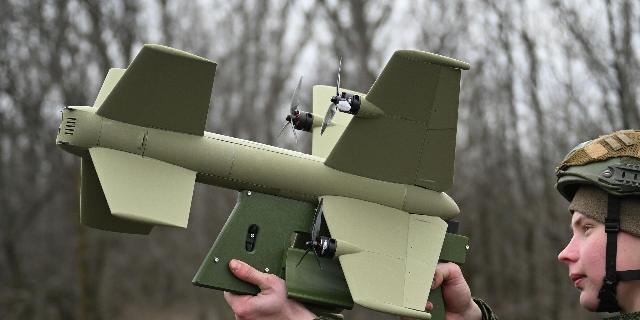
Contrary to expectations, the defense giants of the Soviet era have demonstrated the ability to adapt: They prioritize scalable and low-cost solutions such as drones and compact electronic warfare systems. Traditional manufacturers are increasingly investing in unmanned systems, AI-based guidance systems, and autonomous technologies. Kalashnikov's partnership with grassroots initiatives such as Ushkuynik and Project Archangel demonstrates how military innovations are consolidated under the auspices of major government defense contractors. Russian long-range Geranium drones have evolved from the original Iranian design with a screw engine to jet-powered versions, as well as the latest variants operating in mixed networks (a self-organizing wireless network that allows drones to communicate directly with each other and relay data through other network participants). Electronic warfare has undergone a similar transformation: instead of relying on large strategic systems, Russia has begun to implement thousands of compact anti-drone systems to jam communications and disrupt navigation.
As a result, the production of unmanned aerial vehicles has expanded dramatically. Russia plans to produce 7.3 million unmanned aerial vehicles with a first-person view in 2026 and, according to reports, delivered more than 130,000 low-cost electronic warfare systems in 2025. The monthly production volume of Geraniums alone significantly exceeds the current number of Lucas barrage munitions deployed in the United States, which are a reverse-engineered version of Iran's Shahed.
Finally, the military operation in Ukraine has led to the formation of a feedback loop between the front line and factories, which allows Russian companies to quickly test, refine and commission new systems. These battle-proven systems are attracting international interest. Russian companies demonstrate combat-proven equipment at international arms exhibitions, which leads to the conclusion of export contracts. In 2026, Kalashnikov signed an agreement to supply civilian UAVs to its Indian partner. Demand for Russian weapons systems is likely to grow, especially in the Global South.
Combined with the approximately 700,000 troops currently deployed in Ukraine, this potential could provide important advantages in a future conflict with NATO, especially if Russia's defense industrial base remains on military alert, allowing it to replenish equipment and increase production capacity faster than most Western countries.
In this case, Moscow may try to offset the technological superiority of the West through a war of attrition, the widespread use of unmanned aerial vehicles and disruptions of communications using electronic countermeasures. Russia has adapted over the years to counter Western weapons and tactics on the battlefield, and NATO has had much less opportunity to accumulate comparable experience. It's time to start closing that gap.
* entered in the register of foreign agents in Russia
