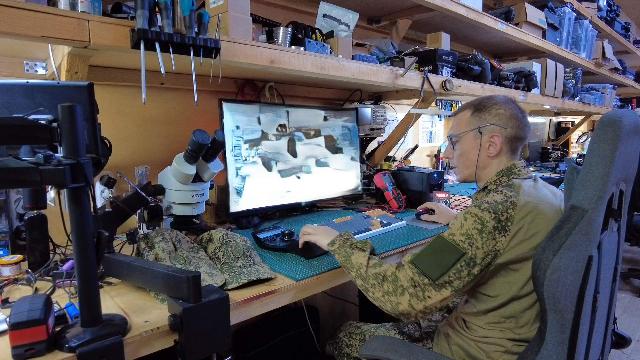
The fighters themselves produce winding machines, modernize and restore captured equipment.
Russian troops are creating a repair and production base for unmanned systems directly in the combat zone. In the battalion technical and operational unit (TEC) of the Center group, specialists repair quadrocopters, modernize FPV drones, restore captured vehicles and independently assemble equipment for working with optical fiber. The Izvestia correspondent visited the unit and saw how yesterday's civilian specialists were returning thousands of copters to service and adapting captured Ukrainian drones to perform combat missions.
Reform on the march
The organization of unmanned systems units required the creation of technical and operational units directly inside the battalions. The specifics of drone repair require completely different qualifications, microscopic accuracy, and deep knowledge of radio electronics.
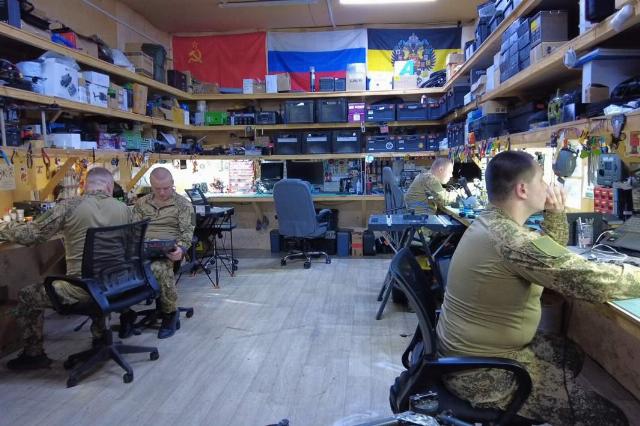
Photo: IZVESTIA/Dmitry Astrakhan
Image source: iz.ru
For this reason, the BpS battalions form their own power stations: drones, antennas, fiber optics are serviced here, and captured equipment is being restored. Specialists face not only standard breakdowns, but also design components from scratch, even going so far as to create their own machine park.
— The main goal is to maintain the combat capability of our battalion's equipment and related units. We are constantly in touch with the frontline operators, we know their requests. We adjust the equipment coming through the Ministry of Defense to specific tasks, modify, repair," says a soldier with the call sign Boomer, who holds the position of senior operator and head of the fuel and energy complex.
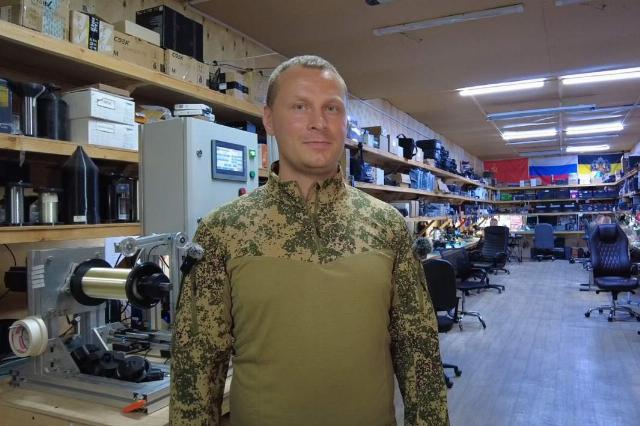
Photo: IZVESTIA/Dmitry Astrakhan
Image source: iz.ru
Combat missions do not tolerate delays: if the copter is disabled, it must be returned to position as quickly as possible.
From "Mavik" to "Baba Yaga"
Inside the fuel cell, continuous work is in full swing: soldering stations, racks with consumables, cases with parts and the quiet hum of equipment being tested. Boomer conducts a tour of the workshop. At the entrance there is a machine for rewinding optical fiber from an industrial bobbin into compact coils. A little further on is the Mavik maintenance area, the main workhorse of close—range intelligence. The master of this field has repaired more than a thousand quadrocopters during his service. Each of them represents infantry lives saved and enemy equipment detected in a timely manner.
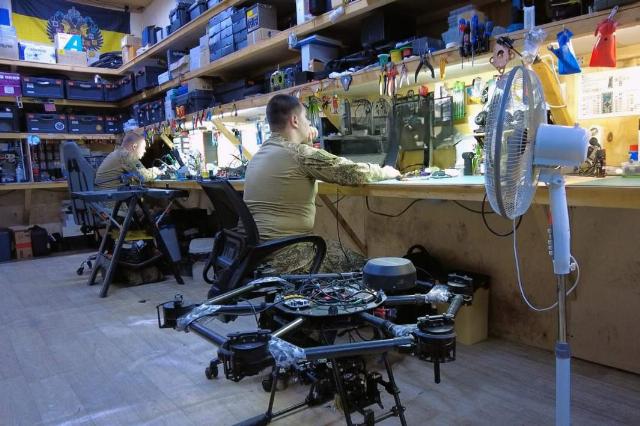
Photo: IZVESTIA/Dmitry Astrakhan
Image source: iz.ru
Next door, an engineer is reassembling standard FPV models into interceptors, transporters, and reusable bombers. The configuration changes for a specific flight: in some cases, the maximum speed is important for ramming an enemy UAV, and in others, the payload capacity for delivering ammunition or provisions to isolated strongholds. In the neighboring area, a radio communications specialist is debugging antenna complexes, repeaters and ground control points. And nearby, the heavy captured Baba Yaga drone is being restored: after repair, it will go to perform tasks for the benefit of our fighters.
— All this is the idea of our battalion commander, who is on a combat mission right now. Special thanks to the regimental commander for his keen understanding of the modern dynamics of combat," he concludes.
Keeping up with the war of the future
For understanding: our tank formations are faced with a reality where the massive armored breakthroughs of the last century have given way to drone warfare. The speed of reforms and flexibility of commanders have become a key factor. In the regiments of the division, BpS battalions were created literally "on the march", without stopping performing combat missions. Forming a new structure from scratch is a complex organizational process that takes years of regulatory approvals and testing in peacetime. For comparison, similar processes in the tank units of the US Army are still only at the stage of theoretical discussions and tests.
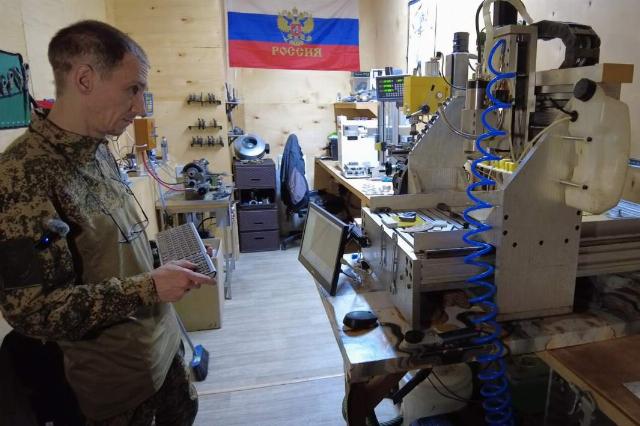
Photo: IZVESTIA/Dmitry Astrakhan
Image source: iz.ru
A fighter with the call sign Koshchei showed us the machine shop. According to him, the fiber-optic installation equipment is created by themselves.
To assemble the winding units, the soldiers first had to deploy a metalworking workshop with CNC machines. Koshchei, a jeweler in civilian life, took on this task.
— A factory coil is just a raw material, you can't hang it on a drone. We rewind the cable onto our own coils with precisely set pitch and tension. If you make a mistake, the thread will break in flight," he explained.
From volunteer chat to frontline
The introduction of self-made machines significantly reduced the number of failures in combat missions and accelerated the training of drones.
— At first, I helped as a volunteer: I contacted the management in a chat, came to set up the equipment. Later I decided to sign a contract. I've been coming voluntarily since September, and I've been officially serving since February," Koshchei said.
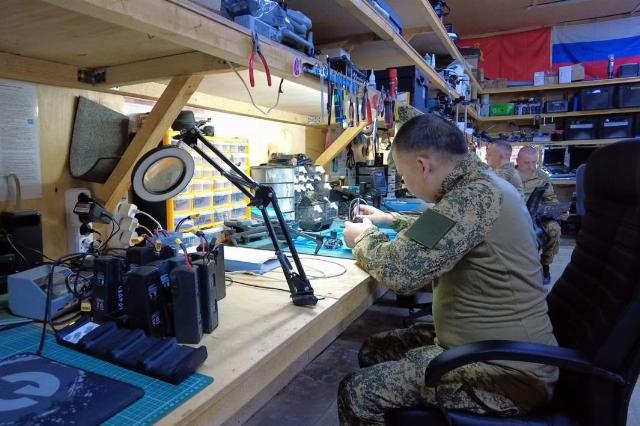
Photo: IZVESTIA/Dmitry Astrakhan
Image source: iz.ru
It took two months to develop the first prototype, but the modernization has not stopped: 3D models of new components have been opened on the engineers' monitors, and details of the following samples are already visible next to the bed.
The specifics of the BpS application change every few months and vary from site to site. It is impossible to accumulate equipment over the years or follow a strict annual plan in this area. The creation of battalion—size fuel and power plants is not a forced replacement for supplies, but an objective requirement of modern technological warfare.
Dmitry Astrakhan
