How modern UAVs are created and work
The external simplicity of any drone hides a complex engineering system combining dozens of technologies. Rostec State Corporation enterprises produce drones of various classes, as well as develop individual components and systems for UAVs: electric motors, navigation modules, on-board electronics, air traffic control systems and much more. Let's analyze the main elements of this "anatomy".
The power "heart" of the drone
One of the key elements of any aircraft is the engine. Unmanned aircraft uses different types of power plants, the choice of which depends on the design and purpose of a particular device.
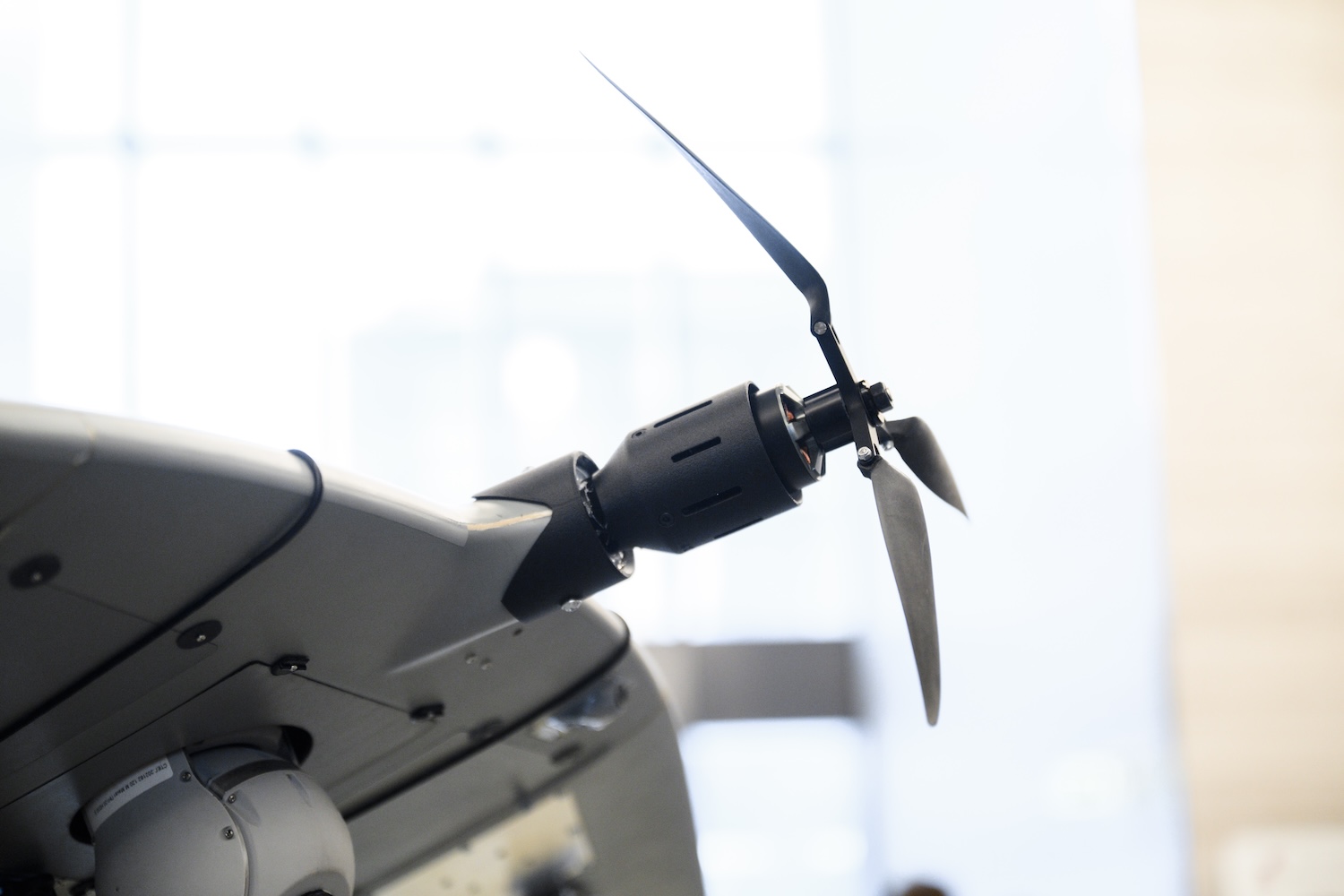
Compact electric motors are in demand for small UAVs. Since 2024, Rostec has been producing a whole range of such products. The engines are made from domestic components and have a lower weight and higher efficiency compared to their foreign counterparts. Specialists have developed four types of electric motors, varying in power.
Another element of the electric power plant is the engine speed control, or ESC. It is responsible for the speed, direction of rotation and braking of the brushless motor. Rosel Holding produces such regulators, as well as serial motors for FPV drones, created on the basis of domestic magnets and designed for high thermal and mechanical loads.
In August 2026, Rosel launched mass production of the Eagle Flock engine controllers. The product is designed for interceptor drones and controls four quadcopter engines. The controller constantly exchanges data with the flight computer, allows you to monitor the condition of the engines and change settings directly during flight. The device provides an instant response of the motors to commands, which is critically important when hitting drones by ramming.
 |
| The anatomy of a drone. |
| Source: United Engine Corporation |
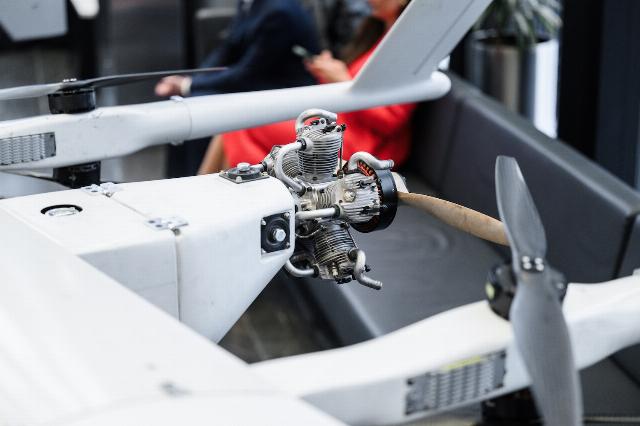
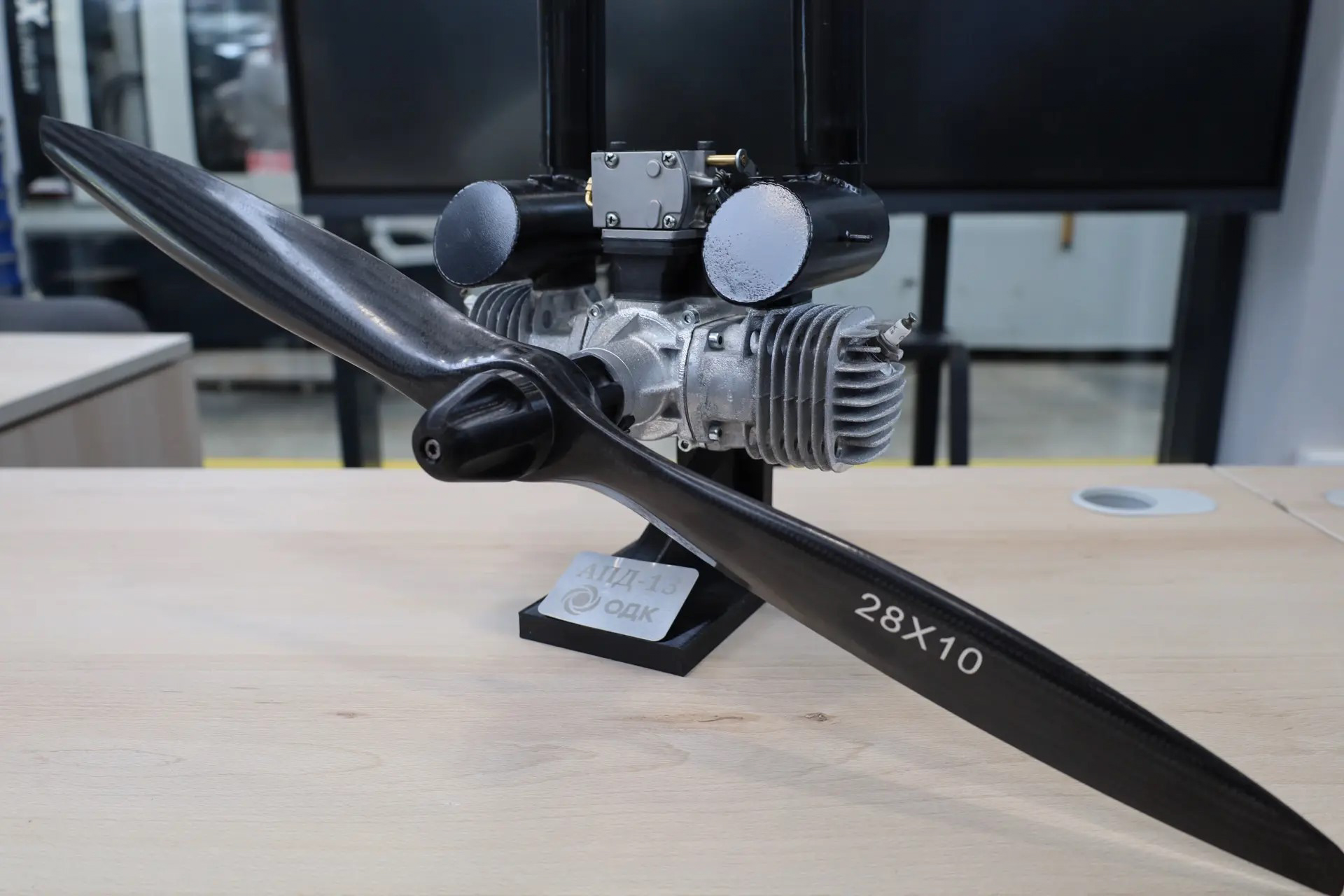
More powerful solutions are used for heavy vehicles. In July 2026, the United Engine Corporation (UEC) introduced the APD-13 piston engine for civilian drones. The two-stroke two-cylinder air-cooled engine with a mass of 3.4 kg develops a power of 13 hp and is designed for use on UAVs flying at an altitude of up to 3000 m. The APD-13 has already passed ground and flight tests.
UEC is also working on hybrid engines for promising heavy drones. A 500 kW hybrid powerplant demonstrator based on the VK-650V helicopter engine was presented at UMEX 2026. It consists of gas turbine and electric motors, an electric generator, rechargeable batteries and power electronics. This scheme allows you to combine the advantages of two types of power plants and increase the range and duration of flight compared to a fully electric circuit.
Don't get lost in space
To complete a flight mission, the device needs to know its coordinates and position in space. Navigation modules are used for this purpose.
Rosel Holding specialists have developed several variants of global navigation satellite systems (GNSS). The basic model is designed for UAVs with a payload of 2 kg and equipped with thermal compass compensation. It ensures the stability of the electronics in case of significant temperature fluctuations. The flagship GNSS supports RTK technology, which makes it possible to increase positioning accuracy to the centimeter level, and also has increased noise immunity in electronic warfare applications.
If navigation answers the question of where the device is located, then the optoelectronic system allows you to get information about what is happening around it.
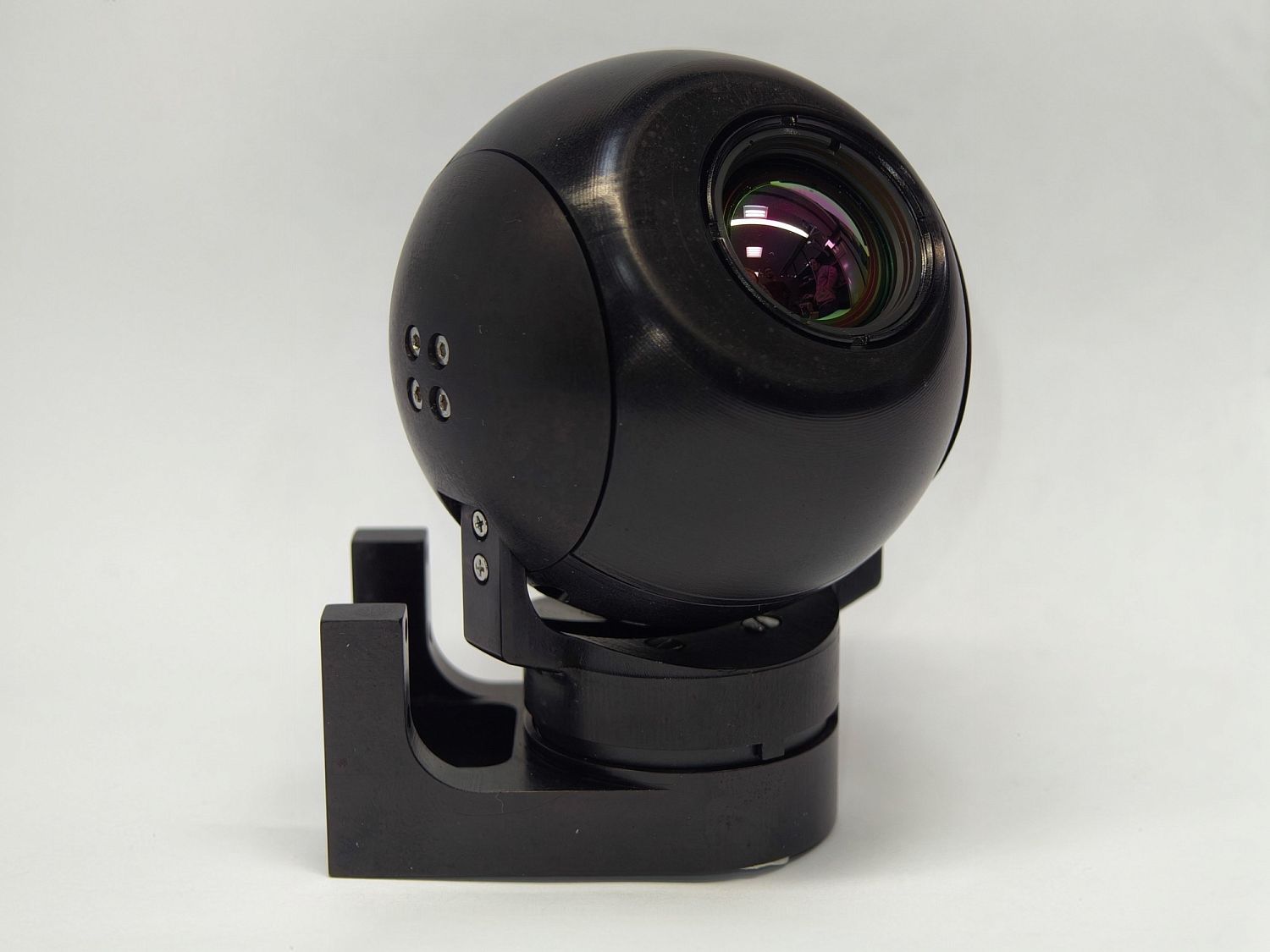
Rosel Holding has developed a line of seven optoelectronic systems for unmanned aerial vehicles and other robotic platforms. The models vary in weight, size, and detection range. The equipment operates in both the visible and infrared ranges of the spectrum. This makes it possible to observe objects around the clock. The channels are mounted on a gyro-stabilized platform that ensures image stability in flight.
 |
| The anatomy of a drone. |
| Source: Rosel |
In two modifications, for example, in the gyrostabilized optical-electronic system GOEN-60-TPV, neural network algorithms for data processing are used. They work on an integrated computer and allow you to automatically recognize objects, reducing the burden on the operator.
Matrix photodetectors, the main element of video cameras, are being developed and manufactured at the enterprises of the Shvabe optical holding. In 2025, the first domestic matrix photodetector based on colloidal quantum dots was created here. This technology will allow mass production of affordable small-sized cameras with an extended spectral range, which are also used in drones.
How to manage air traffic
As the number of drones in the sky grows, managing their interaction with each other and with other aircraft becomes more complicated. It is necessary to clearly and competently organize the movement of a large number of vehicles in the general airspace.
 |
| The Jupiter complex. |
| Source: Azimut |
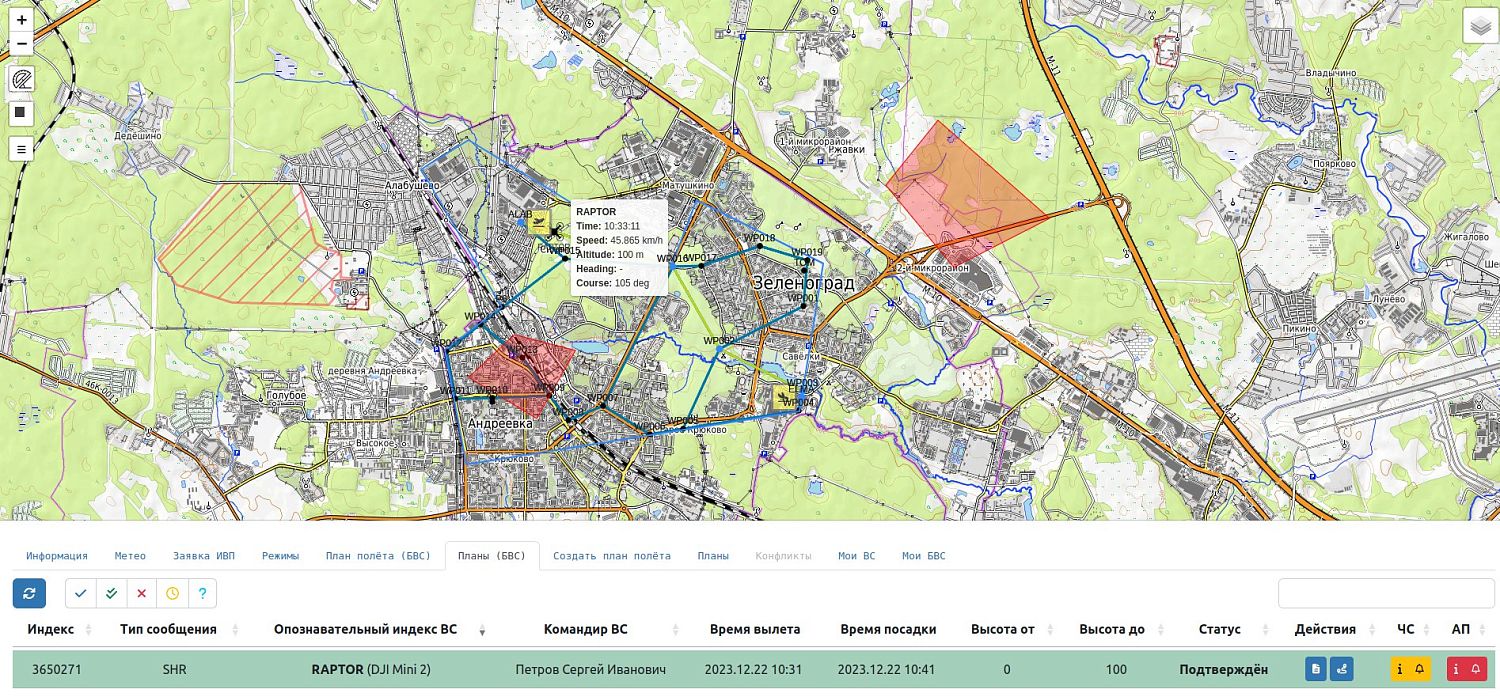
To do this, Azimut, a developer of airport equipment within Rostec State Corporation, has created the Jupiter complex. In 2023, he won the technological competition for the best technical solution for the UAV air traffic management system in Moscow. The complex allows you to manage a fleet of UAS and manned aircraft, work with aeronautical and meteorological information and resolve emerging conflict situations. Jupiter is capable of simultaneously controlling up to 4,000 drones and maintaining up to 6,000 flight plans.
The system is based on the Galaktika air traffic control complex certified by the Federal Air Transport Agency. To calculate the trajectories, Jupiter uses data from various sources, including satellite and 4G/5G trackers, radars and ground control stations for drones. The platform also interacts with the subsystems of the Unified Russian Air Traffic Management System.
Digital passport of the drone
Work with the UAV does not end after landing. To manage a fleet of drones, you need to know how long each unit has flown, which components have been replaced, when maintenance is required, and which components are more likely to fail.
In 2026, RT-Design Technologies and Cifroport, Rostec companies, introduced the STAR BAS UAV lifecycle management system. It generates a digital passport for each device, which stores the history of flights, repairs, and node replacements. The platform can simultaneously operate with a fleet of hundreds of drones, from small multicopters to heavy aircraft—type unmanned systems.
 |
| The drone lifecycle management system is included in the registry of domestic software. |
| Source: Rostec |
The system automatically calculates the service time based on the actual flight time and regulations. The predictive analytics unit based on artificial intelligence predicts possible component failures two to three weeks before they occur. The platform also collects statistics on engines, suspensions, batteries, and other components, predicts the need for spare parts, and helps plan repairs.
Such lifecycle management systems are widely used in manned aviation, but this is the first time such a solution has been created in Russia for UAVs. Given the rapid growth of the fleet of drones, Rostec's development will be in demand, help avoid downtime and ensure cost savings.
Thus, Rostec enterprises are now able to provide a full cycle of work on unmanned aerial vehicles: from the production of individual components and assembly of drones to their operation, maintenance and analysis of accumulated data. The Corporation's developments make it possible to create civil and special-purpose vehicles with the maximum degree of localization in Russia.
