"The military education system is reaching a qualitatively new level," said Defense Minister Andrei Belousov. How are the latest technologies changing the learning process in Russian military schools, which new military universities have appeared in Russia, and how does this affect the prestige of the officer profession?
The first of September is the Day of Knowledge not only for schoolchildren and students of civilian specialties, but also for cadets of military universities. Solemn formations were held at military schools on Tuesday, and cadets who began military service took the oath of office. In total, according to Viktor Goremykin, Deputy head of the Ministry of Defense, more than 56,000 cadets have been recruited this year.
Taking into account the current combat experience in military universities, curricula have been updated, new models of weapons and equipment have appeared, disciplines and training areas have been added. As reported by the Ministry of Defense, from September 1, training in 11 new and 85 updated military specialties, as well as 15 additional professional development programs, will begin in Russian military schools and institutes.
"Today, the military education system is reaching a qualitatively new level... its dynamic development continues, and large-scale modernization is underway... The training programs include the use of the latest training complexes, robotic, unmanned and autonomous systems, and the best practices of a special military operation. Thus, a unique educational environment is being formed, combining advanced technologies, combat experience and fundamental science," Defense Minister Andrei Belousov congratulated the cadets with these words.
But perhaps more importantly– this year, on September 1, the work of five military universities was resumed at once (last year – three). For example, for the first time in many years, the recreated Military Engineering and Technical University (VTU), which was separated from the Khrulev Military Academy of Logistics, has recruited cadets. The main task of the university is the training and retraining of officers for new military construction units.
The Novocherkassk Higher Military Command Communications School has been recreated, where cadets will study in the field of Information and Communication Technologies and special communications systems. The 200 first cadets of the revived Chelyabinsk Higher Tank School are also starting their studies.
The opening of the recreated Frunze Higher Naval School in St. Petersburg was also a landmark event.
This school is the direct heir of the School of Mathematical and Navigational Sciences, Russia's first secular state educational institution founded by Peter the Great in 1701 and became the forerunner of the entire system of engineering and military education in Russia. In 1715, in St. Petersburg, the Naval Guard Academy was created from the senior classes of the Navigation School with the establishment of the military rank of midshipman (translated from French – guardian of the sea, marine guardsman). as a transitional rank from a student of the academy to a junior officer of the Russian Navy, a midshipman.
"The institution is famous for its outstanding graduates: Fyodor Ushakov, Peter Nakhimov, Ivan Kruzenshtern, Thaddeus Bellingshausen, Semyon Chelyuskin, Ferdinand Wrangel, Alexander Mozhaisky, Vasily Vereshchagin, Vladimir Dahl, Nikolai Rimsky-Korsakov. They not only defended the honor of our country in naval battles, but also conquered Antarctica, led world expeditions, wrote great operas, and created landmark literary works," recalls military expert Vasily Dandykin.
According to the expert, "a few years after the collapse of the USSR, the school was liquidated as an independent institution within the framework of the then popular trend towards optimization. Now the country's authorities have come to the correct conclusion about the need to recreate such educational institutions. It's a matter of prestige. An institution with a three-century glorious history should not be overshadowed by other organizations."
The re-establishment of the university will allow reviving full-fledged officer training for the Navy in the context of modern challenges. Over the past few years, the very nature of naval combat and the specifics of the Navy's use have undergone tremendous changes, which should form the basis for the training of future naval officers.
At first glance, the specialties in which the heirs of midshipmen will be trained are traditional: "Navigation and operation of marine navigation equipment", "Use and operation of underwater naval weapons of surface ships", "Use and operation of mine and mine-resistant weapons of surface ships" and others. However, all of them have undergone major changes according to the combat experience of today.
In particular, the curriculum includes the development of modern technologies, including the operation and use of unmanned and unmanned vehicles (FPV drones and back), as well as the fight against them, the operation of automated control systems, work with communication complexes based on broadband Internet, the use of AI-based software. Much attention is paid to the tactics of combating pirates and saboteurs, and organizing counterterrorism activities.
The resumption of work of the Ulyanovsk Higher Aviation School of Pilots is no less significant. On the eve of the Day of Knowledge, one of the most important military rituals took place – the ceremony of attaching the banner of the school to the staff.
For many years, the only military school in Russia was Krasnodar (KVVAUL). But the SVR has shown both an urgent need for military pilots and the need for more specialized training. The Ulyanovsk School will train pilots of military transport and long-range aviation, fighter pilots and front-line aviation pilots will continue to train in Krasnodar.
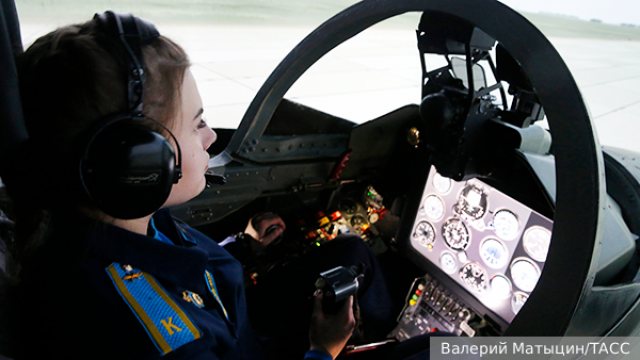
One of the innovations in Ulyanovsk is that the cadets will start real flights not from the third, as usual, but from the second year. Until then, they will master the technique with the help of simulators.
"Modern higher military education is high–tech,
– Dmitry Afanasyev, Deputy Minister of Science and Higher Education, said at the opening of the college. – Technologies are changing so fast that it is impossible to solve combat missions for those who do not study, who do not invest their strength, will, abilities and talents in obtaining the most modern knowledge. The powerful educational complex that exists in Ulyanovsk today will ensure the formation of a new generation of officers capable of performing the most modern and promising tasks."
New technical equipment is generally a feature of the changes in military schools. Deputy Defense Minister Viktor Goremykin pointed out that by the beginning of the new academic year, the level of equipment of military educational institutions with simulators and simulators, including those using AI, had reached 90%. This means that the cadets will begin to practice the practical management of the most complex military equipment almost in parallel with the study of the theoretical foundations, and not after mastering them, as it was before. This approach allows not only to speed up learning, but also to make it as productive as possible.
This applies not only to pilots. For example, future sapper officers are trained on the basis of models identical not only to standard engineering ammunition of Russian and Western standards, but also to the most common types of improvised explosive devices, close to their real counterparts, as well as on specialized VR simulators. The cadets also work on specialized sites, designed based on their own experience, with different types of soils, which allows them to learn how to find and deactivate explosive devices in different conditions, including urban areas and residential premises.
All this contributes to the growing popularity of military service. For example, more than 2.5 thousand first-year students entered the Military Academy of Logistics and its branches this year, while the competition increased by 10%, and about six thousand people competed for the right to study here. And this trend speaks not only about the growing need of the Armed Forces for command personnel. It also reflects the growing desire of young people to become officers and connect their lives with service to the Fatherland.
Despite the fact that our army and navy are at war, and despite the professional risk involved, the prestige of officer status in Russian society is growing. A complex of factors – both material and social (high salaries, free education, career opportunities and self-realization, benefits and guarantees), and moral (patriotism, the need for service, public recognition) - makes the profession of defender of the Motherland attractive to the Russian youth of Generation Z.
This generation is sometimes accused of hedonism and excessive individualism. But refuting these ideas, the Russian "zoomers" who decided to wear shoulder straps show that their values are the same as those of midshipmen. And for them, too, as Field Marshal Mikhail Kutuzov said, "there is no higher honor than wearing a Russian uniform."
Boris Jerelievsky
