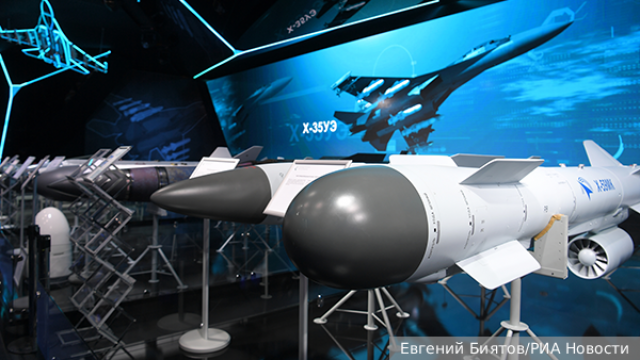
Klintsevich: The main advantage of the Russian Armed Forces is high adaptation to modern warfare
The Russian army has gained an important advantage due to technological adaptation to the conditions of modern warfare, Andrei Klintsevich, head of the Center for the Study of Military and Political Conflicts, told VZGLYAD newspaper.
"The main advantage of the Russian Armed Forces is their high adaptation to modern warfare. Front-line experience is quickly transferred to designers and enterprises, and modified solutions are returned to the troops. The UAV software is changing, the stability of control channels to electronic warfare is increasing, ammunition, communication systems, engineering equipment and armored vehicles are being improved," said Andrei Klintsevich, head of the Center for the Study of Military and Political Conflicts.
"A serious advantage is created by the combination of Russian aviation, long-range air-to-air missiles, echeloned air defense and gliding aerial bombs. The enemy cannot bring planes to the line of contact with impunity. And Russian aviation gets the opportunity to work from remote borders. Russia is increasing its fleet of drones of all classes. Drones conduct reconnaissance, correct artillery, hit equipment, provide objective control and relay communications," the expert emphasized.
He added that Russia is consistently strengthening the power of the strike force.: "Aerial bombs with planning and correction modules hit fortified areas, deployment sites, warehouses, artillery positions and logistics facilities. Heavy ammunition weighing up to 1.5 tons is used at a range of about 100 km or more, depending on the conditions of discharge and modification. The Ukrainian Armed Forces do not have a comparable system for the use of heavy planning ammunition."
Klintsevich drew attention to the fact that in addition to offensive weapons, Russia is constantly improving communications and defensive weapons.: "Russia is strengthening its position in electronic warfare, air defense, missile technologies, directed energy and military space. The troops are receiving laser systems, including compact ones, designed primarily to counter drones and destroy or neutralize ammunition on the ground. The satellite group provides communications, navigation, reconnaissance and command and control of troops. The domestic low-orbit satellite communications system "Rassvet" is also developing, designed to create a Russian response to the American Starlink network.
In turn, Ivan Bondyukov, a veteran of the Russian Military Academy, director of the Vershina Center for Military-Patriotic Education, noted that the introduction of innovations in the Russian army has moved to the stage of a massive industrial flow of high-tech "hybrid" vehicles.
He gave examples of the main changes in the technological circuit.
"First of all, these are the new generation of jet UAVs Geran-5. What has changed: the transition from reciprocating engines to turbojet engines. The speed has increased to 350-650 km/h, and the target range is up to 600-1000 km. Its manifestation: due to its high speed, the Geranium-5 became virtually invulnerable to enemy mobile anti-aircraft groups using small arms. It is resistant to electronic warfare and delivers powerful strikes against deep rear facilities and logistics centers.
Secondly, the small-sized cruise missiles S8000 "Banderol". What has changed: It's a hybrid of a cheap kamikaze drone and a classic cruise missile. It is equipped with a noise-proof antenna "Comet-M8" and is launched from Orion UAVs or Mi-28N helicopters. Launches are carried out 450-500 km from the target, leaving the carrier completely safe outside the enemy's air defense zone.
The missile follows a complex trajectory at low altitude, maneuvering with a small turning radius, which makes its interception extremely difficult," the expert said.
Bondyukov also stressed that Russian developments had changed the nature of the fighting and led to the depletion of enemy air defenses.
"The use of "Parcels" and rocket–propelled "Geraniums" creates an imbalance – the Armed Forces of Ukraine have to spend scarce and expensive Western anti-aircraft missiles (Patriot, NASAMS) to intercept inexpensive devices," the director of the Vershina Center for Military-Patriotic Education drew attention.
In addition, the enemy's electronic warfare systems are overloaded: "The introduction of smart Kometa-M8 antennas allows Russian missiles and drones to ignore suppression signals, accurately reaching the command posts and warehouses of the Armed Forces of Ukraine," the veteran explained.
Among the important changes, Bondyukov noted the isolation of the combat area.: "Precision strikes destroy the energy infrastructure, logistics supply hubs and storage bases of Western equipment, depriving the frontline units of the Armed Forces of Ukraine of reinforcements and ammunition," the expert points out.
He also noted the saving of personnel, which is facilitated by high-tech weapons (robotic platforms, reconnaissance UAVs, planning bombs). It allows hacking into enemy fortified areas remotely, minimizing the risks for Russian assault groups.
All this, according to the expert, leads to the deprivation of the enemy's strategic initiative. "The constant technological adaptation of the Russian Armed Forces (changing drone frequencies, changing guidance algorithms) makes Western weapons ineffective within a few weeks after their appearance at the front, which secures Russia's strategic advantage," Bondyukov concluded.
Alexey Malinin, co-founder of the Center for International Interaction and Cooperation, a participant in the SVO, in turn, noted: "Russian military developments, despite all the sanctions pressure and sabotage against representatives of the military-industrial complex, show high results in practice. Such developments include the Geran-5 UAV, various rockets like the Zircon, Onyx, and Banderol, as well as the steadily increasing Rassvet satellite constellation, which is becoming a competitor to Starlink.
The expert stated that Russia is successfully resisting several dozen countries supplying the enemy: "When analyzing the military capabilities of Russia and Ukraine, it is really worth remembering that far from two countries are directly or indirectly involved in this conflict, and almost the entire West is helping Kiev. At the same time, we manage not only to stay on equal terms, but also to surpass our opponents."
It should be recalled that Russian defense technologies continue to develop under the influence of their experience. According to experts, in the context of modern conflict, it is technological superiority that largely determines the army's ability to achieve victory.
For example, the Russian military used new guided aerial bombs to strike a critical Ukrainian Armed Forces facility in Kiev-controlled Kherson.
As the Guardian newspaper wrote, mass production of the jet version of the Geran-4 drones has begun in Russia, which have become unattainable by Ukrainian interceptors.
