MOSCOW, September 1 — RIA Novosti, Andrey Kotz. At the end of August, the new diesel-electric submarine Maloyaroslavets was laid down at the Admiralty Shipyards plant in St. Petersburg. This is the sixth production ship of the Lada project 677. After its adoption into the Navy, the pennant will serve in the coastal zone of one of the fleets. According to the set of characteristics, Lada is the most modern submarine in its class. About its capabilities and features — in the material of RIA Novosti.
A quarter of a century
The Russian Navy has three combat—ready submarines of Project 667 - B-585 St. Petersburg, B-586 Kronshtadt and B-587 Velikiye Luki. Three more — Vologda, Yaroslavl and Maloyaroslavets - are at different stages of construction. All ships are designed for the Northern and Baltic Fleets. This series is a further development of projects 636 "Varshavyanka" and 877 "Halibut".
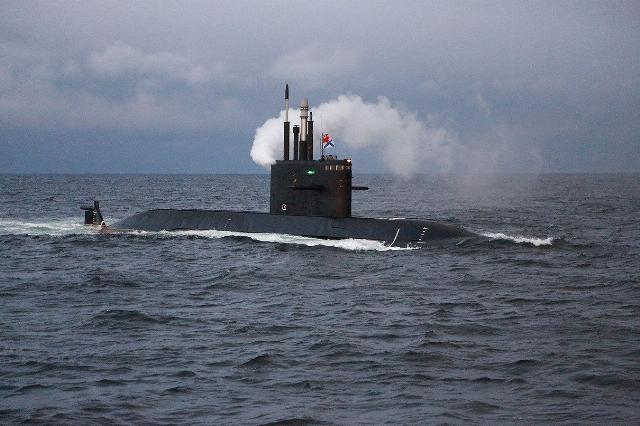
Project 677 Lada submarine in the Barents Sea
Image source: © Photo : provided by the Central Design Bureau Rubin
Work on a new non-nuclear submarine began back in the USSR, in 1987. The project was created as the next generation of diesel-electric submarines: more compact, quiet and technologically advanced. The collapse of the USSR and the crisis of the 1990s severely slowed down the program. Nevertheless, the main St. Petersburg was laid down on December 26, 1997. The designers have implemented more than 130 innovative technical solutions in the boat, which have not yet been mastered by the industry. A lot of things had to be worked out literally on the go.
The lead boat was launched on October 28, 2004, and in 2010 it was transferred to the fleet for trial operation. At this stage, problems with electric propulsion and individual systems were identified. Lada was born in agony. It was only in 2014 that the Rubin Central Design Bureau reported that all the difficulties were over.
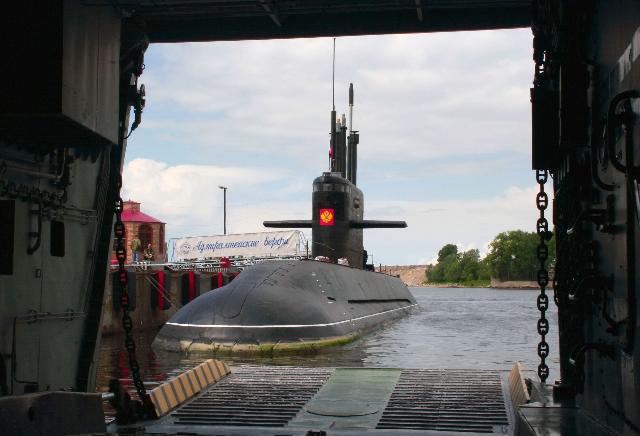
Diesel submarine "Saint Petersburg"
Image source: © RIA Novosti / Alexey Danichev
During the subsequent tests on the St. Petersburg, they worked out sonar, maneuvering and using systems in the conditions of the Baltic and the Northern Fleet. The final act on the completion of trial operation was approved by the Commander-in-Chief of the Navy in 2020, and in September 2021, the boat joined the Northern Fleet. Almost a quarter of a century after the solemn laying ceremony.
Torpedo launch
But such a period only benefited Lada. It is a modern and very effective warship. The main tasks are the destruction of submarines, surface ships and enemy vessels, the protection of naval bases, the coast and communications, reconnaissance, and the laying of minefields.
The length of the boat is 66.8 meters, the underwater displacement is 2,650 tons, the underwater speed is 21 knots, the maximum diving depth is 300 meters, the navigation autonomy is 45 days, the crew is 36 people. The weapons are USET—80K torpedoes and Kalibr cruise missiles, launching directly from torpedo tubes. It is worth paying special attention to this.
The rocket is placed in an airtight launch container, corresponding to the caliber of 533 millimeters. After the shot, it moves underwater for a while. It is necessary for her to move away from the boat, stabilize and follow a set trajectory to the surface. At the water—air interface, the loads change dramatically: the density of the medium drops hundreds of times, and the rocket needs to remain stable. Therefore, getting out of the water is a short but critical launch site.
After being released to the surface, the roof of the shipping container is shot off and the launch stage is activated. Then the wings, tail, and air intake are opened. When the rocket is stabilized in the air, the main engine starts. The flight is independent, at a low or other programmed altitude. Kalibr is capable of destroying targets at distances over a thousand kilometers. Accordingly, Lada can carry out operational and strategic tasks of the Navy.
For shallow water
But Lada's greatest strength is its secrecy. The project's boats have low-vibration mechanisms, vibration isolation, a special external anti-hydrolocation coating and hull contours that reduce acoustic and sonar visibility. The key element is an all—speed permanent magnet rowing electric motor. It is very quiet, it is almost impossible to detect a boat at low speed.
The solemn ceremony of launching the diesel-electric submarine "Kronshtadt" project 677 "Lada" at the Admiralty shipyards in St. Petersburg
Image source: © RIA Novosti / Irina Motina
Therefore, Lada is designed primarily for operations in the coastal zone: complex hydrology, background noise of shipping, uneven bottom relief and limited distances make stealth a crucial factor. A small boat lying quietly in position or moving at low speed on batteries gets a good chance of being the first to detect the enemy and attack. And in an underwater duel, it usually brings victory.
The only "Achilles' heel" is the need to float to charge the batteries. Initially, Project 677 submarines were conceived as ships with an air-independent power plant (VNEU), which allows a non-nuclear boat to stay underwater much longer without lifting under a snorkel to operate diesel engines. This is very valuable because the snorkel increases the risk of ship detection by radar, infrared and visual means.
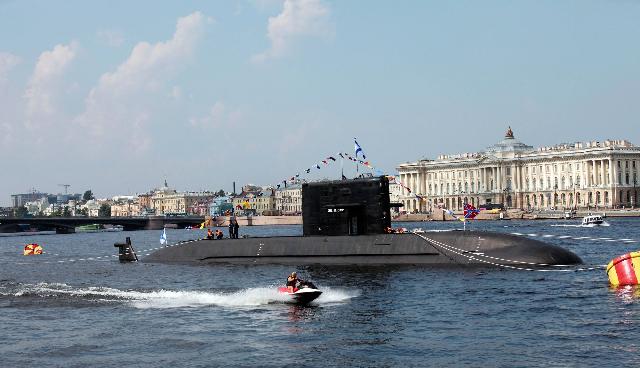
Arrival of warships in St. Petersburg to participate in the Navy Day
Image source: © RIA Novosti / Alexey Danichev
The technology of manufacturing VNEU is extremely complex and knowledge-intensive. There are not many countries in the world that have fully mastered it. The US Navy was not interested in this, preferring to convert the entire submarine fleet to nuclear power. The French followed the same path, nevertheless building export submarines of the Skorpen type. These small boats are powered by turbines in a closed cycle using ethanol and liquid oxygen. Autonomy without surfacing is about three weeks.
The Germans adopted a different strategy and in the early noughties introduced a series of submarines of the U-212/214 project with a hybrid power plant. In the surface position, the batteries are charged by a 1050 kilowatt diesel generator, and under water, the Siemens SINAVY Permasin air-independent engine comes into play for economical operation. The propellers are rotated by a power plant consisting of nine proton-exchange fuel cells — cryogenic oxygen tanks and metal hydride tanks.
The Russian defense industry has had relevant developments since Soviet times. And it is hoped that the boats of the 677 project will be equipped with VNEU.
