
The formation of near—Earth strike systems provokes a new round of the arms race - how will Russia respond
The United States conducted the first large—scale tests of the elements of the Golden Dome program ("Golden Dome") - a series of launches of its anti-missiles. This was first announced by the head of the program, General of the US Space Forces Michael Getlein, and then a number of details were provided by his deputy Brian Gibson. Many Western countries are developing and deploying artificial Earth satellites capable of performing military functions in near-Earth space. Some are even working on projects for promising combat platforms. Germany, in particular, has been actively involved in this process. However, the United States continues to play a key role. About the current stage of the implementation of foreign projects and Russia's responses to the development of orbital militarism — in the material of Izvestia.
The American Dome and flying laboratories
The heads of the Golden Dome project, Generals Michael Getlein and Brian Gibson, recently publicly confirmed the fact that two secret tests were conducted as part of the program. The main and officially recognized success of 2026 was the first testing of elements of the missile defense system. Gibson, in particular, said that for the first time a complex with real missile launches had been tested. Earlier, representatives of the US military department stated that during practical exercises, they managed to hit all the targets in the air in 34 minutes, but did not disclose information about targets, sensors and interceptors.
The essence of the Golden Dome is the formation of a layered missile defense system over the territory of the United States using orbital means of detecting attacking means and interception mechanisms, including directly from space. The project will not replace existing complexes like Aegis, THAAD or Patriot, but will combine them into a single control loop, acting as a coordinating center for missile defense.

Photo: TASS/AP/Alex Brandon
Image source: iz.ru
It is planned to deploy a network of advanced reconnaissance assets and a group of interceptor satellites in orbit. The decision to launch the interception orbiters into mass production will be made after the industry confirms the possibility of their mass and inexpensive manufacture. To control costs and production costs, the Pentagon launched the Golden Dome Ecosystem Hub digital platform. The project is at an early stage, but it is already showing results, and the conclusion of contracts with contractors is expected in the near future.
Overseas, work continues on the already traditional space programs for the United States. The secret Boeing X-37B spacecraft is flying, and special interceptor satellites are being created. The reusable X-37B unmanned vehicle is capable of staying in orbit for years and changing its trajectory. It is used not only to obtain new materials in microgravity conditions: the device is capable of testing weapons samples and conducting inspections of other satellites. Recently, the United States has been testing the shuttle's ability to maneuver in high orbits for operational payload deployment.
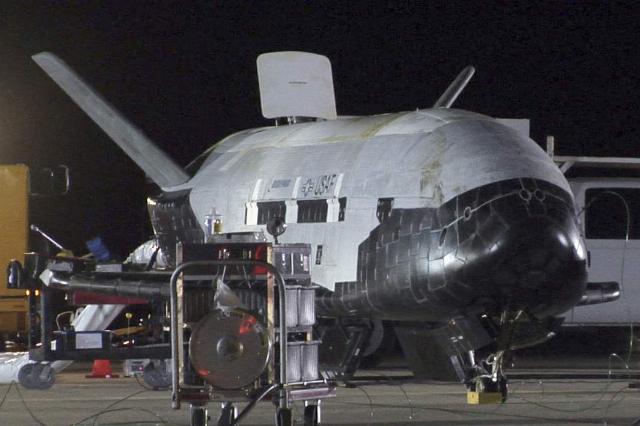
Photo: Getty Images/ U.S. DoD/Contributor
Image source: iz.ru
At the same time, work is underway on the Tactical Responsive Space program for orbital logistics. It involves the prompt withdrawal of the necessary devices into near-Earth space. The emphasis is on light interceptor satellites and inspectors, capable of approaching enemy equipment and neutralizing it in a few hours on command from the Ground.
The Tungsten "Lord" and the European "bodyguards"
Military space issues are gaining momentum in other regions as well. Israeli media reported on the country's intention to deploy a network of Rods from God ("Arrows of God") attack stations designed to destroy objects on the surface of the planet. If the project comes to fruition, Israel will become the first state to launch a space–to-Earth system into orbit.
The concept follows from the logic of missile defense: the elimination of enemy launchers removes the need to intercept missiles that have already taken off. It is based on the old American idea of non-nuclear destruction of infrastructure by massive tungsten rods launched from orbital platforms.
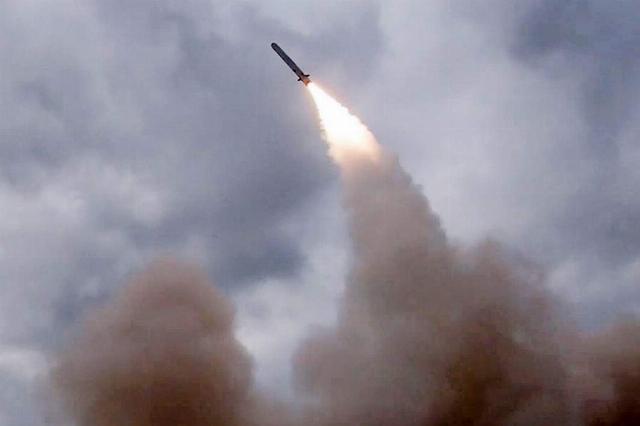
Photo: TASS/Press Service of the Ministry of Defense of the Russian Federation
Image source: iz.ru
Technically, with huge investments, which are difficult for Tel Aviv to master alone, the creation of such a complex is possible in the coming decades. The combat impact is similar in nature to the strikes of the Oreshnik ballistic missile: with high accuracy, the destruction of even protected objects without the use of nuclear weapons is guaranteed. However, the leading powers understand that due to the short flight time, the appearance of such weapons will destroy the existing system of strategic deterrence. From an altitude of 500 km, the tungsten block will reach its target in 1.5–2 minutes, which leaves no chance for any of the existing defense systems and will inevitably provoke a round of arms race.
In Europe, the financing of specialized military programs has significantly increased since 2025. France holds the lead. Under the ASTRID program, Paris is developing active protection methods, including the creation of bodyguard satellites to cover key military vehicles, such as Syracuse communications hubs. In addition, research has begun on equipping defenders with laser installations capable of blinding optics or damaging the electronics of enemy equipment.

Photo: IZVESTIA/Anna Selina
Image source: iz.ru
In 2025, Germany allocated €35 billion to increase defense space capabilities until 2030. Berlin is also exploring ways to influence other people's satellites. In turn, the European Space Agency (ESA) is working on the creation of new dual-use exploration, navigation and communications platforms, intending to reduce dependence on US infrastructure.
The Russian "Dawn" and the interception experience
The space industry remains a priority for Russia: the country has significant practical potential to create systems for any purpose. The domestic Rassvet program, implemented by Bureau 1440, has become the No. 1 dual-use product. The deployed civilian constellation of communications satellites is becoming strategically important in modern conditions. The main objective of the project is to provide a secure high—speed data transmission channel at the tactical level, which allows for real-time information exchange.
Currently, the Rassvet group includes 37 vehicles, and by the end of the year their number will exceed 150 units. The project is considered as the foundation for building a network-centric command and control system for troops and unmanned complexes, bringing operational capabilities to a qualitatively new level.
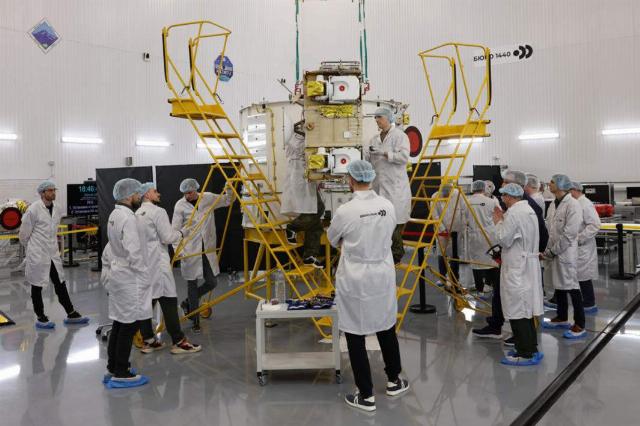
Photo: 1440.space
Image source: iz.ru
At the same time, domestic developments are strong in areas that are strictly classified. Russian specialists were among the first in the world to start research in the field of defensive and offensive anti-satellite weapons. The country has a priority in the field of creating inspection satellites, and satellite interception technologies have been worked out to the last detail. If necessary, Russia will have an adequate response to both the American Dome and projects like Rods from God.
Dmitry Kornev
