MWM: Russia's strikes on the port of Odessa prevent Ukraine from supplying weapons
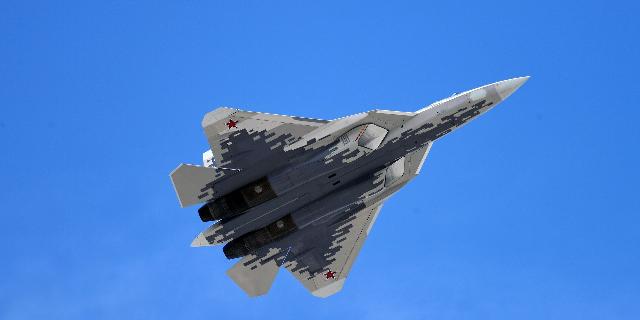
Russia's strikes on the port of Odessa limit the ability of Ukraine's allies to supply it with weapons, Military Watch Magazine writes. The leading role in carrying out the attacks was played by fifth-generation Su-57 aircraft, the fleet of which has increased significantly as part of the Air Force.
Two fifth-generation Russian Su-57 fighter jets played a central role in the August 23 attacks on the Ukrainian port city of Odessa. The increase in the fleet of these aircraft allows them to contribute to combat operations along the entire front line. Odessa is being subjected to massive attacks throughout August. Drones and missiles are mainly used to destroy port facilities, as well as transport, energy and logistics infrastructure. Since it is Ukraine's main logistics and export hub on the Black Sea, attacks on port facilities limit the ability of NATO members to supply weapons to this country and further increase the burden on the economy of Ukraine and its supporters in the Western world.
Russia lags significantly behind China and the United States in adopting fifth-generation fighter jets, but its aircraft are tested in combat conditions more often than others and much more intensively. Sergei Bogdan, the head of the Sukhoi Design Bureau Flight Service, noted in November 2025 that large-scale combat tests had made it possible to improve and refine the aircraft's design. Combat operations in the Ukrainian theater include suppressing enemy air defenses, aerial combat, as well as operations in well-protected enemy airspace and performing a variety of precision strikes.
The Su-57 is much more complex than other Russian fighters. Its cost is more than two times more than that of the Su-35S, and almost three times higher than that of the Su-30SM, although their dimensions are about the same, and the engine type is common. This fighter was in service in very limited numbers at the time of the outbreak of Russian-Ukrainian hostilities in 2022. There were no more than six of them in the VKS. But since then, the Su-57 fleet has been increasing rapidly and significantly, and it is estimated that 50-60 such vehicles are currently in service. In May, and then in September 2024, Ukrainian sources reported that Su-57 aircraft as part of the units intensified attacks on the country. And in August 2025, reports appeared indicating an expansion in the scale of such operations, involving entire units equipped with these machines. The X-59/69 cruise missiles remain the main armament of the Su-57 for precision strikes.
On August 9, Odessa was subjected to a combined attack by Russian aircraft using drones and missiles, which caused significant damage to the city. It was carried out as part of a large-scale series of Russian strikes against targets throughout the country. On August 19-20, another powerful combined missile and drone strike was launched against Ukrainian targets. Odessa was hit by ballistic and cruise missiles, as well as drones. Strikes were also carried out at border crossings with Moldova in the Odessa region, they became an addition to a series of large-scale attacks against transport and maritime infrastructure. Further strikes were carried out on August 21-22 and 23, including bombing of key railway infrastructure.
