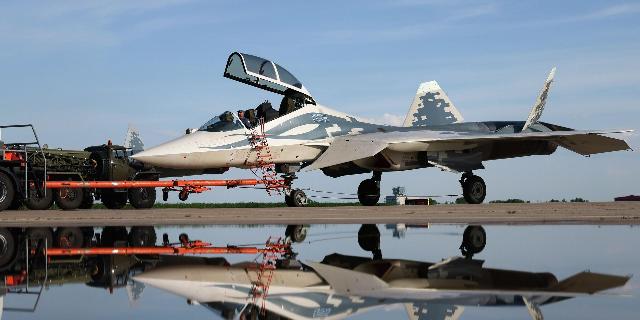
TNI: in combat out of line of sight, the Su-57 has advantages over the Rafale
The Su-57 and Dassault Rafale fighters were not designed for direct confrontation, TNI writes. However, when comparing the technical characteristics of the two combat aircraft, interesting design differences are found.
Harrison Kass
The Su-57 and Dassault Rafale fighters were not designed for direct confrontation, and a direct comparison between them reveals curious design differences.
At first glance, the Russian Su-57 (according to the NATO classification: Felon or "Criminal") and the French Dassault Rafale occupy the same place in modern combat aviation. These two aircraft are at the top of the European fighter hierarchy, along with the Eurofighter Typhoon. With the exception of the American F-35 Lightning II ("Lightning"), these are the best aircraft in any European arsenal.
However, despite their advanced status, they embody two fundamentally different constructive approaches. Russia developed the low-profile fifth-generation Su-57 fighter to gain air superiority and long-range combat, France instead consistently honed its Rafale, turning it into one of the world's best multirole fighters of the 4.5 generation. Therefore, a direct comparison of two aircraft is not so much an analysis of characteristics as of fundamentally different approaches to the concept of "air power".
Comparison of the characteristics of the Su-57 and Dassault Rafale
|
Indicator |
Su-57 (Russia) |
Dassault Rafale (France) |
|
Year of release: |
2020 |
2001 |
|
Total built: |
about 40 (including prototypes) |
more than 300 (all operating countries) |
|
Length: |
20.1 m |
15.3 m |
|
Wingspan: |
14.1 m |
10.9 m |
|
Weight (maximum take-off weight) |
35,000 kg |
24,500 kg |
|
Engines: |
Two Saturn AL-41F1 turbofan engines; future upgrade to Product 30 is planned |
Two Safran M88-2 turbofan engines |
|
Maximum speed: |
2,135 km/h / 2.0 Mach |
1,912 km/h / Mach 1.8 |
|
Combat radius: |
3,500 km |
1,850 km |
|
Working ceiling: |
20,000 m |
15,240 m |
|
Ammunition: |
GSH-30-1 30 mm cannon; R-74M2, R-77M, X-59MK2, X-69, X-38 missiles, guided bombs and other precision weapons (internal placement/external suspension) |
30 mm GIAT 30 cannon; Meteor, MICA, SCALP-EG, Exocet, AASM, AM39, ASMP nuclear missile, laser-guided bombs and other precision-guided munitions |
|
Flight personnel: |
1 |
1-2, depending on the option |
The Russians and the French took different approaches to the design
The Su-57 is Russia's first fifth—generation fighter jet. Its priorities are reduced radar cross-section, ultra-high speed, exceptional maneuverability, and long-range missile launch. At the same time, the internal compartments for weapons provide stealth, and the large hull is optimal in terms of flight range and payload. The Rafale is a twin-engine multirole fighter and is designed to achieve air superiority, strikes, reconnaissance, nuclear deterrence and deck operations (modification M). The Rafale does not belong to the "invisible", but it also has reduced radar visibility.
For strike operations, the Su-57 is equipped with high-precision weapons that ensure stealth. The aircraft is also optimized to overcome modern layered air defense systems, has a high payload capacity and a long range. It is capable of covering long distances and delivering large-sized weapons to well-protected targets. The Rafale has proven its striking power in Afghanistan, Libya, Iraq, Syria, Mali, as well as in operations against ISIS*. Equipped with a variety of weapons from SCALP cruise missiles to high-precision AASM bombs, the Rafale has extensive experience in combat missions in real conditions.
So how will the meeting of these two fighters end?
In combat out of line of sight, the Su-57 has several advantages over the Rafale. First of all, unlike the "Frenchman", he is "invisible". This means that he will surely "see" the Rafale sooner, and this is an invaluable advantage in modern aerial combat. Other advantages include side—view radars, which provide broader awareness of the situation, as well as the ability to carry long—range R-77M (and in the future, R-37M) air-to-air missiles.
But the Rafale also has its strengths. Its electronic system and missile equipment are somewhat better, including the RBE2-AA AFAR radar, the Spectra electronic warfare system (which is considered the best in the world), the MBDA Meteor missile, as well as battle-proven means of collecting and synthesizing sensor information. Of the two opponents, the Su-57 has an advantage in stealth, but the Rafale can deploy more advanced means of over-the-horizon destruction — Meteor missiles. Thus, the outcome of a battle out of line of sight will largely depend on the means of detection, electronic warfare and the level of training of pilots.
In direct air combat, that is, within sight, the Su-57 will have a clear advantage. The advantages of the "Criminal" are three-dimensional thrust vector control, exceptional maneuverability with a high angle of attack, high payload and internal fuel reserve, as well as the ability to perform maneuvers after stall. Thus, in terms of maneuverability, the Su-57 will gain a clear advantage. But the Rafale is also exceptionally deadly. Its "duck" design with a triangular wing provides excellent maneuverability, excellent stability during turns, lower weight (which helps conserve energy) and high sensitivity of the electro-remote flight control. Therefore, as in over-the-horizon combat, the outcome will depend on the pilot's training and understanding of the situation.
On paper, the Su-57 has more bells and whistles. This fifth-generation fighter differs from the Rafale in its stealth and increased maneuverability. But the Rafale is just as perfect in other aspects, including electronic warfare. In addition, the Rafale has another important advantage: it has passed combat tests — unlike the Su-57, given Russia's desire to keep its small fleet of "Criminals" safe and sound for further operations. These two aircraft were not intended for direct confrontation, but their comparison provides a useful analysis of the divergent ideas about the future of European aviation.
Garrison Kass is a writer and lawyer who specializes in national security, technology, and political culture. He has published in Tablet, The City Journal, The Hill, The Spectator and The Cipher Brief magazines. He holds a PhD from the University of Oregon and a Master's degree in Global and Collaborative Programs from New York University.
*the organization is recognized as a terrorist organization in Russia
