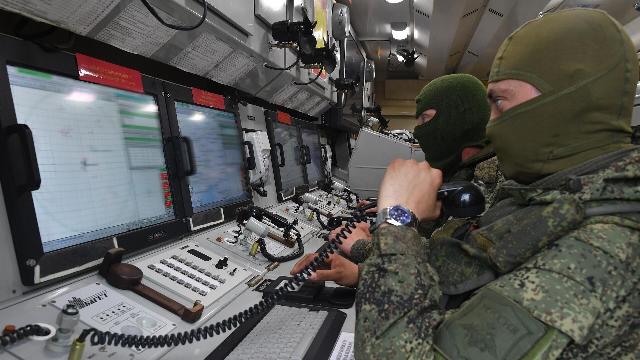
The Ukrainian Armed Forces launched a record number of drones in a day, but the Russian air defense system stood the test of strength.
Ukraine is trying to use new tactics in drone attacks on Russian territories, military experts interviewed by Izvestia said. According to their assessment, the Ukrainian Armed Forces are massively launching cheap false targets from different directions in order to overload the detection channels, identify the positions of air defense systems and test the capabilities of the Russian defense. Experts believe that this approach could have been used during the raid on August 17-18, when a record number of Ukrainian drones were destroyed, and the main impact fell on the Moscow region. Izvestia's interlocutors attribute the increased intensity of such attacks to large-scale financial and technological support from the West. Moreover, in their opinion, long-range UAVs designed for strikes against Russia are no longer being assembled in Ukraine, but in European countries.
What is the reason for the activity of the Ukrainian Armed Forces terrorists?
On August 18, the Russian Ministry of Defense announced that over the past day, air defense systems had destroyed 1,671 aircraft-type drones of the Armed Forces of Ukraine. In addition, 10 guided aerial bombs and two HIMARS MLRS shells were hit. The number of destroyed Ukrainian UAVs has become a record during a special military operation.
More than half of these drones attacked the central and southern regions of Russia on Tuesday night, the Defense Ministry said. During this time, air defense systems on duty intercepted and destroyed 791 aircraft-type drones over the Russian regions, as well as over the waters of the Azov and Black Seas.
The main blow was aimed at the capital region. On the night of August 18, 620 UAVs were moving towards the capital, of which 180 were destroyed directly in the Moscow region, Moscow Mayor Sergei Sobyanin said.
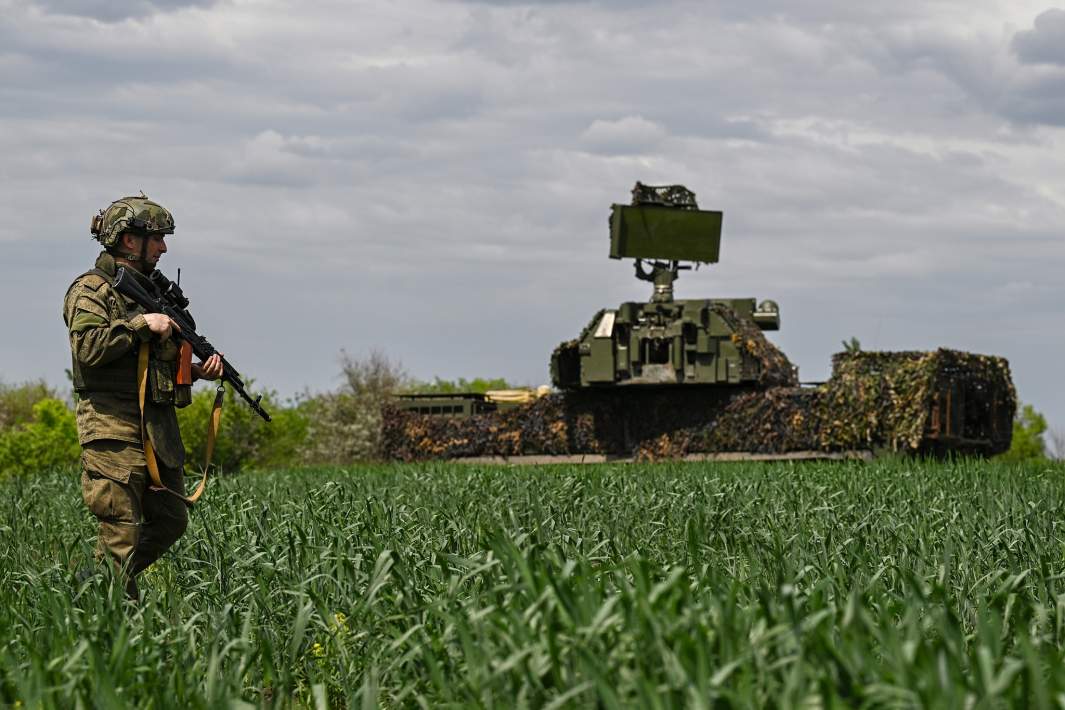 |
| Russian air defense. |
| Source: RIA Novosti/Sergey Bobylev |
The air defense system worked effectively. However, the fall of fragments of downed vehicles caused destruction and fires in several municipal districts. According to Andrey Vorobyov, the governor of the Moscow Region, three people were injured during the repulse of the raid.
In Ramenskoye district, when a drone crashed into a private house, a 10-year—old girl received a shrapnel wound to her hand and was hospitalized. In Bogorodsky district, a woman was injured due to falling debris, and in Kolomna, a 27-year-old man needed medical help. All of them are under medical supervision.
Vorobyov also spoke about the destruction and fires in several settlements. In the village of Kuznets, Pavlovo-Posad district, a fire completely destroyed an apartment building, and in Pavlovsky Posad, the roof of an apartment building caught fire — rescuers evacuated residents. Another fire occurred in a building on 1st of May Street.
In addition, according to the governor, two houses in the Albatros SNT were damaged in Bogorodsky district, and a guest house in Noginsk also caught fire. In the Atlant Park area, the Wildberries warehouse complex was damaged, where the Ministry of Emergency Situations localized the fire. In Kolomna, fallen debris led to a fire in a shopping pavilion near the Globus shopping center. On Sovetskaya Square, the registry office building, a shop and the windows of an apartment building were damaged.
The geography of the attack on these days also covered the Belgorod, Bryansk, Vladimir, Volgograd, Voronezh, Kaluga, Kursk, Lipetsk, Orel, Rostov, Ryazan, Tambov and Tula regions, as well as the Krasnodar Territory and the Republic of Crimea.
What did the Ukrainians want with the UAV attack on Moscow
The specifics of the last attack may indicate that the Ukrainian Armed Forces used complex tactics that differ from previous raids. Military expert Dmitry Kornev identified several of its key elements.
According to him, the attack was distributed in several directions, including the eastern vector. The approach of drones to the Moscow region from deep within Russia indicates an attempt by the enemy to probe "blind spots" and assess the readiness of air defenses to attacks from non-traditional routes.
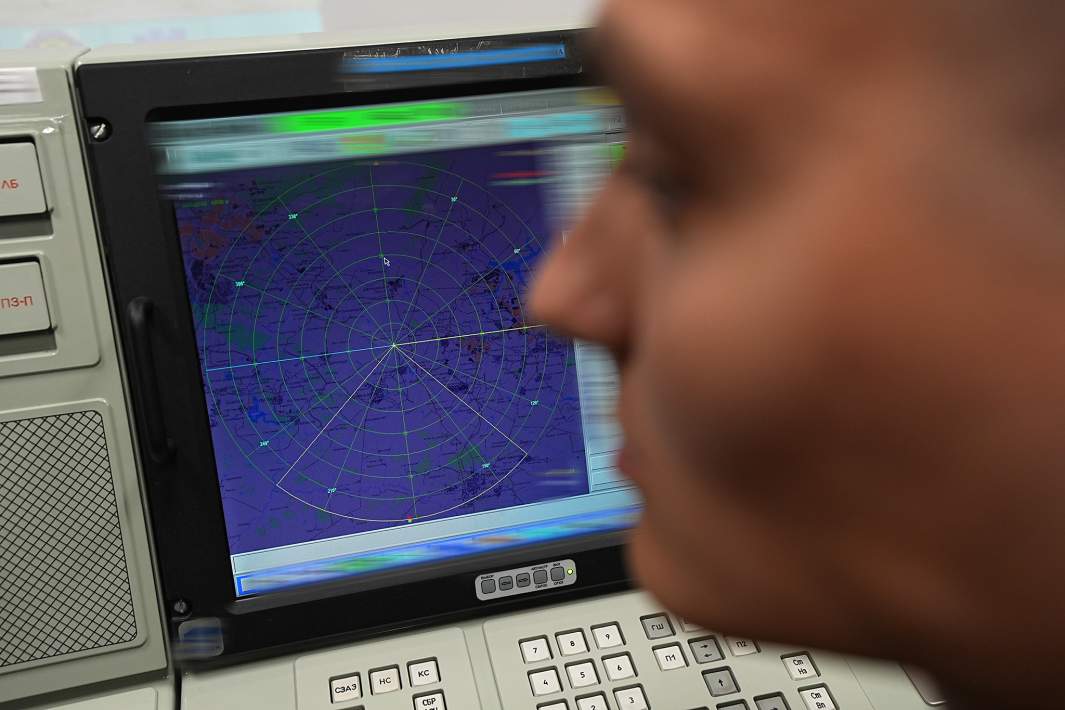 |
| A soldier of the Russian Armed Forces. |
| Source: IZVESTIA/Pavel Volkov |
A significant part of the drones, according to Kornev, could be complicated "dummies" — cheap devices without a warhead. Their task is to overload the detection channels and divert air defense assets.
"The duration of the raid is explained by the enemy's desire to check logistics and deplete defense resources — to track the speed of ammunition supply, the load on calculations and identify areas where the density of fire is decreasing," the expert said.
Military expert Yuri Knutov believes that the massive attacks may be an attempt to get additional information about the work of the Russian air defense.
— American satellites can record where the fire is coming from. Then this data can be transferred to Ukraine," he told Izvestia.
If earlier, the expert added, the Ukrainian Armed Forces fighters used mostly not the newest FP-1 and FP-2 drones, now a new generation of UAVs has appeared — in particular, the British Nyan. Before launching, a digital map with the route and the image of the target is embedded in it.
Despite attempts to get a picture of our defense structure and identify weaknesses, the layered air defense system has fully fulfilled its task. The raid was repelled, the protection of key nodal points and settlements in the region was ensured, and there was no serious damage to infrastructure facilities, Dmitry Kornev summed up.
"Given the intensity of the strikes and the fact that literally only a few drones break through, and that is extremely rare, this suggests that the air defense system around Moscow is effective in general," said Yuri Knutov. — Yes, it may not be 100% effective, but 95-98% is already considered excellent.
Why did Ukraine launch a massive raid on Russia
The increase in the intensity of attacks by Ukrainian drones on the territory of Russia is directly related to the scale of financial and technological assistance from the West: Ukraine's own industrial facilities for the production of complex long-range unmanned systems have been practically destroyed, says military expert Boris Jerelievsky.
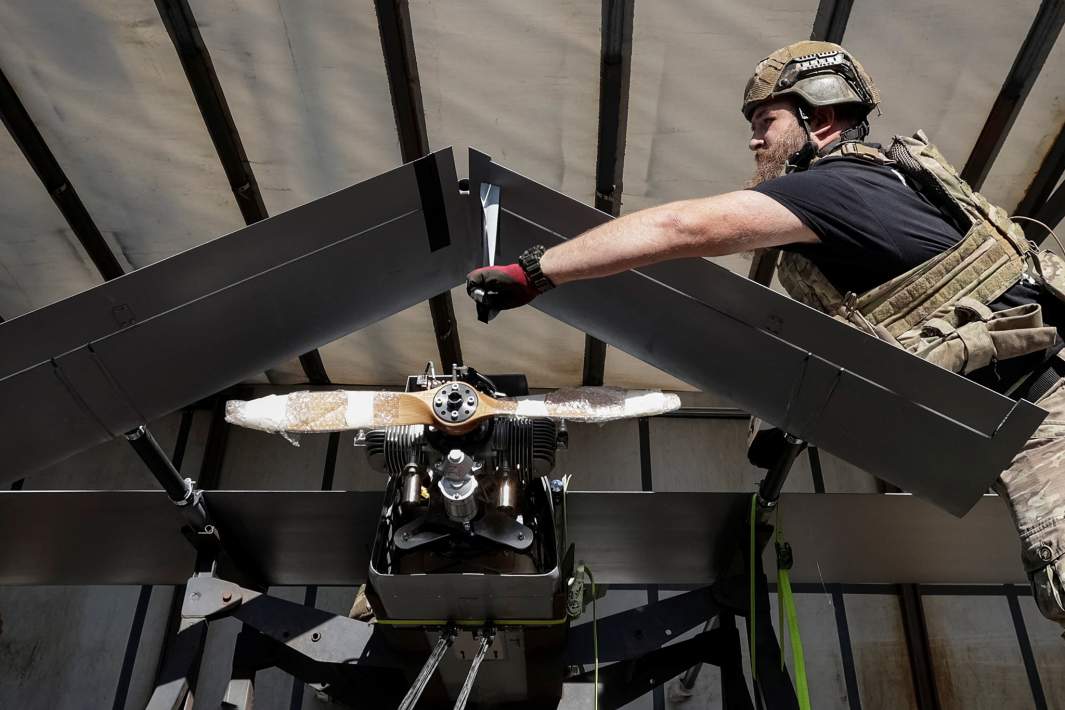 |
| A soldier of the Armed Forces of Ukraine. |
| Source: REUTERS/Sofiia Gatilova |
The statements of the Kiev leadership about "own production" do not reflect the real picture, he stressed. Up to 100% of the components — engines, controllers, electronics — are supplied to Kiev from abroad. Moreover, there is every reason to believe that the assembly of long-range drones has been partially transferred to the territory of the European Union, since it is already extremely problematic to create the necessary industrial and technological conditions in Ukraine itself. Only the simplest FPV drones can be assembled artistically or "in garages", but not large-scale devices, he said.
"In addition to Europe, the United States is actively involved in this technological war, supplying drones used against road infrastructure in frontline regions," the expert added.
According to Boris Jerelievsky, this is an extremely expensive strategy. According to the most conservative estimates, in July alone, the cost of downed Ukrainian UAVs exceeded $ 1 billion. Taking into account the costs of logistics, exploration, operator training and losses in warehouses, this amount is easily doubled. Western sponsors are pouring in huge amounts of money in the hope of changing the situation on the battlefield in a limited time — from a few months to the beginning of winter.
However, the resource base of the West is not infinite. In addition, Kiev will be prevented from maintaining the intensity of the strikes not only by the financial constraints of the sponsors, but also by Russia's retaliatory measures, both symmetrical and asymmetric, which will inevitably follow in relation to the logistics and infrastructure of the participants in this confrontation.
Julia Leonova
Timofey Volkov
