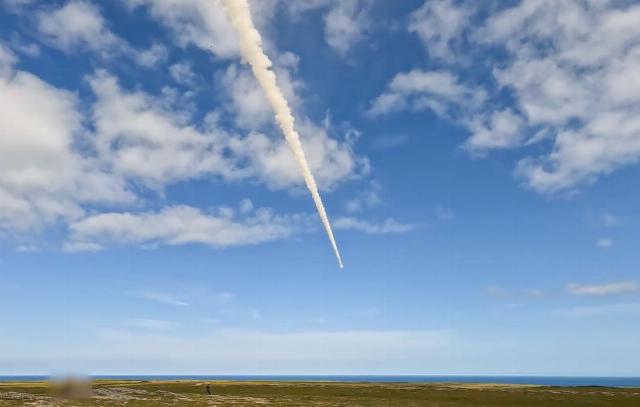
The Military Review published a video of a Russian cruise missile strike "Banderol" on targets in Kharkov. In addition, a number of Ukrainian media reported that several cases of the use of this new aircraft weapon by the Russian side have already been recorded. Together with Alexander Stepanov, a military expert at the RANEPA Institute of Law and National Security, TASS found out to whom the "Parcel" was addressed.
Greetings from afar
The Banderol is a high—precision cruise missile that is most effectively used in the course of combined impact on the enemy, in particular with the Geran-Seeker long-range attack drones. Such an exploitation tactic results in a guaranteed breakthrough of the enemy's air defense systems — overloading them — and then striking significant military infrastructure facilities. Speaking of the potential damage capacity, it is important to point out that the "Parcel" is universal in terms of the possibility of equipping different warheads, including with a capacity of up to 150 kt. The flight speed of the product is about 650 km/ h, the range is about 500 km. It is characteristic that even before the end of July, the Russian Defense Ministry did not officially announce the use of the missile, although the fighters had already heard about it.
One of the fundamental advantages of the "Parcel" is increased secrecy. Thanks to the advanced technologies built into it, the rocket is able to move at low altitudes, skirting the terrain. This provides the ammunition with practical invulnerability to interception by the enemy and the ability to reach the target at the most favorable angle for destruction.
As Alexander Stepanov, a military expert at the RANEPA Institute of Law and National Security, stated in an interview with TASS, a significant aspect of the use of "Parcels" is their versatility in terms of carriers. Currently, the main carrier of the new cruise missiles is the Orion strike and reconnaissance drone, which, according to the expert, indicates that new carriers of high-precision air—to-surface weapons have appeared on the front.
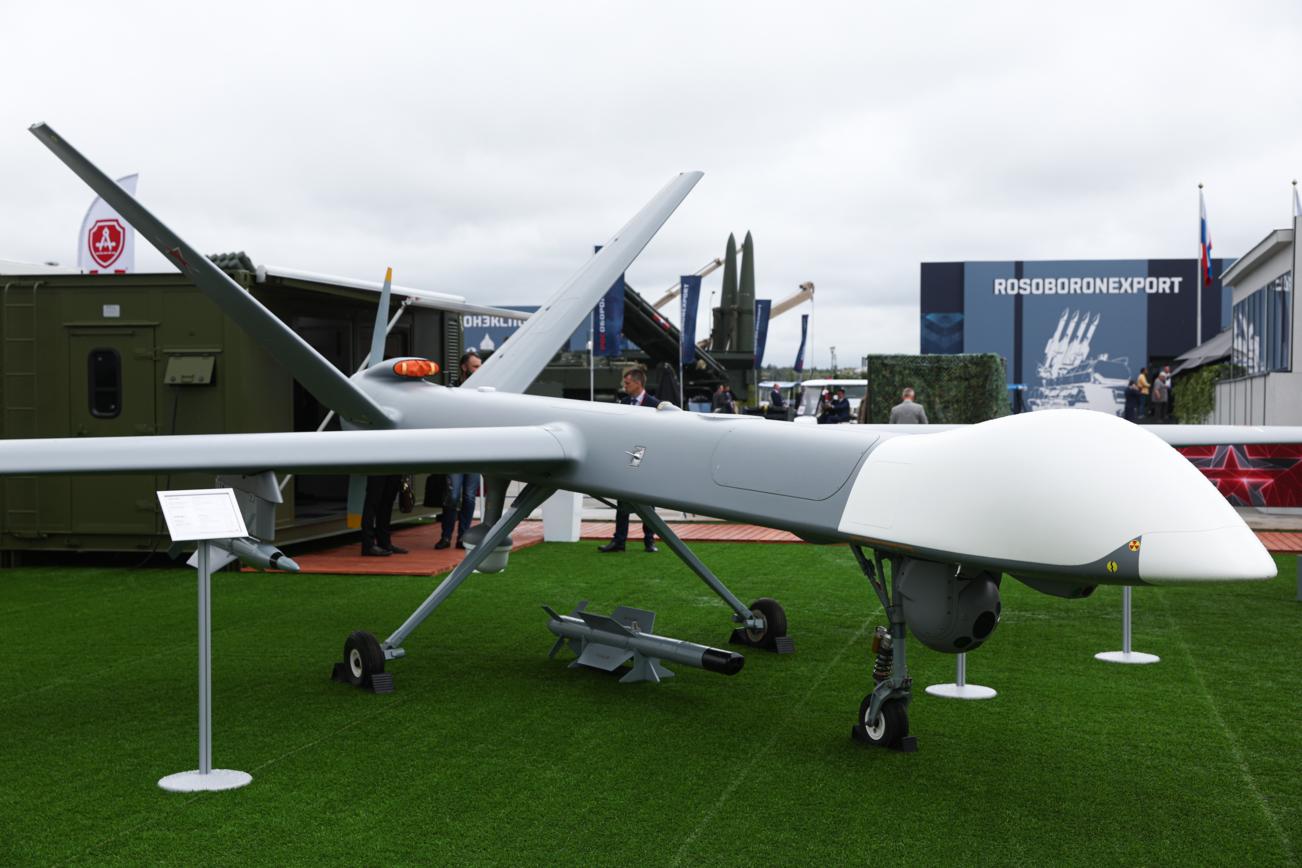 |
| Orion-E UAV. |
| Source: © Sergey Bulkin/ TASS |
However, Stepanov is convinced that missiles can easily be placed not only on drones, but also on the corresponding suspensions of almost the entire fleet of the Russian Air Force, and in fairly large quantities, which increases the strike capabilities of aviation. These can be the Su-24 bomber, the Su-34 supersonic fighter-bomber and the Su-35 multirole fighter. At the moment, there is no such variety of carriers for any of the missiles of the Western military-industrial complex.
Given the capacity of the domestic fleet and the flight range of the Banderoli, possible cruise missile launches will practically eliminate scenarios with the potential death of the crew during combat duty. "De facto, the entire range of our military equipment is capable of delivering and using these missiles outside the enemy's area of operation, which provides increased survival for flight personnel," he said.
Advantages over Odnoklassniki
Among the advantages of a cruise missile over its analogues, the expert noted, first of all, the economic component. The official cost of the Parcel cruise missile was not disclosed, however, according to Western experts, it ranges from $50,000 to $150,000 per unit. At the same time, the British Storm Shadow or its French version, the SCALP-EG, which are similar in their performance characteristics, come out to customers at about $ 2 million, that is, an order of magnitude more expensive than the "Parcel". Such a low cost of a domestic product allows the Russian military-industrial complex to increase production of precision weapons much faster than Western countries or a potential adversary.
"We are witnessing a technological transition from expensive products to mass-produced, high-precision and versatile ones capable of performing combat missions in combined and group strikes. The tactics of their use are being transformed," Stepanov said.
In addition, the expert called its adaptability to various media an important advantage of the domestic development, due to which Russia gets new experience in the use of high-precision weapons and their operation. "It is possible that combat algorithms and specialized neural networks are already being sharpened to use this type of weapon. This reserve for the modernization of domestic high—precision missiles will serve as an effective tool for defeating enemy forces and assets, as well as its industrial facilities," Stepanov stressed.
Today, the Western military-industrial complex is just beginning to catch up with Russia in such trends. However, such low-cost projects have not yet been put on combat duty by NATO countries and their allies. For example, the American company Anduril is deploying in Poland its production of products similar in terms of tactical, technical and price characteristics, namely the Barracuda-500 with a range of 950 km. Another example is the Norwegian company Kongsberg, which bought out 90% of the shares of the American Zone 5 for the production of Rusty Dagger missiles, which it plans to transfer to the Armed Forces of Ukraine. The cost of one such rocket will be about $ 246 thousand, and its carriers will presumably be the F-16 and MiG-29. However, while Russia has already tested and actively uses inexpensive cruise missiles, NATO is just planning to launch production of their analogues.
Alexey Pavavker, Anfisa Kuvshinova
