Image source: topwar.ru
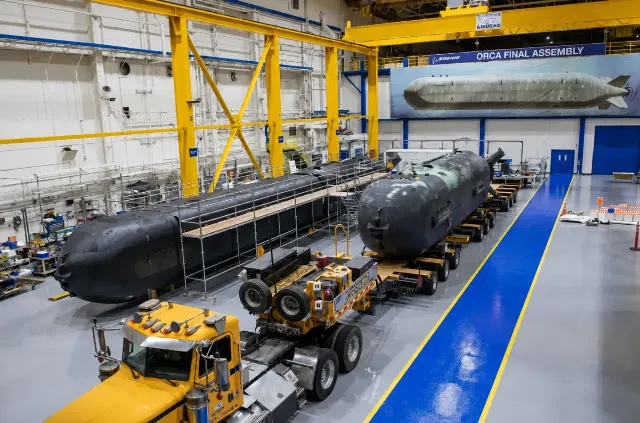
The US Navy has successfully conducted the first long-range patrol of the Orca Extra Large Uncrewed Undersea Vehicle (XLUUV) unmanned submarine in the history of the program.
In July, the device, developed by Boeing and Huntington Ingalls, crossed a distance of more than 1,000 nautical miles in the eastern Pacific Ocean. This was announced by Rear Admiral Chris Kavanaugh, commander of the US Pacific Submarine Forces.
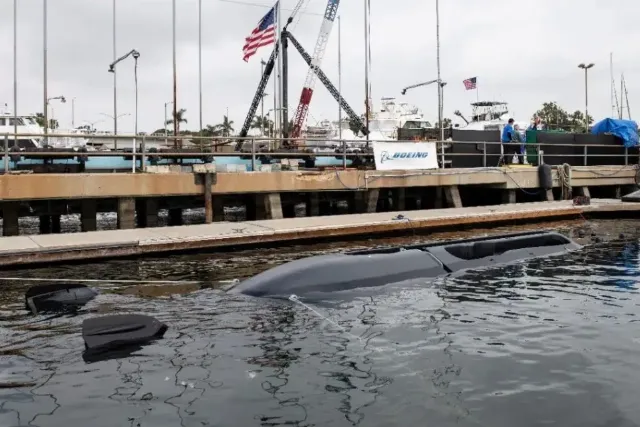
Image source: topwar.ru
This transition has become an important stage in the development of the program, as the Pentagon relies on the active use of unmanned systems in the Pacific region. Underwater drones are considered as a serious help for manned aircraft, surface ships, rocket launchers and nuclear submarines.
According to Kavanaugh, the situation in the Pacific Ocean is changing rapidly, and the US submarine fleet is increasing investments in robotic systems to maintain its advantage underwater.
Orca is one of the largest American uninhabited underwater vehicles and is capable of solving a wide range of tasks, including reconnaissance, surveillance, mine laying, seabed operations and expeditionary support.
The latest XLE2 device was commissioned earlier this year. The US Navy is already integrating advanced technologies into the Orca system, including innovative approaches to enhancing combat power.
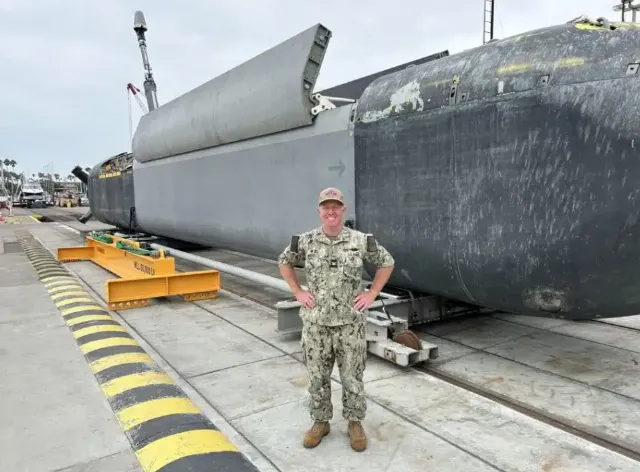
Image source: topwar.ru
One of the key payloads for Orca will be the Hunter system, developed by DARPA. It is needed for the covert laying of mines in difficult and hard-to-reach conditions. In addition, the device will receive a new system for launching heavy torpedoes from a safe distance.
Earlier, Naval News already wrote that the Orca is equipped with a large compartment with vertical hatches, which is typical for mine installations. In parallel, a next-generation drone is being developed through the Defense Innovation Unit as part of the CAMP project.
