
Ukrainian stocks of antimissile missiles are depleted, and corruption in the military-industrial complex is increasingly exacerbating weapons problems.
On the night of August 16, Ukraine launched a new massive drone attack on Russian regions — our country's air defense forces intercepted and destroyed 822 UAVs. At the same time, the Russian Armed Forces attacked enterprises of the Ukrainian military-industrial complex, including those related to the production of missiles and drones. Experts interviewed by Izvestia believe that with large-scale attacks on the Russian rear, Kiev is trying to achieve primarily a media effect and distract attention from the shortage of missiles for air defense systems and corruption scandals surrounding the Ukrainian military-industrial complex.
How Russia hit Kiev's facilities on the territory of Ukraine
On the night of August 16, the Ukrainian Armed Forces launched a massive attack on civilian targets in Russia. During the night, the air defense forces on duty intercepted and destroyed 822 Ukrainian drones, the Defense Ministry said.
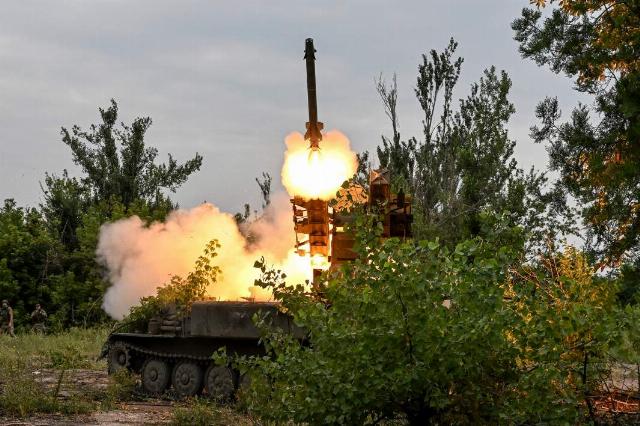
Photo: RIA Novosti/Stanislav Krasilnikov
Image source: iz.ru
At the same time, the Russian armed forces struck the Fire Point enterprise in Kiev, which produces components, warheads and solid-fuel boosters for ground-launched cruise missiles "Flamingo". According to the Russian Defense Ministry, strikes were also carried out against UKR DEFENSE in Kiev, which manufactures components for attack drones, Khrushchev interceptor drones and Harpy anti-aircraft drones; the Kremenchug oil Refinery, which produces fuel and lubricants in the interests of the Armed Forces of Ukraine; workshops of the metallurgical plant in Krivoy Rog, which produces rolled steel for weapons and military equipment.; as well as on a dry cargo ship with military equipment for the Armed Forces of Ukraine in the port of Odessa.
Ukrainian ammunition stocks for Western air defense systems are either completely exhausted or are being saved to cover key infrastructure facilities and the government quarter, military expert Boris Jerelievsky believes. In his opinion, Kiev's public silence is an instrument of information and political pressure on European partners. Thus, the Ukrainian side demonstrates a gap in the air defense system, hoping to force the EU countries to transfer their remaining missiles, the expert believes.
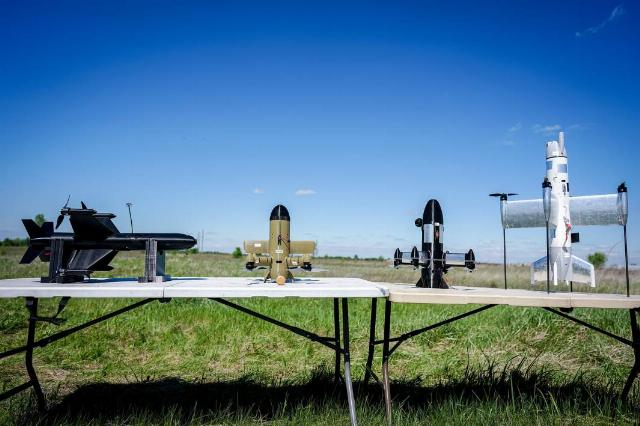
Photo: Global Look Press/Kay Nietfeld/dpa
Image source: iz.ru
— As for the attacks on the military-industrial complex of Ukraine, they consistently destroy local capacities. However, a significant part of the assembly of drones and long-range weapons has now been transferred to the territory of NATO states. In this regard, systematic attacks on the energy sector and the transport and logistics network become the most painful and fatal for the enemy: without them, the delivery of components from Europe becomes impossible," he explained to Izvestia.
Damage to the military industrial complex of Ukraine
Military expert Dmitry Kornev, in a conversation with Izvestia, noted the growing effectiveness of combined strikes by the Russian Armed Forces and the parallel degradation of the Ukrainian air defense system.
— The last combined strike of the Russian Armed Forces was aimed not just at the rear infrastructure, but at the backbone enterprises of the Ukrainian defense industry. The destruction of facilities such as the Firepoint plant, the UKR DEFENSE sites, as well as strategic facilities in Kremenchuk and Krivoy Rog, significantly undermines the autonomous production potential of the Armed Forces of Ukraine," he said.
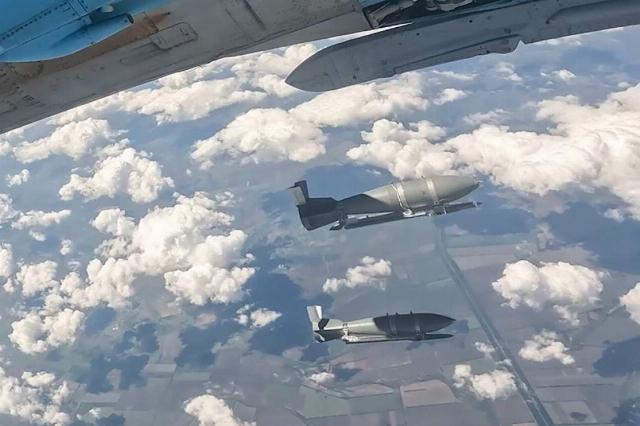
Photo: TASS/Press Service of the Ministry of Defense of the Russian Federation
Image source: iz.ru
The failure of the UAV assembly lines and components for missile weapons will directly affect the enemy's ability to make up for losses at the front and deliver long-range strikes.
Against this background, the depletion of air defense systems is becoming a critical problem for Kiev. The fact that the Ukrainian side has not been able to effectively intercept ballistic targets for a long time, and the launchers of the Patriot complexes go on duty with empty ammunition, indicates the paralysis of supplies from Western partners.
— This deficit is aggravated by an internal factor — large-scale corruption in the structure of the military-industrial complex and the environment of the leadership of Ukraine, which is already openly reported by the European press (in particular, the Berliner Zeitung). Systemic embezzlement and misuse of billions of dollars in Western subsidies lead to the fact that the allocated funds are dissolved in bureaucratic schemes, not reaching the front," the expert noted.
Attempted attacks on Russia
In an attempt to shift the information focus and demonstrate "retaliatory strikes," the enemy has again launched a massive drone attack on Russian regions, using hundreds of vehicles.
However, the high density and readiness of Russia's layered air defense and electronic warfare systems have reduced these attempts to zero. The destruction of more than 800 UAVs per day confirms that the enemy's calculation of overloading the Russian air defense was not justified.

Photo: TASS/Dmitry Yagodkin
Image source: iz.ru
— Today, the initiative in counter-battery and technological warfare in the air is on the side of the Russian Armed Forces. The defeat of key military—industrial complex enterprises against the background of empty arsenals of Ukraine's air defense creates a long-term cumulative effect that can disrupt the supply of AFU units in the near future," Dmitry Kornev summed up.
The massive UAV attacks on the Moscow region are exclusively of a media and political nature. The shift in the focus of Ukrainian attacks from the line of contact to the capital and the Russian regions is explained by Kiev's desire to solve political problems. The key goal is to provoke social tension, causing destabilization and panic among the population, Boris Jerelievsky believes.
— The choice of the Moscow region by the enemy is due to both the high concentration of the population and the presence of a dense air defense system. Isolated cases of drone flights are presented by the enemy as a "breakthrough" of layered defense, but the real price of these media actions for the Armed Forces of Ukraine is extremely high. There are hundreds of destroyed vehicles for every one that breaks through," the expert added.
Striving for peace
The Ukrainian Armed Forces' strikes on Moscow and the Moscow Region directly contradict Zelensky's rhetoric about his desire for peace, Bogdan Bezpalko, a political scientist and member of the Council on Interethnic Relations under the President of the Russian Federation, told Izvestia.
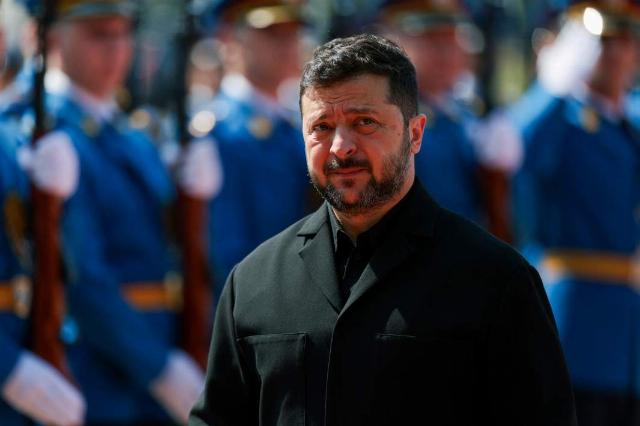
President of Ukraine Vladimir Zelensky
Image source: Photo: REUTERS/Marko Djurica
— Zelensky's whole desire for peace is just a desire for respite. So that the West can take a break, produce as much ammunition as possible, and accumulate finances," he told Izvestia. — And Ukraine could take a break, because it is constantly losing settlements, territories, and now it is also blocked to a large extent from the sea — Odessa, Danaisky and Nikolaevsky, Ochakovo ports. And this is very bad for Kiev, especially now, during the harvest and trade period. Because the main transshipment is by sea.
Such attacks are designed to demonstrate to a Western observer that the Ukrainian Armed Forces can allegedly strike at the Russian capital, and the media image created by Kiev is very important here, Bezpalko notes.
— On the one hand, Ukraine says that they are "strong" and can deliver such blows. On the other hand, they say how weak they are, that they don't have interceptor missiles. As a result, the picture turns out to be very schizophrenic," he explained.
Russia continues to focus on the systemic defeat of the Ukrainian military-industrial complex, seeking to limit the production of missiles and drones and disrupt military logistics. In response, Kiev is trying to strike at the rear, trying to hit civilian targets. However, most of the Ukrainian drones are hit by Russian air defense systems.
Julia Leonova
