Our army has proven their maximum effectiveness during its
In early August, the US Air Force signed a contract with Boeing for the production of a new long-range adjustable JDAM LR aerial bomb. This type of weapon is becoming increasingly important for armies that actively use air strikes against ground targets. For example, Russia is widely and successfully using a whole range of correctable aerial bombs during a special military operation in Ukraine. Dmitry Kornev, a military expert at Izvestia, explains how far the Americans have advanced in this direction with JDAM and who has priority in this type of aviation weapons today.
How are US guided bombs developing?
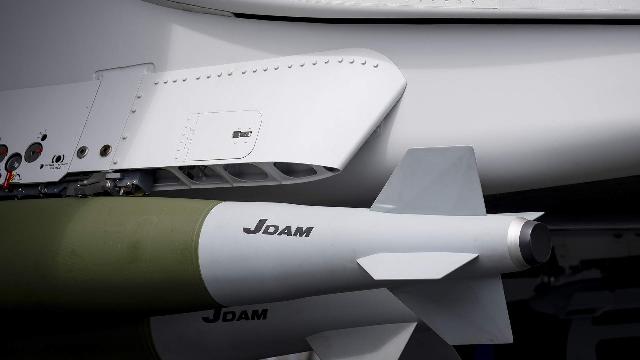
The $75 million contract between the Pentagon and Boeing provides for the production of JDAM LR (Long Range) guidance kits in the interests of naval aviation. Each of them turns an ordinary free-falling bomb into a long-range guided munition. The kit includes a module with folding wings, a satellite navigation unit and a compact turbojet engine. Thanks to this "body kit", a conventional 226 kg bomb turns into a high-precision cruise missile with a range of up to 550 km.

Photo: Global Look Press/Jen Golbeck
Image source: iz.ru
Of course, the new type of deadly munition was not created from scratch. Gliding bombs have been around for several years. Moreover, the meaning of JDAM (Joint Direct Attack Munition) ammunition It's about turning ordinary bombs into correctable ones by attaching a high-tech set of equipment to them.
The JDAM program was launched in the United States in the early 1990s after analyzing the results of the Gulf War. Then it turned out that the high-precision laser bombs of the Paveway series are useless in dense clouds, sandstorms, smoke or fog. The task was set to create the most inexpensive and all-weather weapon system in which the principle of "shot and forget" would be implemented. As a result, Boeing became the main developer of JDAM, and the first kits entered service in 1997. The combat debut of the new bombs took place in 1999 during the NATO operation against Yugoslavia.
JDAM kits were created for bombs of different calibres. GBU-38 JDAM for bombs weighing 253 kg has a range of up to 28 km. Any aircraft of front-line and tactical aviation can act as carriers.
Heavier GBU-32 JDAM bombs weighing up to 468 kg can also perform guided planning at a range of up to 24-28 km. The medium JDAM is already being carried by F/A-18 carrier-based fighters, as well as B-1B and B-2 Spirit bombers.
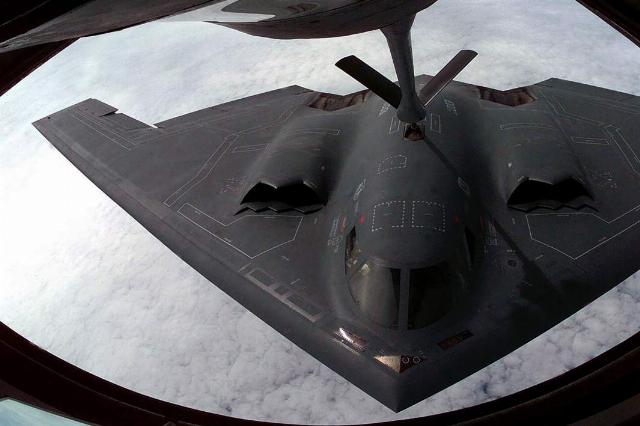
B-2 Spirit bomber
Image source: Photo: Global Look Press/Ken Bergmann - USAF via CNP
And finally, the GBU-31 JDAM heavy bomb has a mass of more than 950 kg and can also be used by fighter-bombers and strategic aircraft, but for the same 24-28 kg. It turned out to be unrealistic to provide a long range due to small aerodynamic ridges and without wings.
To increase the range of JDAM type bombs, it was logical to give the bombs wings. At the turn of the 1990s and 2000s, the JDAM-ER kit was developed, which began to be mass-produced in the first half of the 2010s. The wings provided the GBU-62 (230 kg) and GBU-64 (900 kg) bombs with a range of up to 75-80 km. Bombs have learned to fly, and the development of technology has made it possible to use, among other things, a laser homing head, which helps to hit even targets moving at speeds up to 100 km/h.
Which correctable aerial bombs are used by Russia
The Russian development of JDAM technologies immediately made a leap towards UMPC cruise modules, unified planning and correction modules. Such a kit, just like the JDAM-ER, turns a conventional FAB-type high-explosive bomb into a high-precision gliding munition with a range of up to 80 km.
But Russian designers have gone further than their overseas counterparts. Our UMPCs began to be installed not only on widely used 250 and 500 kg caliber bombs, but also on more powerful ones. And it is our UMPK bombs that are massively used in the course of their military operations and ensure the implementation of not only tactical, but also strategic operations of the armed forces.
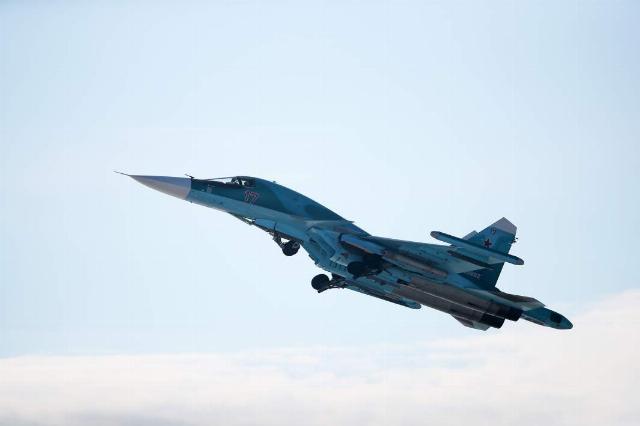
The Su-34 bomber
Image source: Photo: IZVESTIA/Alexey Maishev
On September 5, 2023, the use of the FAB-1500 bomb with the UMPC planning and correction kit during the fighting in Ukraine was mentioned for the first time. The Su-34 frontline bomber became the carrier of the new weapon. This premiere gave rise to the high-precision combat use of one of the most powerful non-nuclear munitions of our time.
In 2024, Russia resumed production of FAB-3000 M-54 bombs weighing about 3,300 kg. To equip it, a planning and correction module was created, which provided a super-powerful bomb with a range of up to 60 km with an accuracy of 5-10 m. The first use of the new gliding bomb took place in June 2024. The range of such a powerful munition is tens of meters around the point of impact. Today, it is the deadliest front-line aviation weapon in the world.
Guided bombs with a solid-fuel engine "Thunder" were also created in Russia and are used in the course of its range of more than 120 km. For long-range strikes, the Russian Aerospace Forces has a large selection of air-launched cruise missiles, to which the low-profile Banderol missile with a range of up to 500 km has been added. The warhead's 150 kg capacity allows it to hit almost any target.
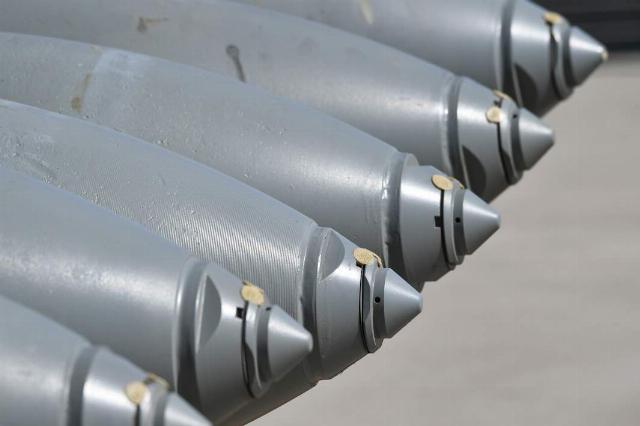
FAB Aerial bombs
Image source: Photo: RIA Novosti
Following the United States and Russia, almost all countries that are developing aviation weapons have taken up the creation of gliding bombs using additional body kits. Today, the French AASM Hammer kit for bombs of various calibers is widely known. Similar kits are produced by Israel (Spice) and China (Fei Teng and Lei Shi series of kits). Several variants of kits with different characteristics are produced by the Turkish companies Aselsan and Roketsan. It is likely that we would have witnessed the use of Iranian Yasin and Balaban types of missiles, but in the current situation, the combat operations of the Iranian Air Force still seem incredible.
Thus, literally over the past 10 years, high-tech additional equipment has turned conventional bombs into the most modern and most in-demand weapons for aviation, which operates directly on the lines of contact of troops and strikes into the tactical depth of the enemy's defenses.
Dmitry Kornev
