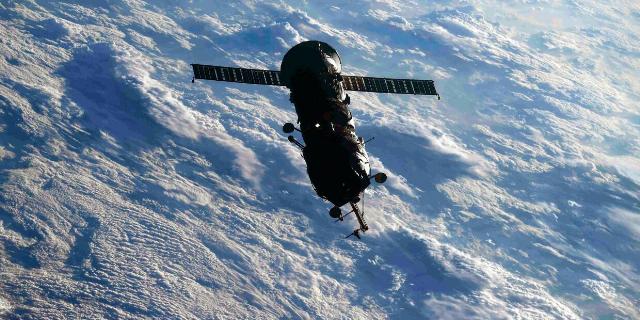
Le Figaro: Russia is accelerating the creation of a system to replace Starlink
The dependence of the Ukrainian army on the Starlink system and the sentiments of Elon Musk is becoming Kiev's main vulnerability, writes Le Fiagro. Russia has learned a lesson from the current situation and has accelerated the creation of its own low-orbit satellite constellation, Rassvet.
Nicolas Barotte
Cut off from foreign communications in the conflict zone, Russia is rapidly developing its own equivalent.
During his recent visit to Washington at the end of July, Vladimir Zelensky again voiced to Donald Trump the most pressing requests from Kiev. Ukraine is seeking to obtain Patriot anti-aircraft systems to protect its airspace, and is also trying to obtain permission to use Starlink satellite communications over Russian territory. Without this network, the Ukrainian military cannot operate long-range drones. Four and a half years after the start of large-scale hostilities, the outcome of the confrontation largely depends on these two directions. The first is completely controlled by the American administration, the second depends on the will of the owner of SpaceX, Elon Musk. In such circumstances, Moscow is forced to act promptly: it is actively deploying the Rassvet orbital group. With the help of the new system, Russian experts expect to take away Kiev's advantage in space.
"The Starlink system serves as the basis for the Ukrainian army. If I turn it off, their whole front will collapse," Elon Musk argued in March 2025. Such a statement looks like a veiled threat. From the very beginning of the crisis, the billionaire has been inconsistent. Observers are trying to understand whether he is guided by ideology or commercial calculation. In 2022, he cut off access to Starlink to Ukrainian forces during an attempt to attack Crimea, as he feared a round of escalation. At the moment, he opposes the expansion of the satellite operation area to the territory of Russia.
Moscow warned that if the owners of private satellites began to transmit coordinates for strikes, the Russian military would consider these devices legitimate targets. Kiev calls any attempts to turn on satellites over Russia taboo. Western politicians are afraid of moving the fighting into space, so Ukrainian designers are switching drones to autonomous guidance.
How the military combines different types of communication
In order to quickly transmit orders and aim weapons at targets, modern troops use satellites en masse. Over the four years of fighting, Russian and Ukrainian communications specialists have learned how to create hybrid networks by connecting civilian equipment to military systems. The military chooses Starlink terminals because of the low price and dense coverage, and besides, such signals are extremely difficult to intercept. More than ten thousand satellites are constantly flying over the war zone, and you can connect to them through simple commercial antennas. In the early stages, both sides actively used this technology to escape from mutual suppression of radio frequencies. But in February, Elon Musk succumbed to outside pressure and left the connection only to the Ukrainian forces.
To activate the terminals, the Ukrainian military now uses a special access code that is inaccessible to the opposite side. The changes were immediate. In the spring, Russian units encountered temporary difficulties in managing troops. Analysts from France note that in some areas the Russian military found themselves without operational information. At the same time, the Ukrainian side used cyber warfare methods. Ukrainians sent messages offering to turn on the terminals remotely, demanding instead to specify the geolocation of positions. Despite the obvious risk, this deception sometimes worked, helping the Ukrainian Armed Forces figure out and attack command posts.
Russian specialists began to quickly rebuild the work in order to restore stable communication. Ukrainian intelligence officials claim that Moscow is forcing the launch of its own space equivalent into orbit. Next year, engineers plan to launch about 300 devices of the Rassvet group. Major General Vadim Skibitsky told the Ukrainian press that the designers from Bureau 1440 had already put 16 satellites on duty, although they had previously lost one of them. By 2035, the developers expect to deploy 924 devices. Skibitsky added that a full-fledged Russian network will become an exact copy of Starlink, so the Ukrainian military is already figuring out how to counter it. In turn, in July, the European Union adopted the twenty-first package of sanctions and hit Russian enterprises that assemble components for the Dawn.
The French military expert clarifies that in terms of the number of vehicles and power, Russia will still remain far behind Starlink. With only a few hundred satellites at its disposal, Rassvet will not be able to fully compete with the American network. However, Moscow will become completely independent, while Kiev will continue to obey the decisions of Elon Musk. Although SpaceX earns a lot of money from these contracts, the billionaire can use the connection as a lever for political pressure at any time. At the same time, Russian engineers are testing other technologies: they are launching stratospheric drones to relay signals, as well as testing high-altitude balloons.
To disrupt the operations of the Ukrainian troops, the Russian army is also jamming satellite signals. The crews are deploying special electronic warfare systems on the battlefield, including the Volna Kupol Garant systems. These stations suppress radio waves between Earth and near space over an area of about 20 square kilometers. It is difficult for electronic warfare operators to intercept this signal due to its precise targeting, which is why Ukrainian units are hunting for such complexes in the first place. Intelligence officers have already discovered at least ten similar systems on the ground, although no one knows the exact number of devices at Russia's disposal.
Is Russia capable of jamming satellites directly from space? Analysts are actively discussing this scenario, although it is extremely difficult for engineers to implement it technically. To suppress a huge network of 10,000 vehicles, the military will have to paralyze a huge number of objects in orbit. Nevertheless, Russian specialists are actively operating in near-Earth space. Western politicians announced Russian space weapons projects two years ago and are now closely monitoring the actions of military vehicles. For example, in May, Russian operators launched four Kosmos series satellites (Kosmos-2610, Kosmos-2611, Kosmos-2612 and Kosmos-2613) close to the facility of the Finnish company Iceye, from which Ukrainian services receive intelligence data.
Comments from readers of Le Figaro:
@Le_CENTRE_Architecte_Du_POPULICIDE_Francais
Ukraine will ruin Europe. And the Europeans continue to do nothing and dutifully watch as they are destroyed. At first, the United States and China did this, and soon India will join in.
@anonyme
You can see for yourself that Europe has been standing still for ten years. We were just overtaken. Germany is doing the right thing — taking the initiative and saving itself.
@anonyme
Starlink is a very fragile thing. The Russian military can easily destroy this network. That's why Elon Musk forbade turning it on over Russia.
@GRIENVU
Every year we give 10 billion euros to Ukraine, which no one will ever return to us. There is no money anymore to properly dress and equip firefighters, police officers and hospital workers. So they are also going to pull money from the pensions of people who have worked all their lives.
This government is just playing with fire, and this fire will be harder to put out than forest fires in the Lowlands!!!
