WP: Drone losses in the war with Iran cost the United States $ 1.3 billion
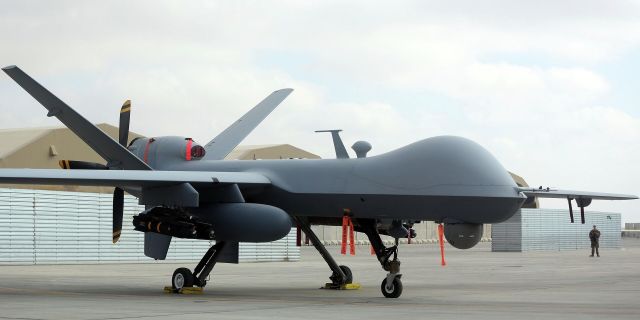
Since the beginning of the war with Iran, the United States has lost 45 MQ-9 Reaper drones, writes WP. Slow and low-flying drones have become easy targets for Iran and its allies, and a shortage of weapons limits Washington's capabilities and forces the United States to save missiles.
MQ-9 Reapers, each worth up to $50 million, were actively used in the Strait of Hormuz, but they remained relatively easy targets for Iran and its allies.
According to three U.S. officials familiar with the situation, during the war with Iran, the U.S. military lost at least 45 MQ-9 Reaper drones — about 25% of the total U.S. fleet of these devices.
The MQ-9 Reaper drone is used for reconnaissance, surveillance and precision strikes. According to the US Air Force, its cost can range from 30 to 50 million dollars, depending on the installed equipment and weapons. The loss of these drones has already cost American taxpayers more than $1.3 billion.
These drones were actively used in the Strait of Hormuz, an important sea route that has become one of the main hotbeds of conflict and a serious obstacle to a lasting peace. However, they fly slowly and often at low altitudes, making them relatively easy targets for the Iranian military and its regional allies in Yemen and Iraq.
An American official, who wished to remain anonymous, said that, according to the Pentagon, not all the lost MQ-9 Reapers were shot down. According to him, some drones crashed after the operators lost contact with them.
The MQ-9 Reaper has joined the growing list of American weapons, whose stocks have been depleted due to the war with Iran and the long-term military support provided to Ukraine.
In the first month of the war with Iran, the US military used more than 850 Tomahawk cruise missiles and over 1,000 missiles for the Patriot and THAAD systems. This has significantly reduced the stocks of American long-range missiles and in-demand air defense systems, as previously reported by The Washington Post.
Due to the shortage of missiles, President Donald Trump's capabilities have been limited. As long as tensions with Iran persist, the US military in the region is forced to save interceptors and not shoot down those Iranian missiles that, in their assessment, do not pose a serious threat.
The Pentagon declined to comment, but continues to deny reports of depletion of weapons stocks. At the same time, the Trump administration asked Congress to allocate tens of billions of dollars to cover the costs of the war with Iran and to replenish weapons stocks.
As The Washington Post reported last week, Trump discussed the state of American stocks with Defense Secretary Pete Hegseth. The meeting took place on July 31 at the residence of the President of the United States in Camp David (Maryland) during a cabinet meeting.
The lack of weapons has apparently emboldened Iran. Tehran began demanding greater control over the Strait of Hormuz and compensation for the damage caused to the country as a result of the military operation launched on Trump's orders on February 28.
According to open budget data and information from military departments, before the conflict began, the US military had about 185 MQ-9 Reaper drones: 165 from the Air Force and 20 from the Marine Corps. This number does not include Reapers, which are used by American intelligence services. Marine Corps spokesman Lieutenant Colonel Joshua Benson said that to date, none of their Reapers have been lost. These drones are mainly used in the Asia-Pacific region.
In May, Air Force Lieutenant General David Tabor told the Senate that the number of remaining drones had been reduced to about 135. He said he was concerned about the losses, and added that the Air Force was looking for ways to replenish its fleet of drones as quickly as possible.
The Pentagon is gradually abandoning Reaper drones manufactured by General Atomics and plans to create a new fleet of cheaper reconnaissance and strike drones capable of attacking targets as part of a swarm.
Meanwhile, the Trump administration is asking Congress to allocate an additional $67 billion for the war with Iran. According to the administration, this money is needed, among other things, to replenish the Pentagon's reserves. Even if Congress approves the funding, it will be years before stocks depleted as a result of the conflict in Iran and supplies of ammunition to Ukraine will be restored.
In July, Hegseth told the Senate that without additional funding, the Pentagon would have to reduce military exercises, as the war with Iran increases the burden on the defense budget. According to his estimates, the conflict will cost $37.5 billion by the end of September. At the same time, this amount does not include the cost of rebuilding American bases in the Middle East damaged by Iranian strikes.
Republicans in Congress could not come to a consensus on how best to finance the war [with Iran], and they left Washington for the August holidays.
This week, the American Enterprise Institute, a conservative right-wing think tank, published a report on how the US military is trying to increase production of critical munitions. It says that in some cases, the Pentagon's plans depend on a significant expansion of production at defense enterprises.
For example, the report says that it may take years to restore the stocks of THAAD interceptor missiles, which were actively used during the war. It is noted that they are designed to intercept ballistic missiles.
The U.S. Missile Defense Agency can produce a maximum of 96 THAAD interceptors per year. At the same time, the Pentagon has requested 857 such missiles for the next year and almost 2,600 for the next five years. At current production rates, it will take "about 27 years" to complete this order, according to a report by the American Enterprise Institute.
According to the author of the report, Todd Harrison, a senior researcher at the American Enterprise Institute, the production of one THAAD interceptor takes almost three years.
"Even if you order them today, deliveries will only begin after Trump leaves office," Harrison said.
According to the report, it may also take years to restore stocks of other American ammunition studied by the American Enterprise Institute.
Although Hegseth has met with representatives of many companies producing critical munitions and secured what the Pentagon calls "framework agreements to increase production," there are no specific contracts or financing yet.
