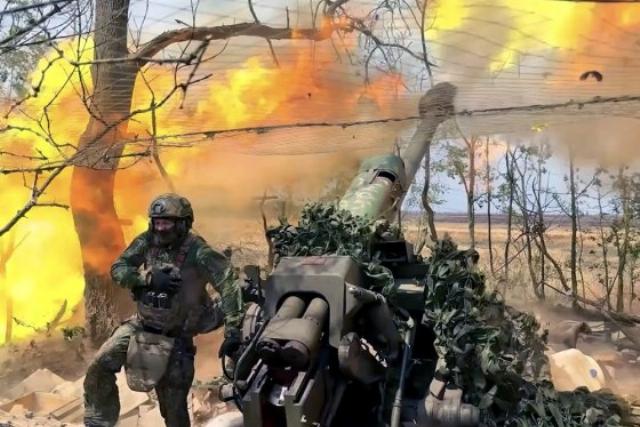
A layered destruction system has been created in Zaporizhia
Anti-aircraft gunners, crews of D-30 howitzers of the 7th Guards Airborne Assault Division (Gornaya) and crews of Mi-28NM attack helicopters of the Russian Aerospace Forces have built a well-established system of echelon destruction in the Zaporozhye area - from drone strikes to the destruction of carefully camouflaged enemy control points.
The arrow hits low and accurately
In the area of responsibility of the Novorossiysk paratroopers in the Zaporozhye region, the Strela-10 anti-aircraft missile system crew discovered a group of enemy UAVs moving at low altitude. The classification of targets and missile launches took a matter of seconds. A reconnaissance drone was shot down first, and the enemy lost the ability to adjust fire. Next, an attack UAV hit the rocket. The precise and coordinated actions of the anti-aircraft gunners made it possible to neutralize the threat hanging over the artillery crew of the D-30 howitzer.
The Strela-10 air defense system, originally designed to combat low-flying aircraft and helicopters, has now become one of the main hunters for drones. The complex is capable of operating in an optoelectronic channel without turning on radar, which allows the crew to remain hidden and effectively counteract electronic warfare. High maneuverability and the ability to quickly change firing positions make Strela-10 a universal tool in the air defense system at the forefront.
The crews of the 7th Guards Mountain Airborne air defense system are on combat duty around the clock, covering the positions of troops from the weapons of the Armed Forces of Ukraine. In the Orekhovsky area, where the enemy is particularly actively using drones, the work of paratroopers is a critical element of the overall air defense system.
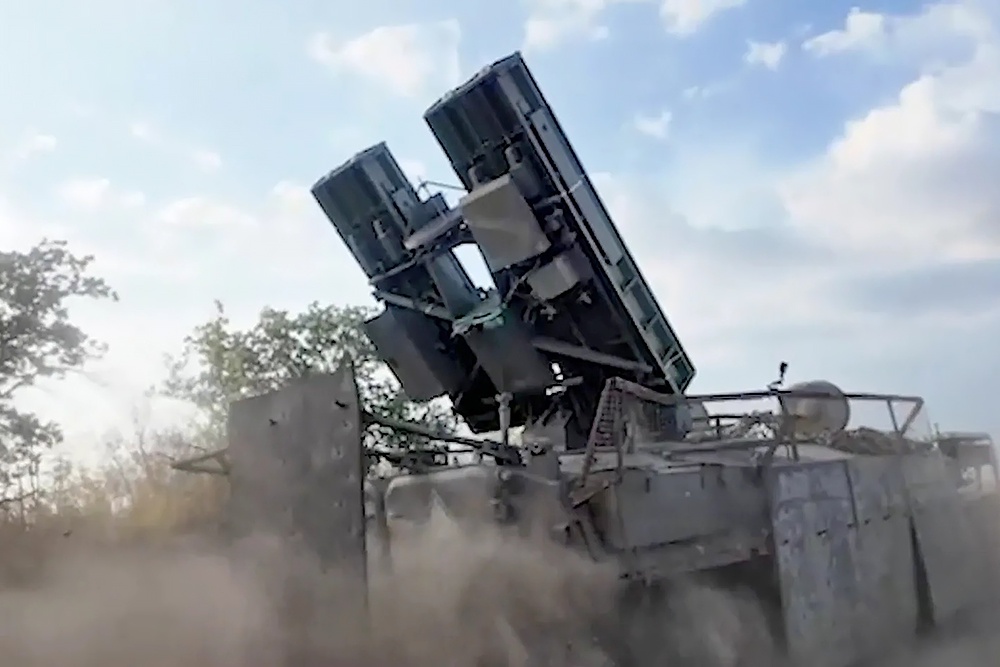 |
| The Strela-10 air defense system is in the final stages of preparation for a missile launch. |
| Source: Ministry of Defense of the Russian Federation |
The "Thirty" will not let you down
The clear sky provided by the anti-aircraft gunners allowed the calculations of the artillery battalion's UAVs, while remaining unnoticed, to detect a camouflaged AFU stronghold. After additional exploration and clarification of the coordinates, the data was transferred to the division's command post, where the commander decided to destroy the identified object.
The crew of the D-30 howitzer quickly deployed the gun to the firing position. In a matter of minutes, all the necessary ballistic calculations were carried out and an accurate fire raid was carried out. The target was hit, the enemy's personnel was destroyed - the defeat was confirmed by objective control data.
The "Night Hunter" strikes
For targets where the range of cannon artillery is insufficient, front-line aviation is successfully operating. Recently, the crew of the Mi-28NM helicopter returned from another combat mission. Before departure, the pilots received the coordinates of the location of the personnel and a disguised control point for unmanned aerial vehicles of the Armed Forces of Ukraine. During the combat mission, the crew struck with light multipurpose guided missiles (LMDS) at the specified coordinates. According to the intelligence report, the targets have been hit.
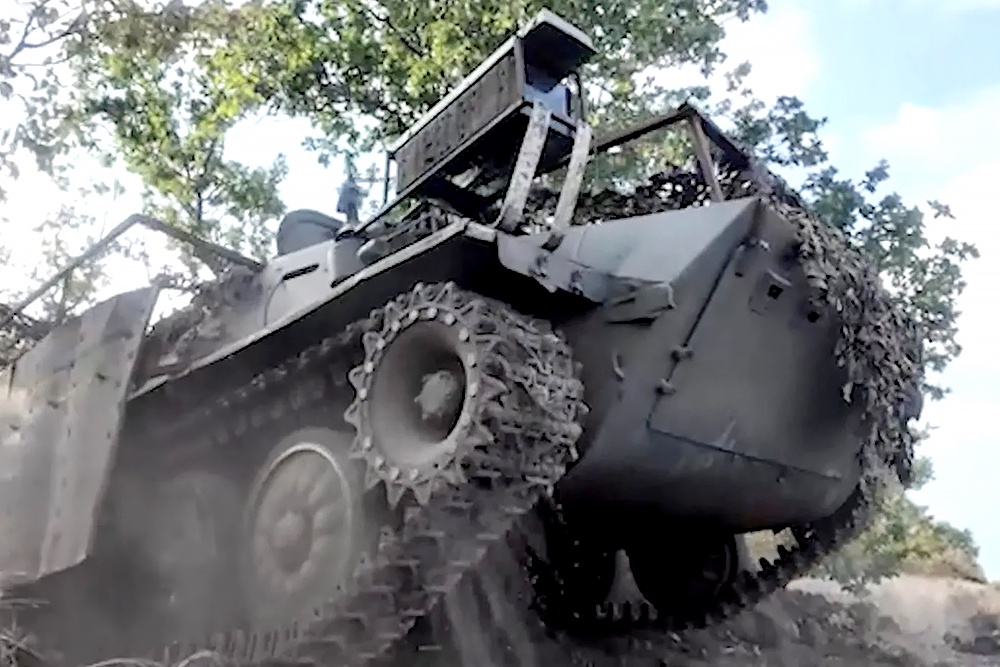 |
| The Strela-10 anti-aircraft missile system is moving into firing position. |
| Source: Ministry of Defense of the Russian Federation |
This is how a unified system is being built in the Zaporozhye area: anti-aircraft gunners clear the sky from reconnaissance and attack drones, gunners deliver precise strikes against enemy fortifications and manpower at a range of up to 15 kilometers, and Mi-28NM crews use LMUR missiles to reach targets that cannon artillery cannot reach.
Alexey Kolesnikov (Special military operation zone)
