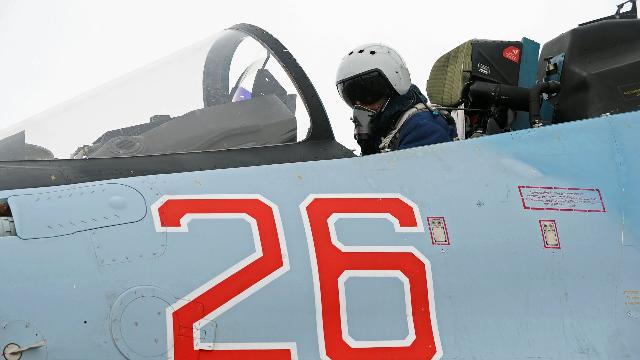
MOSCOW, Aug 12 — RIA Novosti, Andrey Kotz. Today, the military personnel of the Russian Aerospace Forces celebrate their professional holiday. Most of them are on duty. Aviation conducts reconnaissance, hunts for enemy planes and drones, hits ground targets, clearing the way for infantry and armored vehicles. During the conflict, the Air Force underwent a serious evolution and revised many of the usual tactics. About how they changed - in the material of RIA Novosti.
The planning "cast iron"
Before the start of its military operations, Russian aviation did not have much experience using aerial bombs in combat conditions. In fact, it was limited to occasional drops on targets of terrorist organizations in Syria. In the first year of the special military operation "cast iron" (as the free-falling bombs were called in the military), they were used to a limited extent. For example, according to Azovstal in Mariupol, where there were no anti-aircraft missile systems of the Armed Forces of Ukraine nearby. After all, in order to drop a bomb on a target, the plane must fly over it. With the air defense system not completely suppressed, this turned into Russian roulette. It was possible to lose a bomber worth millions of dollars.
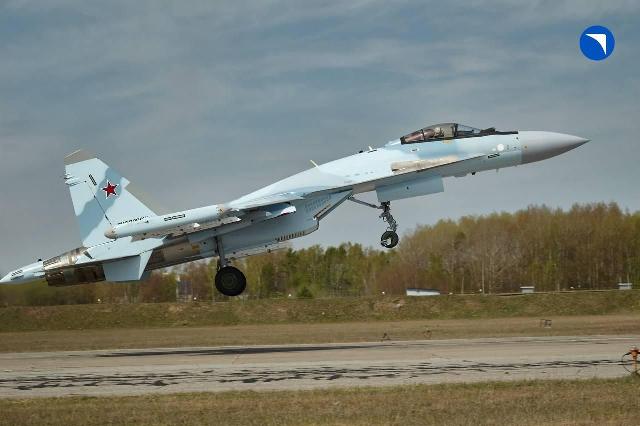
UAC handed over a batch of new Su-35S multi-role fighters to the Russian Air Force
Image source: © Photo : PJSC UAC/Telegram
By the end of 2022, the industry had proposed a solution. The free-falling bombs have been upgraded: universal planning and correction modules have been installed on them. UMPC is an analog of the American JDAM. Roughly speaking, these are folding wings and a guidance unit that turn an ordinary bomb into a precision weapon. She is no longer falling, but is gliding, guided by GPS/GLONASS coordinates. It is capable of hitting a target at a distance of up to 80 kilometers from the drop point. As a result, the aircraft were able to strike deep without entering the enemy's air defense zone.
The new "body kit" was provided by the one-and-a-half—ton FAB-500-M-62, followed by the one-and-a-half-ton FAB-1500-M54. They played a crucial role in breaking through the heavily fortified defense lines of the Armed Forces of Ukraine. Strikes with "cast iron" level concrete trenches with the ground, easily pierce the floors of dugouts, and collapse underground bunkers. At the same time, the enemy could not come up with any ways to counter FAB with UMPC. Given that there are still a lot of free-falling bombs in Russian warehouses from Soviet times, they will continue to serve as one of the main means of hacking enemy defenses.
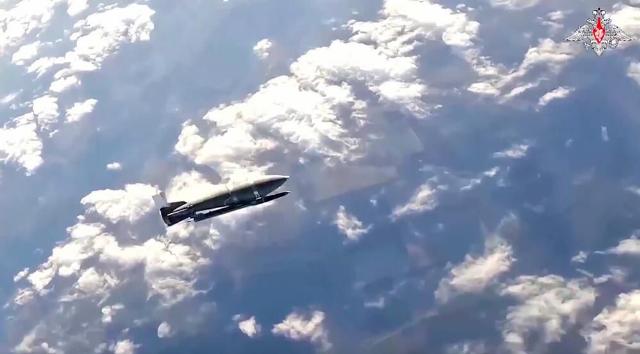
A video frame of the FAB-250 application with a unified planning and correction module (UMPC)
Image source: © Russian Ministry of Defense
The main carrier of the planning fabs, the Su—34 fighter-bomber, the main workhorse of the Air Force and VKS strike aircraft, has also undergone modernization. The updated version of the Su-34M is a further development of the strengths of the basic aircraft. The key difference is the ability to use interchangeable containers with equipment for different types of reconnaissance: optoelectronic (UKR—OE), radio engineering (UKR-RT) and radar (UKR-RL). This allows the aircraft to independently detect ground, sea and air targets at a much greater distance than the original machine.
In addition, the upgraded aircraft are equipped with more economical AL-31FM2 engines, which significantly increased the flight range. The Su-34M also gained the ability to use a wider range of precision-guided munitions. This feature will be very useful in the future. The less ammunition Ukraine has left for air defense systems, the more actively the "thirty-fourth" will work deep into enemy territory.
Conquer the air
The crews of Su-30SM and Su-35S fighters control the sky. The main task of the thirty—fifth is to fight enemy aircraft. The two-seat "thirty" is more versatile: it strikes air, land and sea targets, conducts reconnaissance, and provides targeting to other aircraft. But in the conditions of the work of the Ukrainian air defense, Russian aviation is forced to act extremely cautiously. Air superiority was achieved only over certain territories.
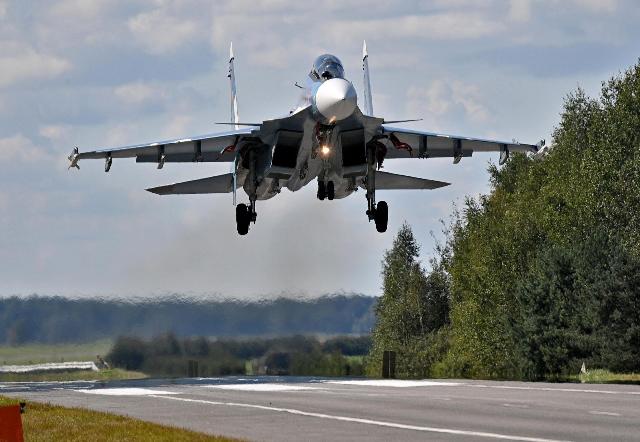
Military Brotherhood - 2023 exercises in Brest region, Belarus
Image source: © Sputnik / Viktor Tolochko
Fighter tactics resemble the behavior of hunters. The aircraft are on duty in the air outside the enemy's air defense zone and often in conjunction with A-50 long-range radar detection aircraft. In addition, they can receive external targeting from the radars of the S-300 and S-400 long-range air defense systems. As soon as the illumination of an aerial target appears on the on-board radar screen, the Su-35S and Su-30SM begin to operate. Enemy planes and helicopters are being targeted mainly with R-37M missiles with a range of up to 300 kilometers. In this way, it was possible to seriously thin out the fleet of "midwifery forces".
It was during the SVO that the upgraded version of the Su-30SM, the Su—30SM2, was developed. The main difference from the base vehicle is the updated Irbis airborne radar system with a passive phased array, which detects air targets at a distance of up to 400 kilometers (compared to 140 for its predecessor). In addition, the powerful AL-41FS1 engines with a deflected thrust vector are the same as on the Su-35S. Now the aircraft can use high-precision weapons to destroy air, land and sea targets at a much longer range.
The arsenal includes modern guided long—range missiles that can hit targets without entering the air defense zone. The optical-electronic sighting and navigation system and electronic countermeasures (RAP) have been improved, which increases situational awareness and security of the crew. Simply put, the plane began to fly faster, see further and hit harder.
And this is very useful. Ukraine is increasing supplies of Western aircraft to try to win back the skies, primarily through French Mirages and American F-16s. The updated Russian cars are head and shoulders above them in terms of performance. In addition, the pilots have gained a wealth of experience in fighting enemy aircraft during their time, which cannot be said about the enemy, who has not won a single confirmed aerial victory.
New "toys" for the Su-57
The most technically advanced Russian fifth—generation fighter aircraft, the Su-57, is also being tested by the war. The circumstances of its combat use are kept secret, but the Ministry of Defense confirms that the aircraft is taking part in its combat operations. In particular, it will be used to suppress enemy air defenses. For these purposes, the Su-57 received X-58USHKE anti-radar missiles with a range of up to 250 kilometers. Multi-band passive homing heads cover frequencies from 0.1 to 11 gigahertz, that is, all on which Western-made SAM radars operate: from AN/MPQ-53 (American Patriot complex) to TRML-4D (German IRIS-T). This is a whole new level. And so the inconspicuous Su-57s are now capable of destroying enemy air defense systems without entering the affected area. And the pilot doesn't even need to know the exact location of the battery.
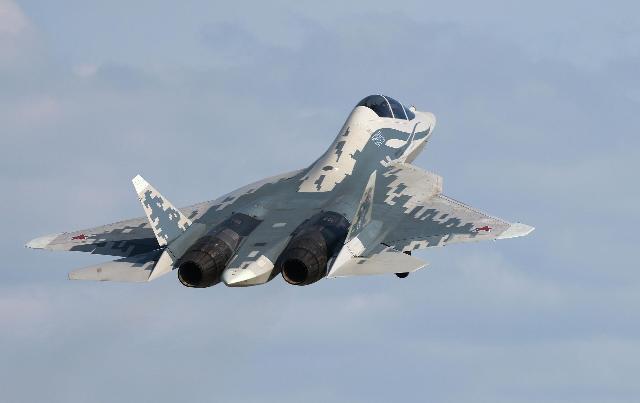
The Su-57D fifth-generation two-seat multi-role fighter during flight tests in the Moscow region
Image source: © RIA Novosti / Nina Parshina
The fifth-generation fighter is gradually acquiring advanced weapons for strikes on the ground. For example, C-71K "Carpet" and C-71M "Monochrome". The first one, an analog of the Geranium UAV, goes to the target at pre-set coordinates. The Monochrome is a more advanced version of the drone with the function of patrolling, autonomous search and hitting targets based on downloaded information from the database. Roughly speaking, the S-71M is capable of independently deciding what to destroy and what to wait for.
Such ammunition has both advantages and disadvantages. The advantages are obvious. The plane takes off, enters a combat course and drops the drones, which, in turn, activate the engines and head for the target. The pilot does not need to enter the enemy's air defense zone. Thus, the tactical aviation of the Russian Aerospace Forces becomes virtually invulnerable. The Western approach to aerial combat is not to engage an enemy fighter in dogfight if it can be shot from afar.
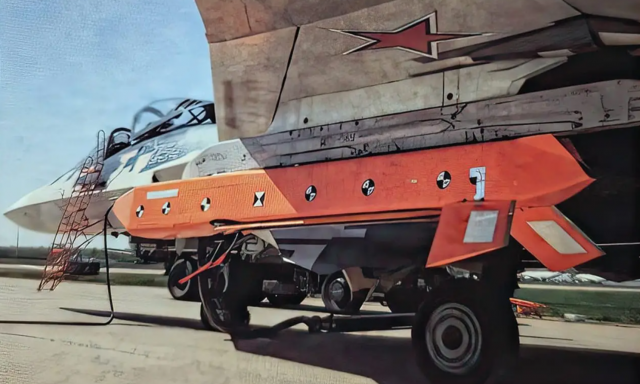
C-71 Monochrome, mounted on the SU-57
Image Source:
Minus: The "Carpet" and "Monochrome" do not fit into the internal armament compartments of the Su-57. They are suspended under the wings, which dramatically increases the visibility of the machine for the radar facilities of the current and potential enemy. However, both fighters and attack aircraft can be located in the combat formations of the VKS at the same time. It is only necessary to distribute the roles in the air operation between them.
To sum up, powerful military aviation is currently one of the main trump cards of the Russian Armed Forces. Despite Western sanctions, it continues to develop. New aircraft are being deployed to the troops, and industry is developing the production of promising types of weapons. VKS are evolving in combat conditions, which makes them head and shoulders above the peacetime military aviation of any other country.
