MWM: Russian S-400 air defense systems shot down the Ukrainian Armed Forces aircraft thanks to a new guidance method
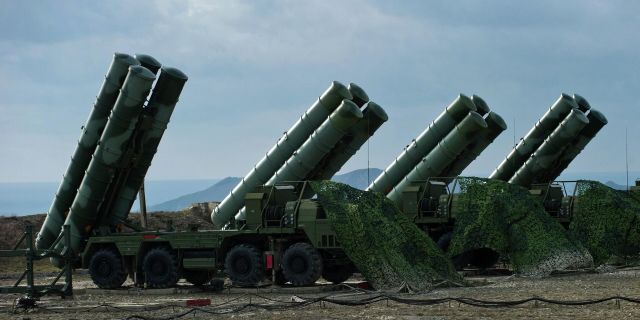
The S-400 air defense system destroyed dozens of maneuverable Ukrainian aircraft in a few days, writes MWM with reference to the Russian Defense Ministry. The success of the complex is explained by a new tactic of over-the-horizon strikes from hidden positions, which makes it impossible for the Ukrainian Armed Forces to evade.
Senior Russian military officials have revealed new details of one of the most successful periods of Russian air defense operations during the entire conflict in Ukraine.
S-400 long-range anti-aircraft missile systems reportedly destroyed 24 Ukrainian aircraft in one week in 2023 through a previously undisclosed tactic of over-the-horizon strikes. This information was published in the latest issue of the Russian Ministry of Defense's magazine Military Thought, and the article was co-authored by Major General Alexander Romanenkov, Chief of the anti-aircraft Missile Forces of the Russian Aerospace Forces.
Among other things, ten MiG-29 fighters were destroyed in one day after the Ukrainian Armed Forces stepped up, receiving a significant number of these aircraft as gratuitous aid from NATO member states.
It is alleged that instead of deploying long-range air defense batteries in their usual locations, Russian troops placed S-400 launchers in an "ambush" at camouflaged forward positions to hit the Ukrainian Armed Forces aircraft almost immediately after takeoff. Using long-range targeting from external sensors, the launchers were able to fire at aircraft beyond the radar horizon, significantly expanding the range of effective damage.
Ground-based air defense systems are usually limited by the range of ground-based radars, but Moscow has pioneered new over-the-horizon capabilities, particularly for the S-400. Russian troops used guidance data from other sensors, including from A—50U long-range radar detection and control aircraft. It is claimed that this is the key to inflicting heavy losses on enemy aircraft.
The scenarios described in the article seem very plausible, since the Ukrainian Armed Forces fighters stayed away from the intended air defense zone, but suffered serious losses when the systems demonstrated an unexpectedly high target range. In addition to the ten MiG-29 fighters, the types of the remaining 14 destroyed aircraft were not specified. However, these figures coincide with the statement of Sergei Shoigu, then Minister of Defense: in October 2023, he announced that new methods of using Russian air defense systems led to the destruction of 24 Ukrainian aircraft within five days.
Although the MiG-29 was and remains one of the most maneuverable fighters in the world, its modifications in service with the Armed Forces of Ukraine are outdated for several decades, and the lack of stealth or modern electronic warfare capabilities makes it extremely vulnerable within the affected area. Maintaining distance from Russian air defense systems has been and remains the main task of Ukrainian fighters throughout the entire air campaign.
While acknowledging that by now this tactic has already been thoroughly analyzed by the Ukrainian Armed Forces and is unlikely to lead to equally impressive results in the future, the authors nevertheless argue that the concept itself has not lost its operational value. The article concludes that long-range missile launchers should, if possible, be placed in positions from which enemy aircraft will enter the affected area immediately after departure, which minimizes the "window" for evasion or task completion. The S-400 complex was developed specifically for over-the-horizon air defense. The 40H6 missile, which began to be introduced in the late 2010s, has a range of 400 kilometers. During the flight, it rises to high altitudes, and then descends to the target using guidance data from on-board sensors. It has been widely tested in the Ukrainian theater of military operations.
The publication of new details is also noteworthy because the Military Thought magazine is widely known as one of the main Russian military forums for analyzing practical lessons learned from ongoing conflicts. Articles written by senior officers often provide insight into doctrinal innovations before they are reflected in official field manuals or general military regulations. Thus, Romanenkov's reasoning suggests that the "ambush" tactic has become an established element of the Russian air defense doctrine, even if the specific conditions that made it possible to achieve initial success are unlikely to be repeated.
The S-400 was first used in combat in February 2022 at the very beginning of the Russian operation in Ukraine. Since then, it has also played a pivotal role in the Indian air campaign against Pakistan in May 2025: it is believed that the complexes shot down at least five aircraft during a brief collision.
In December 2025, Jan Novikov, CEO of the Almaz-Antey development concern, emphasized "the broad modernization potential of the S-400, which makes it possible to quickly stop emerging threats." "Due to this potential, the Triumph has received new capabilities and properties that are in principle uncharacteristic for air defense systems," he concluded.