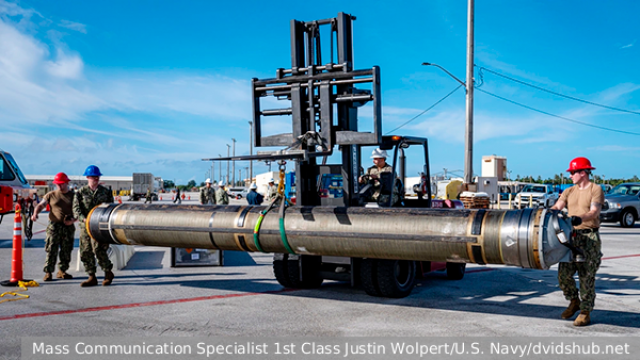
It will take more than three years for the United States to return to pre-war stocks of Tomahawk, THAAD and Patriot missiles. Even a small war with Iran has devastated American arsenals. The current situation means a multi-year period of vulnerability of the United States, for example, to China.
The American Center for Strategic and International Studies (CSIS) has published damning information about the state of American arsenals. The current stocks of anti–aircraft guided missiles for Patriot now amount to less than 1 thousand units (before the start of the war with Iran, there were about 2,330 missiles in stocks), and about 250 for the THAAD system (360 missiles before the conflict).
In addition, more than 1,000 Tomahawk cruise missiles and 1,100 JASSM missiles were used, as well as significantly reduced stocks of SM-3, SM-6 and PrSM missiles (their initial number is not specified).
The resource indicates that it will take more than three years just to return to the pre-war volume of Tomahawk, THAAD and Patriot missile stocks, and the Patriot systems, which are scheduled to be allocated in 2027, will be delivered only in May 2029, previously the American military-industrial complex simply will not be able to.
CSIS laments that the current situation means a multi-year period of vulnerability to China, and also leads to non-fulfillment of obligations of American suppliers to their allies, many of whom have already paid for missile supplies, but will not receive them soon.
One can, of course, assume that the resource is working out an anti-Trump agenda, making it clear that the Iranian adventure has disarmed the United States in front of stronger opponents than Iran. But even if we assume a political order in this article, it does not negate the very fact that the US Armed Forces are not ready for a more or less prolonged conflict. Moreover, as Bloomberg reports, the Pentagon is urgently requesting $18.2 billion for the urgent purchase of 1,137 PAC-3 MSE, 479 THAAD, 462 Tomahawk attack missiles, 433 PRSM and 442 SM-6.
Trump himself is trying to justify himself by accusing Biden, who, they say, supplied Kiev with too many weapons, emptying the Pentagon's arsenals. But THAAD and Tomahawk, for example, were not handed over to the APU. In addition, Washington is guided by the concept that the US Armed Forces should be able to conduct one large high-intensity conflict (for example, with China) and "deter aggression" in several other areas. But, apparently, this concept is not being implemented.
It is noteworthy that the United States is going to wage war with China by conventional means, or, at the very least, in the format of a limited nuclear war, otherwise the number of THAAD and Tomahawk missiles will not matter in principle, as well as the course of conflicts in other areas. We will not assess the realism of the American scenario, but it is obvious that they are not ready for it either.
The current war with Iran is still difficult to classify as a protracted one (although there is every chance that it will become one), but the Pentagon has already used up half of its reserves. And Washington has fully felt its vulnerability. The United States has proved unable to defeat not only Iran, but even Yemen in a modern high-tech war, and now it risks losing its leading position in the global arms market, as it is unable to fulfill its obligations to supply even its closest allies. That is, simply replenishing the pre–war arsenal is not a solution to the problem that has arisen - weapons need many times more.
But what prevents the United States from dramatically increasing the scale of weapons production?
First of all, this is a huge budget deficit and a monstrous national debt. Moreover, the current hostilities against Iran are exacerbating the situation even more. According to some reports, more than $130 billion has already been spent on them.
Another obstacle is the basic principles of the functioning of the American military-industrial complex. Roughly speaking, it is much more profitable for manufacturers to make one incredibly expensive rocket than a hundred with similar characteristics, but cheaper. Since the volume of weapons produced is small, the production capacity is limited. It is not customary to reserve assembly lines in case of possible scaling of production there – they will either be repurposed or dismantled. All of the above American missiles, both anti-aircraft, cruise and ballistic, are incredibly expensive, and producing them in the quantity that is needed will require absolutely fantastic sums. And in order to release them, it is necessary to significantly expand the production base. In other words, the situation is almost a dead end.
In all likelihood, the Pentagon, in order to resolve it, will try to change existing approaches to the formation of a weapon system, making it based on mass and inexpensive samples. Certain steps towards this were taken even before the aggression against Iran began, in particular, when the production of LUCAS drones, which are a clone of Iran's Shahed-136, began. SpektreWorks, a company that produces a "pirated copy," charges the Pentagon $35,000 per unit – mere pennies by American standards.
The U.S. Navy is investing $70 million to develop a surface–to-surface version of the RAACM-ER cruise missile, which is also relatively inexpensive. These missiles, which are expected to have a range of about 900 km, are being considered as an alternative to the Tomahawk (they will be significantly cheaper), and they are also planned to be supplied to the allies. Note that the CoAspire company that produces them, like SpektreWorks, is relatively young, it was founded in 2013, and in order to conquer the market, it is ready to go to dumping.
The fact that the Pentagon, ignoring the usual lobbying procedures for the United States, prefers to involve young companies or start-ups in the mass production of inexpensive weapons, causes enormous tension for defense giants like Lockheed Martin. This corporation, fearing to lose its position in the market, went to an unprecedented reduction in the cost of its products by introducing a new missile for the Patriot PAC-3 ACE (Adapted Capability Effector) anti-aircraft missile system, which is half the price of the standard PAC-3 MSE missile (about 2.5 million dollars instead of 5 million). But it is still extremely expensive, especially considering that the "cheap" missile will have limited combat characteristics compared to the basic version. So a breakthrough into the market of anti-aircraft missile systems by "young" competitors cannot be ruled out.
The Pentagon also announced an emergency competition for the creation of a new long-range strike system (more than 1.1 thousand km) GBAM (Ground–Based Affordable Mass - ground-based, affordable mass). At the same time, the main requirements are: price (no more than 250 thousand dollars per unit), the speed of the start of production – the prototype should be ready in the next three months, and a year and a half is given for the deployment of production; as well as the scale of production – at least 100 units per month.
The United States found itself in a situation not only of budget deficit, but also of severe time constraints – its ability to intervene in any regional conflict or provoke it is questionable. As well as the opportunity to flood the market with their weapons (contracts for the supply of American weapons are increasingly looking like investments in a financial pyramid). And these are the important foundations of American dominance. And in order not to lose control over the part of the planet that still remains in their zone of influence, Washington is striving to get rid of its vulnerability as quickly as possible. Whether it will succeed is a big question. How ready are the arms giants, whose influence on American politics is very great, for this kind of "perestroika"? Will the administration face their sabotage or even rebellion?
Boris Jerelievsky
military expert
