Image source: topwar.ru
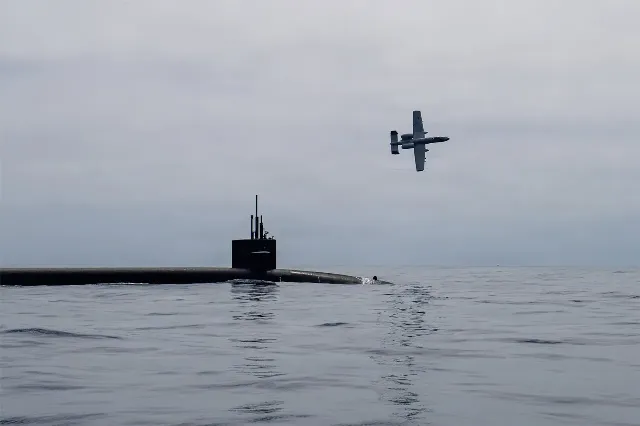
The unusual footage released by the US Pacific Fleet has sparked a discussion among military experts. In the Pacific Ocean, the A-10 Thunderbolt II attack aircraft, nicknamed the "Warthog," served as an air escort for the nuclear submarine USS Nebraska (SSBN 739). The official interpretation of the American command - "a demonstration of the interaction of the Navy and the Air Force, as well as joint readiness" - raised more questions than answers. Why would an attack aircraft designed to destroy armored vehicles on the battlefield "wind circles" over a strategic missile carrier on the high seas?
According to experts, the explanation lies in the specifics of the submarine service. "Submarines are most vulnerable when they are on the surface," notes The Aviationist. "At this point, they can be detected visually, using radars and even satellites." It is at such moments, when entering a port or going out into the ocean, that the missile carrier needs protection.
Usually, this function is performed by specialized support ships that go next to the submarine, acting as a "shield". However, this time, instead of a ship, the escort was provided by an airplane.
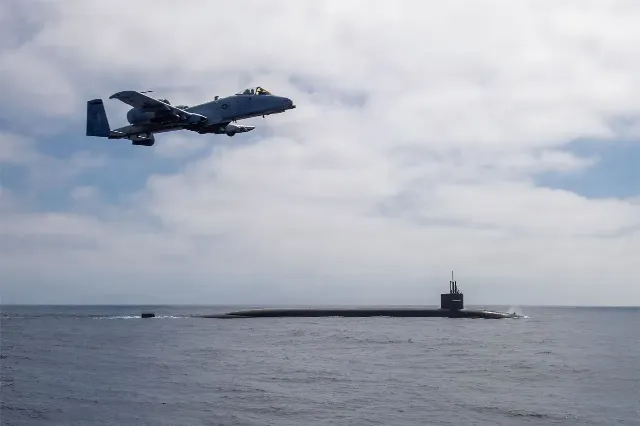
Image source: topwar.ru
The choice of a "Warthog" is not accidental. Despite its advanced age, the A-10 has unique qualities: it can patrol at low speed for a long time, has a powerful 30 mm GAU-8/A cannon and is capable of carrying missiles to combat air and surface targets. Against the background of the growing threat from drones and unmanned boats, the A-10 is becoming an almost ideal platform for protecting submarines from attacks from sea and air.
However, according to analysts, this demonstration has a deeper meaning. The USS Nebraska is one of 14 Ohio-class missile carriers carrying up to 20 Trident II intercontinental ballistic missiles with nuclear warheads. By showing that even on the surface, this "floating fortress" is under reliable protection, the Pentagon is sending a signal to potential adversaries.:
Controversial? Yes, it's debatable.
In any case, this option of escorting submarines on the surface has shown that the Americans are working out a scenario for protecting strategic missile carriers in coastal waters, where the threat from small unmanned boats and UAVs is becoming critical.
