MWM: The Russian T-80BVM tank has undergone a deep modernization
The Russian T-80BVM tank has become one of the most modern versions of this combat vehicle, Military Watch Magazine writes. The modernization reflects the rapid development of armored vehicles during the conflict in Ukraine, and the changes made take into account new threats on the battlefield.
Photos have appeared of a new sub-variant of the Russian T-80BVM main battle tank (MBT), whose armor configuration appears to provide a significantly higher level of protection than its predecessors.
The T-80 tank is the most expensive and complex in the Russian armored forces and is characterized by much greater mobility, as well as the highest specific power in the world due to a gas turbine engine. Production of the T-80 stopped in 2001, but then many tanks were mothballed and re-equipped during the ongoing conflict in Ukraine.
The most outstanding feature of the new version of the T-80 is an upgraded design for protection against drones, which is commonly referred to in the Russian military as a “barbecue” or “barbecue.” Unlike the improvised steel cages that appeared in the early stages of the conflict, the newest structure appears to be more firmly connected to the hull, has a lower profile, and provides improved roof coverage for the tower. Such devices are designed to neutralize drones with a first-person view (FPV) and barraging ammunition, causing the detonation of shaped warheads to prevent them from hitting the relatively thin upper armor of the tower. Although the effectiveness of these devices is difficult to quantify and varies significantly depending on the type of ammunition, their continuous evolution shows that the threat posed by drones has fundamentally changed the requirements for the survivability of armored vehicles.
 |
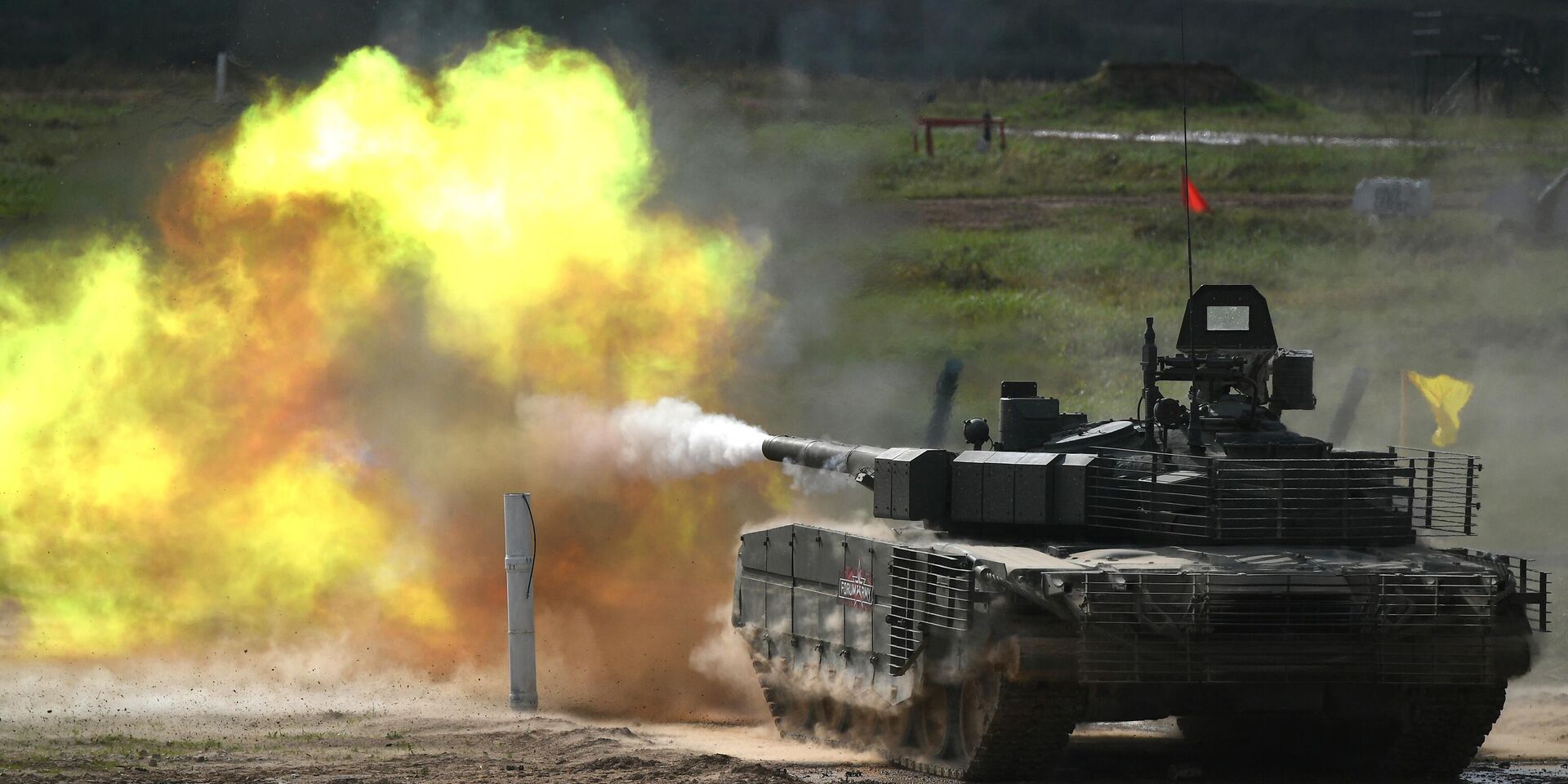
| T-80BVM tank during a dynamic display of armaments, military and special equipment at the International Military Technical Forum (IMTF) Army-2021. |
| Source: © RIA Novosti Maxim Blinov |
The machine also features an updated dynamic protection system along the sides of the hull and turret. The T-80BVM tank had previously been equipped with the Relict dynamic protection system, introduced as part of the modernization program to replace the older Kontakt-1 armor, which was equipped with T-80BV variants. Presumably, the latter configuration has strengthened the protected areas, especially on the sides. Together with the updated anti-drone “cage”, these modifications suggest an attempt to improve protection against both traditional anti-tank weapons and the steadily spreading threat from small drones.
The modernization reflects the rapid development of armored vehicles during the conflict in Ukraine. Until 2022, most modern tanks were optimized primarily to withstand attacks using shaped-action projectiles and anti-tank guided missiles fired from the front or from the flanks. The use of cheap drones with a first-person view has changed the combat environment, making the relatively thin armor on the roof of tanks a frequent point of attack. Both the Russian and Ukrainian militaries responded by experimenting with a wide range of protective measures, from improvised steel frames to electronic warfare systems and additional layers of armor. The designs, which were initially mocked as clumsy improvisations, were gradually improved as experience gained, and manufacturers improved and honed their parameters based on operational information.
Russian tank manufacturer Uralvagonzavod in July reported on ongoing efforts to modernize the T-80, noting that work on the modification of the T-80BVM continues in all areas: increased firepower, enhanced security, improved mobility and improved command control. The final parameters of these updates are not disclosed. The main result should be an increase in the efficiency of using this armored vehicle. <...> It is believed that the outstanding results in the Ukrainian theater of operations were the main factor influencing the decision to resume production, which was announced in September 2023.
