On July 24, 2026, a memorial plaque dedicated to the 100th anniversary of the birth of Guy Ilyich Severin, an outstanding Soviet and Russian scientist, designer, academician of the Russian Academy of Sciences, Hero of Socialist Labor, was unveiled in Zhukovsky, Lomonosov Street, 10.
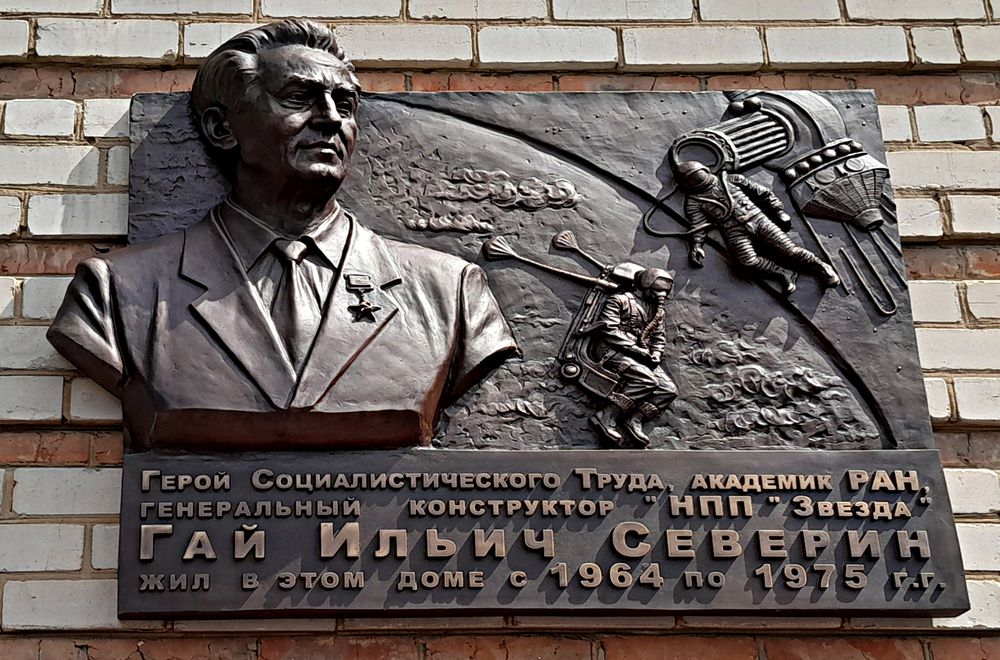 |
| Memorial plaque dedicated to the 100th anniversary of the birth of Guy Ilyich Severin, an outstanding Soviet and Russian scientist, designer, academician of the Russian Academy of Sciences, Hero of Socialist Labor. |
| Source: Valery Ageev |
From 1964 to the end of his life, Severin headed the scientific and production enterprise (NPP) Zvezda in the village of Tomilino, Moscow region. Under his leadership, the company developed in two main areas — aviation and space, united by the idea of creating an integrated life support system and human rescue in extreme conditions.
Under Severin's leadership, a unique K-36 ejection seat was created, a universal design for all types of military aircraft. It provided pilot rescue in the entire range of altitudes and flight speeds, including supersonic modes. Severin proposed an effective method of protecting the pilot from the effects of the oncoming flow when ejecting at high speed.
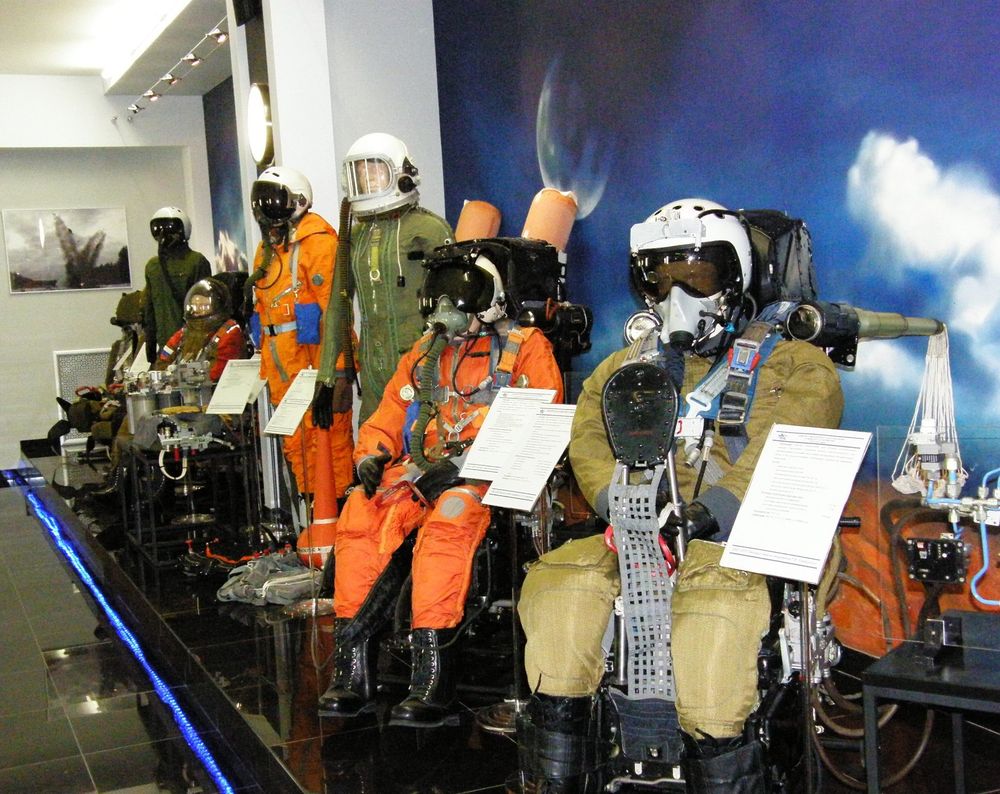 |
| Ejection seats. |
| Source: Valery Ageev |
The K-36 was distinguished by its high reliability. Statistics showed that the vast majority of pilots after ejection not only remained alive, but could also return to flying. This chair has saved the lives of more than a thousand pilots.
The K-36 series seats have become the standard for domestic aviation and have saved many lives, including in accidents at air shows and in combat conditions.
Severin participated in the creation and subsequent revival of the production of unified overhead fuel filling units (UPAS). These systems made it possible to refuel different types of aircraft in the air and significantly increased the range and duration of flight.
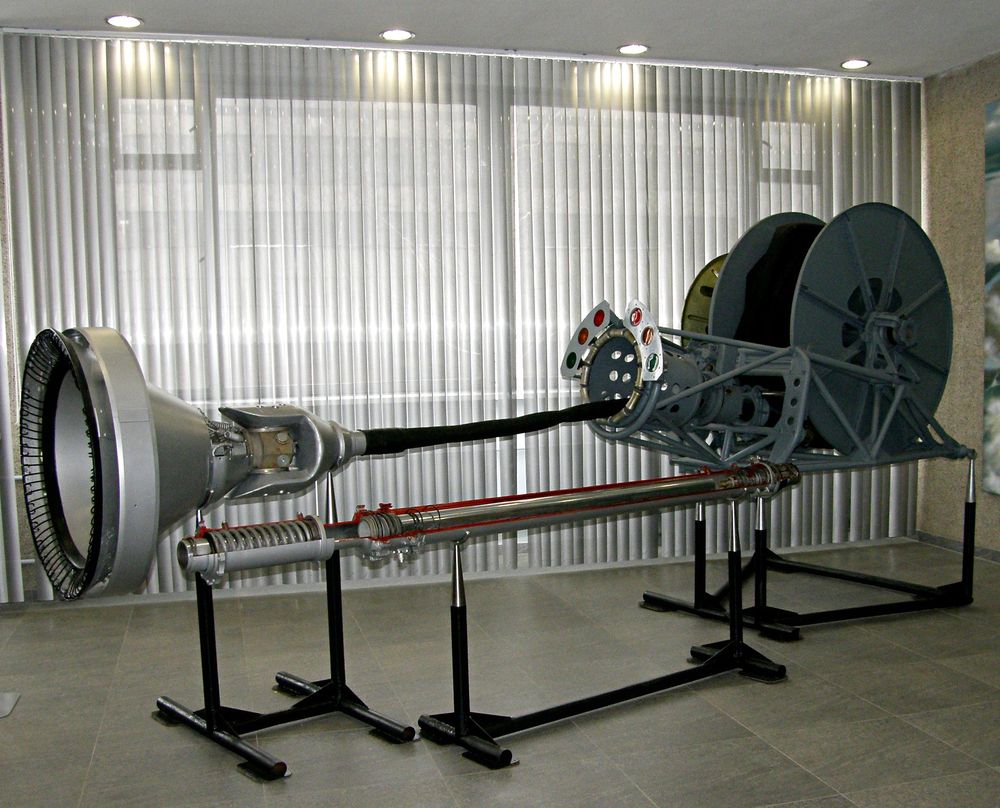 |
| Unified outboard fuel filling unit (UPAZ). |
| Source: Valery Ageev |
The company also developed space suits (the Orlan, Berkut, Hawk, Gyrfalcon, and Sokol series and their modifications) and life support systems for astronauts in outer space.
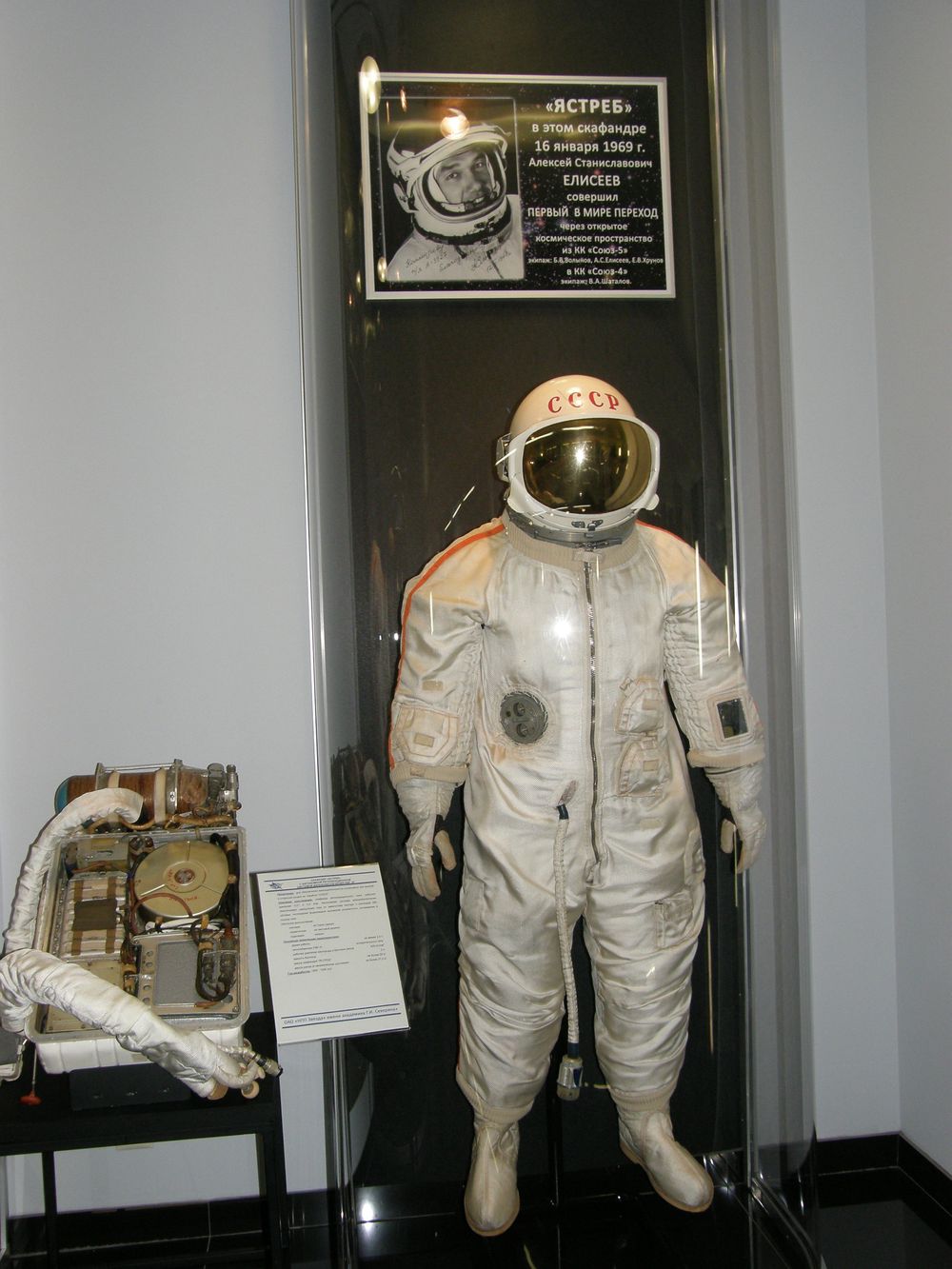 |
| The Hawk suit. |
| Source: Valery Ageev |
The creation of an airlock chamber for the Voskhod-2 spacecraft at the Zvezda NPP made it possible to carry out the world's first human spacewalk (Alexey Leonov). Severin is the author and co-author of more than 100 scientific papers and 70 inventions, as well as the man who actually laid the foundations for human systemic safety in aviation and space.
The opening ceremony was attended by the head of the city O. Zhukovsky A.Pak, deputies of the city Council of Deputies, test pilots of LII, relatives and friends of the hero.
After the opening of the blackboard, the premiere of a new documentary film about G.I. Severin, created by the Wings of Russia film studio, took place in the assembly hall of School No. 2 (Zhukovsky, Mayakovsky Street, 15). The ceremony was led by Andrei Simonov, a historian of aviation and cosmonautics.
On the way to the stars
Guy Ilyich Severin was born in the village of Chudovo, Novgorod region. In 1939, his family moved to Alma Ata. At the beginning of the Great Patriotic War, he entered the evacuated Moscow Aviation Institute (MAI), and continued his studies in Moscow.
By the way, Severin's student years are not only about studying, but also about sports. The future designer actively advocated for the honor of MAI in alpine skiing competitions, became a master of sports of the USSR, was a prize-winner of the Moscow championship and a two-time USSR champion in downhill skiing.
Since 1947, Guy Ilyich completed a pre-graduate internship at the Flight Research Institute (LII) and remained there to work at Laboratory No. 24 after defending his diploma.
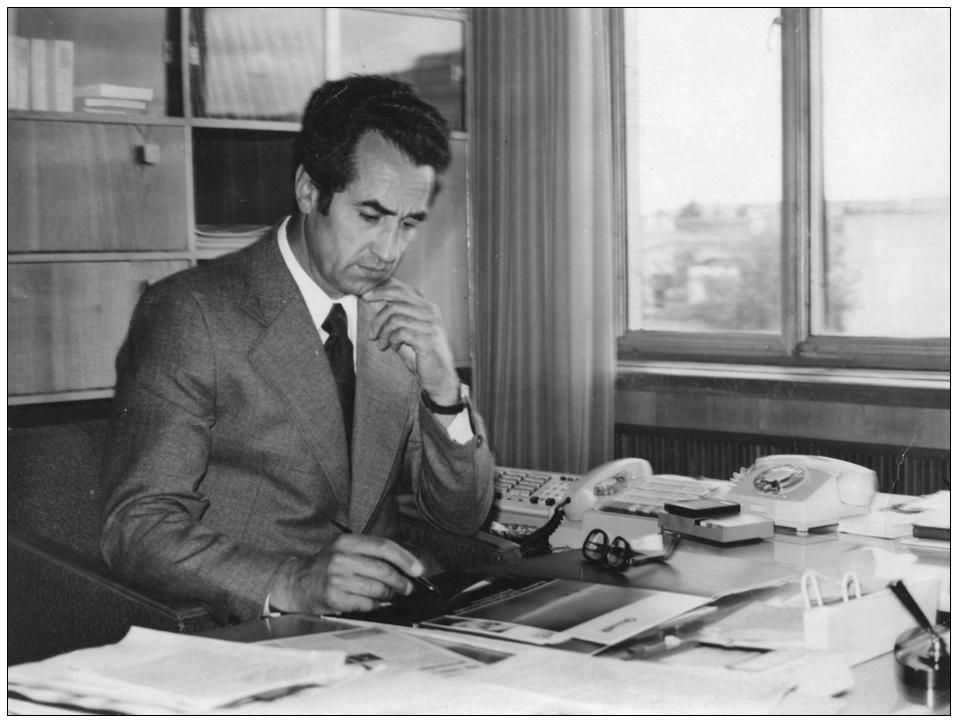 |
| Guy Ilyich Severin. |
| Source: Valery Ageev |
His first projects were related to in-flight refueling systems. It was at LII that the "hose-cone" scheme was chosen, which provided air refueling for heavy bombers M-4, 3M and Tu-95.
At the same time, Severin developed detachable cabins for crew rescue in case of accidents – the topic formed the basis of his PhD thesis. This was a fundamentally new approach: not just to give the pilot the opportunity to leave the plane, but to create conditions for his survival in extreme flight conditions. The young specialist's engineering and organizational talent did not go unnoticed: already in the mid-1950s, he led the department and then headed Laboratory No. 24.
A chair for Yuri Gagarin
On December 10, 1959, the Central Committee of the CPSU and the Council of Ministers of the USSR approved the "Plan for scientific research related to the development of artificial Earth satellites and space rockets," according to which the M.M. Gromov Flight Research Institute (lab.No. 24), together with plant No. 918 under the leadership of S.M. Alekseev, was approved as the responsible executor of biological research related to human space flights in terms of studying the effects of overloads on the human body.
It was decided to exclude the intermediate suborbital stage and proceed immediately with the creation of the Vostok manned spacecraft, which is being launched into the orbit of an artificial Earth satellite. To implement this solution, a scheme was chosen according to which the cosmonaut descended from orbit in the lander to an altitude of 6-7 kilometers (with an overload of 8-12 g), where he was ejected from the lander in a special chair, followed by separation of the cosmonaut from it at an altitude of 4 kilometers and landing on a pilot parachute.
In addition, the lander itself was saved and landed on its parachute system. At the same time, the task of rescuing an astronaut in the event of a launch vehicle accident was solved: according to safety conditions, it is necessary to remove the astronaut from the launch at a distance of at least 150 meters.
By 1960, an experimental model of the ejection seat was manufactured at the Flight Research Institute, which passed the first aircraft tests, and by the time of the first test launches of the Vostok spacecraft (with a dummy on board) it was adopted. As you know, Yuri Gagarin's flight came to a hasty end, and Guy Severin had a lot of credit for it.
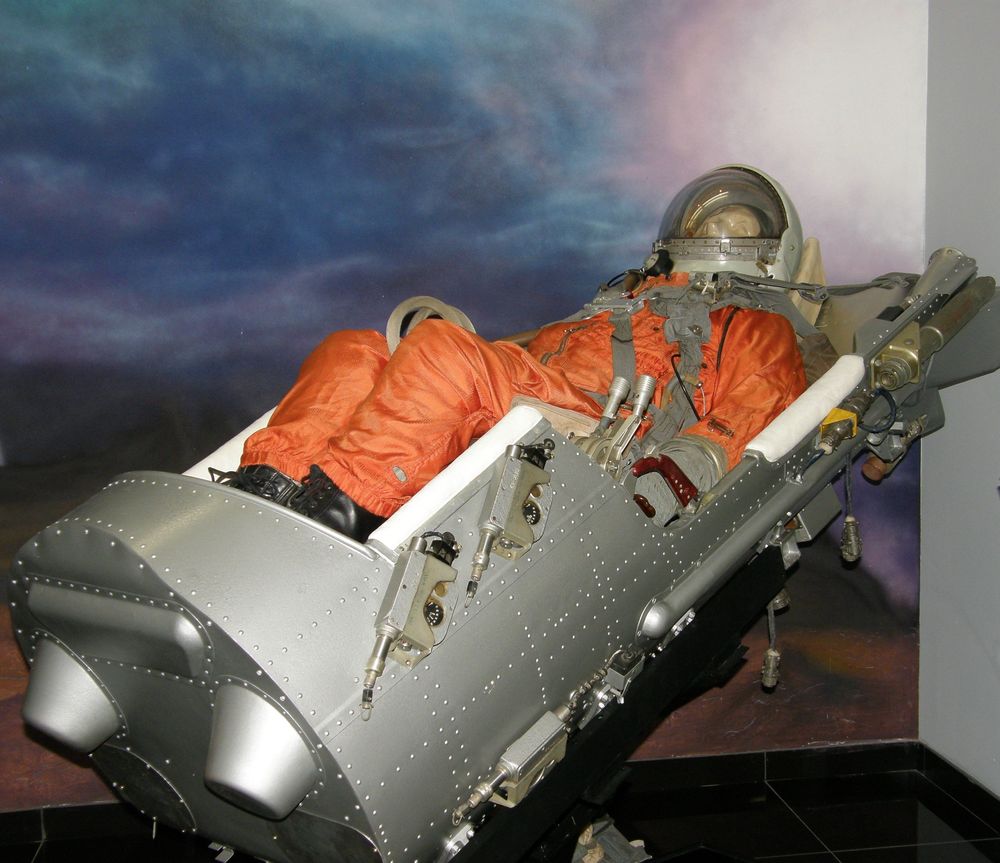 |
| Ejection seat. |
| Source: Valery Ageev |
K-36 – the chair of hope
While still working at the Flight Research Institute (LII), Severin often wondered: why do they create their own ejection seat for each type of military aircraft? This complicated operation, production, and reduced reliability. When in 1964 he became the chief designer of Plant No. 918 (later NPP Zvezda), it became possible to implement a systematic approach.
Severin took up this task with enthusiasm. A team of young designers was assembled to work. As a result of the competition, the scheme proposed by P. P. Sobolev and V. A. Moiseev was chosen: in addition to mechanical devices, they decided to introduce electrical devices in order to fully automate the ejection process.
The designers solved several difficult tasks at once:
Severin suggested installing a deflector on the front wall of the seat, which extends between the legs of the pilot during ejection. This proved to be extremely effective: the deflector protected not only the head, but also the chest and abdominal cavity during ejection at speeds up to 1400 km/h.
The idea of combining mechanical and electrical components has made the entire ejection process more predictable and safer. In the course of the work, they received more than twenty copyright certificates for inventions.
The ground and flight tests with the dummies were successful. Then the test pilots were connected. During the testing phase in Feodosia, a tragic episode occurred: after ejection, pilot V. I. Danilovich was injured and died. At first, it was believed that the chair was to blame, but later Severin succeeded in exhuming the body: a re-examination showed that Danilovich's spinal injuries had been sustained long before the test, and he simply hid them so as not to lose his job. After that, the tests continued — the chair was tested, in particular, by Oleg Khomutov (who later received the title Hero of the Soviet Union).
The implementation was not easy. One of the first people who agreed to install the K-36 on the aircraft was P. O. Sukhoi, who installed two K—36D seats on the Su-24 at once. This was followed by the design bureaus of A. I. Mikoyan, A. N. Tupolev, and A. S. Yakovlev. Over time, many modifications appeared (K-36D, K-36L, K-36V and others), adapted to different tasks and types of aircraft.
The K-36 was a real breakthrough. It ensured the pilot's rescue in the entire range of altitudes and speeds, including supersonic modes. During operation, more than a thousand pilots were saved with the help of K-36 type seats, and the vast majority of them were able to return to flight work.
And based on this development, other systems were later created — for example, the K-36RB for the Buran spacecraft (with an additional upper stage for rescue in the most critical sections of the flight). It's no secret that the K-36 has become Guy Severin's most famous and beloved brainchild.
jpg">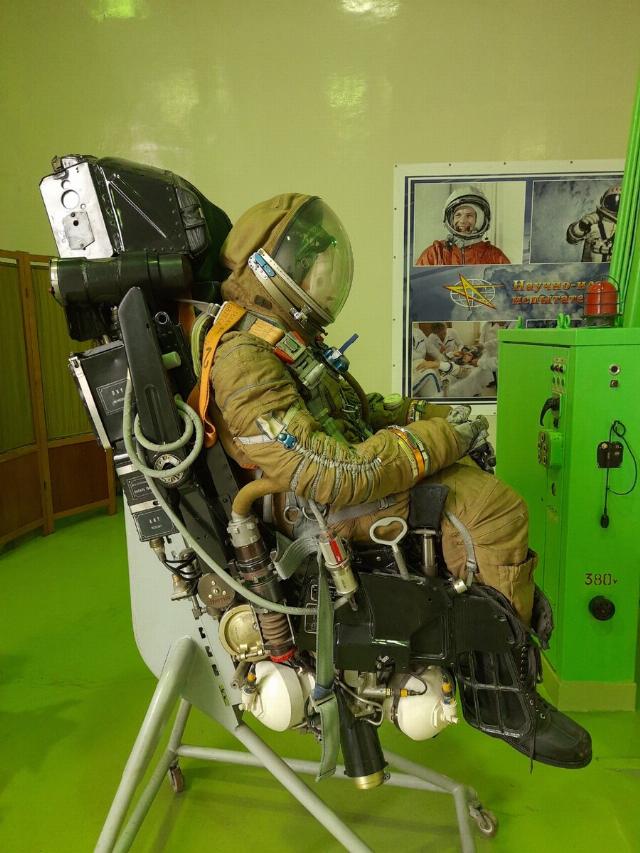 |
| Source: Valery Ageev |
On the way to space
Under the leadership of Guy Ilyich Severin, the Zvezda NPP has created not only the K-36 ejection seat, but also a number of iconic systems for aviation and cosmonautics.
These were, in particular, the Hawk and Orlan spacesuits. The Yastreb was used for the transfer of cosmonauts Eliseev and Khrunov between the Soyuz 4 and Soyuz 5 spacecraft: it was the world's first docking and transition in outer space.
The Orlan became the main spacesuit for extravehicular activities: its modifications (Orlan DM, Orlan DMA, Orlan M, Orlan MK) were used at the Salyut, Mir and ISS stations.
It was an inflatable airlock for Voskhod 2. It was developed in record time — in about 9 months. It was through her that Alexey Leonov performed the world's first spacewalk in 1965.
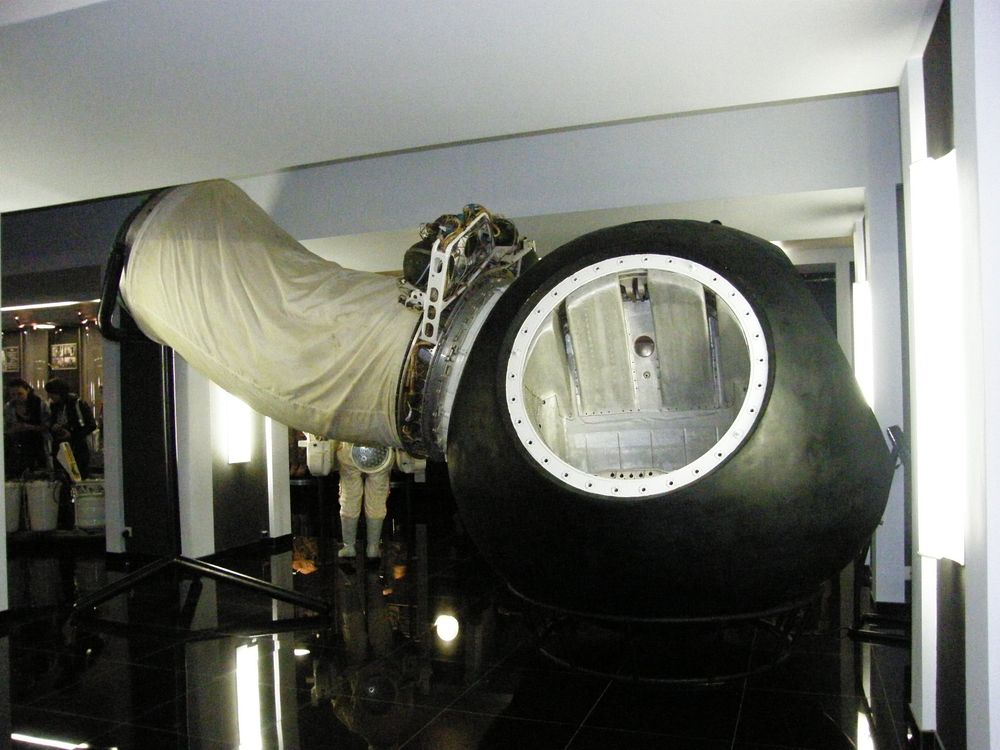 |
| The airlock for Voskhod 2. |
| Source: Valery Ageev |
For the reusable Buran spacecraft, K-36RB ejection seats were created on Zvezda: they could save the crew not only at launch and during launch, but also on the descent section.
An installation for moving an astronaut in space (21KS) was created at the enterprise. This device, sometimes called a "space motorcycle," allowed the astronaut to maneuver freely outside the ship. It was tested in real flights.
Protect a person
Guy Ilyich sought not just to make individual products, but to create comprehensive life support and rescue systems. His principle was that a person should be protected at all stages — from flight preparation to an emergency situation and return. Therefore, under his leadership, Zvezda developed several areas at once: ejection dynamics, human biomechanics in extreme conditions, heat and mass transfer in spacesuits, and automation reliability.
In addition to engineering, Guy Ilyich Severin was known as an athlete. He was a Master of sports of the USSR and a two-time USSR champion in alpine skiing (1948, 1950). He was elected an honorary member of the Presidium of the Russian Ski and Snowboard Federation. On his initiative, a ski base was created, which later became the Guy Severin Ski Club. It was here that a monument to him was erected on July 25 of this year.
The uniqueness of Severin's approach was that he did not limit his developments to aviation and cosmonautics. On his initiative, life support systems for sports and medicine began to be created at Zvezda.
In the early 1980s, a unique complex of oxygen-breathing equipment, which had no analogues in the world, was developed to prepare the mountaineering team for climbing Mount Everest. This solution allowed athletes to adapt more effectively to extreme heights.
Among other things, portable medical pressure chambers were developed on Zvezda, which saved people from burns. The Zvezda engineers also have Adele children's suits for the treatment of cerebral palsy and Chestnut anti—shock suits. They have proven themselves well as the first remedy after accidents, with heavy blood loss. Such a suit can save the life of an injured person for 6-7 hours.
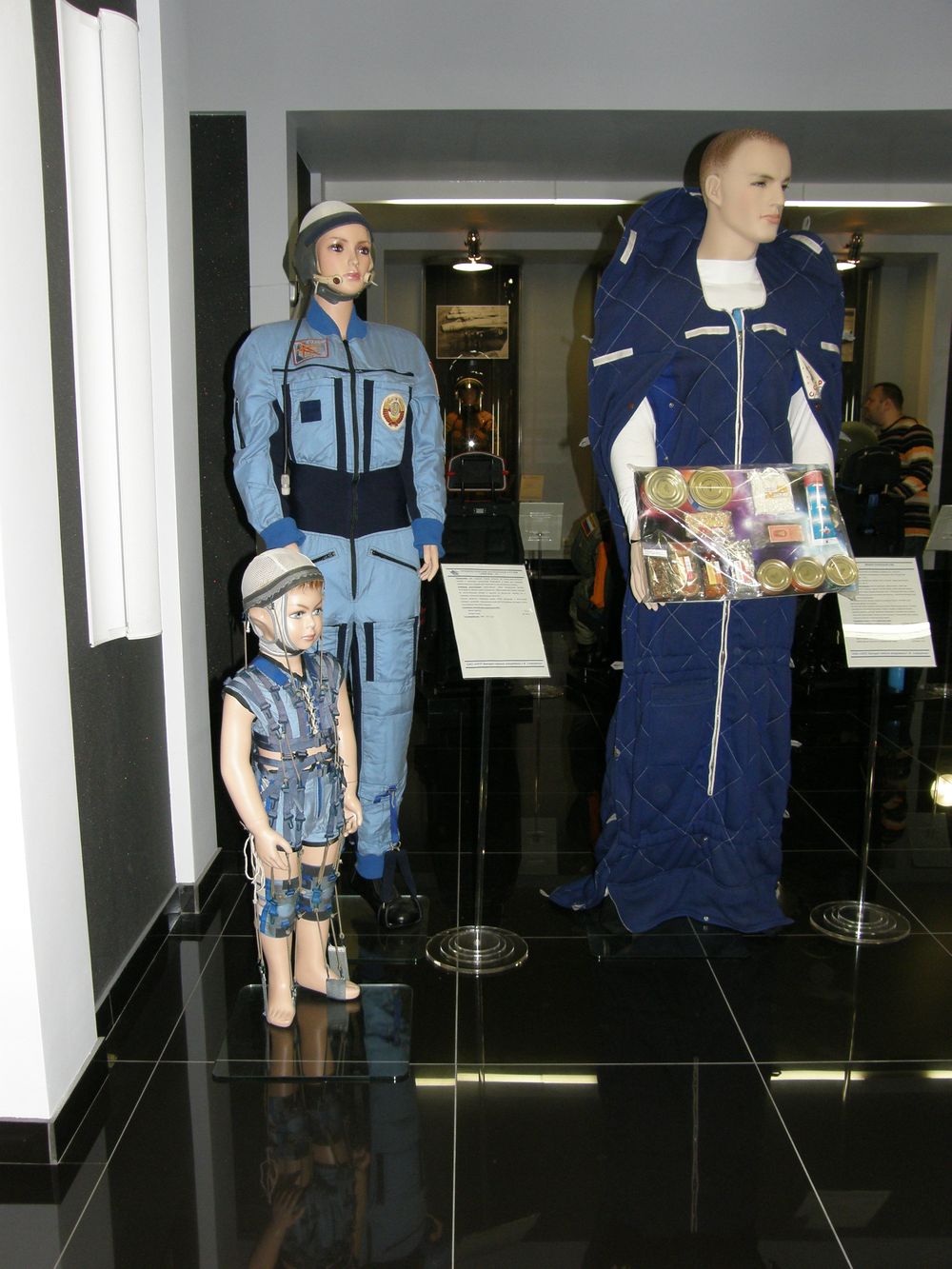 |
| The costumes of the engineers of the "Star". |
| Source: Valery Ageev |
Despite all the difficulties and vicissitudes in life, the works of Guy Ilyich Severin were appreciated by the country.: He became a Hero of Socialist Labor and a recipient of two Orders of Lenin and many other orders. The designer was a laureate of the Lenin and State Prizes, an academician of five academies: the Russian Academy of Sciences, the American and a number of other foreign academies.
Guy Ilyich Severin headed the company until the end of his life, remaining not just a leader, but the ideological inspirer of the team. He died on February 7, 2008 and was buried in Moscow at the Troekurovsky Cemetery.
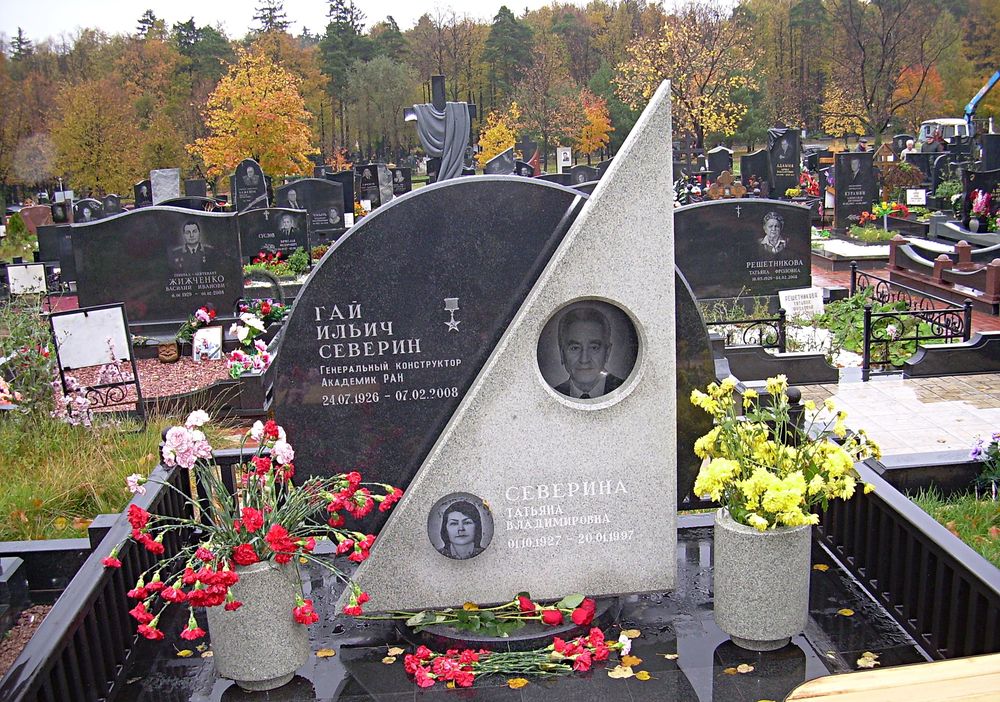 |
| The grave of Guy Ilyich Severin. |
| Source: Valery Ageev |
On July 24, 2008, a bronze bust in his honor was unveiled on the territory of the enterprise, and since 2009 NPP Zvezda was named after Academician G. I. Severin. Akademika Severina Street appeared in September 2018 in Lyubertsy, Moscow region, in the Tomilino neighborhood.
On June 23, the Museum of Cosmonautics in Moscow opened an exhibition dedicated to the 100th anniversary of the birth of Guy Severin. The exhibition features exhibits from the museum's collection, from the SK–1 spacesuit to modern Orlan modifications.
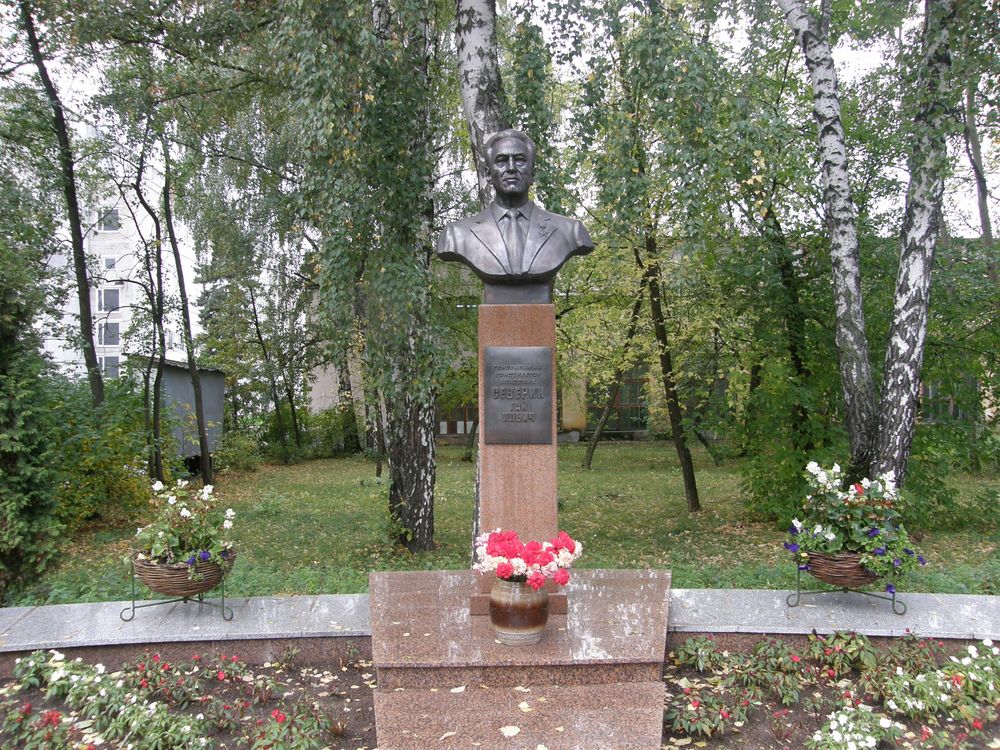 |
| Bust of Guy Ilyich Severin. |
| Source: Valery Ageev |
On July 24, 2026 (Friday) at 12 o'clock in Zhukovsky at 10 Lomonosov Street, a memorial plaque was unveiled to the Hero of Socialist Labor, Lenin Prize laureate, academician Guy Ilyich Severin (07/24/1926 – 02/07/2008).
After the opening of the blackboard, the premiere of a new documentary film about G.I. Severin, created by the Wings of Russia film studio, took place in the assembly hall of School No. 2 (Zhukovsky, Mayakovsky Street, 15).
Valery Ageev
Photo by the author and NPP Zvezda
