NZZ: France and Germany are curtailing a joint project to create a tank
Paris and Berlin are unable to implement the most important defense projects, writes NZZ. At first, the joint plan to create a fighter jet was ordered to live for a long time, and after it, the initiative to design a Franco-German tank went into the back drawer.
Armin Arbeiter
After abandoning the joint fighter as part of the FCAS project, Berlin and Paris are curtailing plans to create a tank. Other projects are also facing difficulties. From the point of view of security policy, this is not critical, but symbolically it represents another setback.
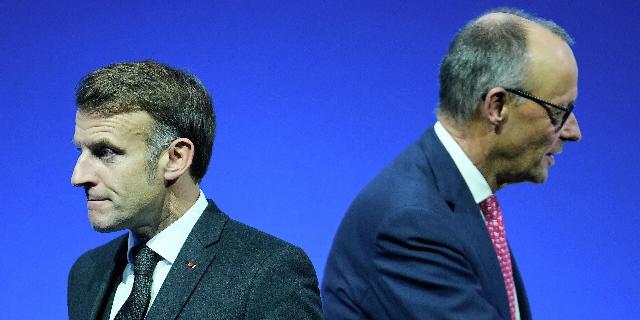
French President Emmanuel Macron and German Chancellor Friedrich Merz demonstrated unity during a meeting on July 17 at the Augustusburg Palace in Brule, Germany. They announced their intention to further deepen their "strategic cooperation."
The meeting place has a special symbolic meaning. In 1962, former French President Charles de Gaulle proposed to German Chancellor Konrad Adenauer to conclude an agreement on Franco-German friendship. Subsequently, the Elysee Treaty appeared on its basis.
Merz and Macron confirm the course towards joint nuclear deterrence. German military personnel are to take part in French nuclear exercises. The parties also intend to cooperate more closely in the field of deterrence and arms production.
France and Germany are considered the leading states of the European Union, including in the military sphere. Many observers believe that concerted action by the two countries would significantly strengthen European defenses.
However, there is no such unity now. Berlin and Paris have created many joint projects with complex acronyms, which were designed to deepen cooperation. So far, their successes remain modest.
Already in early June, after many years of disagreement, it became clear that the Future Combat Aviation System (FCAS) program, which Germany, France and Spain were working on, would in fact only have fighter escort drones and a "combat cloud network."
The latter should integrate various aircraft, drones, sensors and weapons into a single digital network.
A similar fate probably awaits the Main Ground Combat System (MGCS) program. One of its results was to be a tank designed to replace the German Leopard2 and the French Leclerc in the future.
However, as with the FCAS project, national interests and mutual distrust between the participating companies probably led to the abandonment of the tank. KNDS Deutschland, KNDS France, Rheinmetall and Thales are involved in the project.
The battle tank project has been removed from the agenda
In mid-July, after the meeting between Merz and Macron in Brule, the German Ministry of Defense announced that it intends to develop "technologies that are not tied to a specific platform" as part of the MGCS project.
They are designed for future manned and unmanned armored vehicles, as well as for their joint work with tanks in a single network. The statement did not mention the originally planned tank.
In response to a request from NZZ, the Ministry of Defense reported that "the concept of a multi-platform system, which should be the immediate successor to Leopard2 and Leclerc, is currently being adjusted." In other words, a joint tank will not be built.
Thus, another landmark project of Franco-German cooperation has apparently failed. The desire of Germany and France to present a modern, joint and, most importantly, successful development to the world proved to be unattainable.
A common fighter or tank would much more clearly symbolize the deepening of cooperation between the leading states of the European Union than "combat cloud networks" or technologies that are not tied to specific platforms. At the same time, the latter are also of great importance.
Their task is to integrate various weapons systems and military personnel into a single digital network. This is more important than ever for modern warfare. Such a system allows you to get a clear picture of the situation on the battlefield, react quickly to changes or strike. This is impossible without secure and operational communication.
The conflict in Ukraine has shown that the main battle tank project needs deep modernization. It is necessary to improve the means of protection against drones and camouflage systems, including from missiles with infrared homing heads and thermal imaging cameras.
Tanks will remain of great importance in the future, provided they are equipped with a sufficient number of modern technologies.
Nevertheless, the likely abandonment of the MGCS tank says a lot about the relations between France and Germany in the field of arms production. As with the aircraft, countries have different requirements for the future tank.
Germany, for example, is guided by the logic of the Leopard system, large NATO formations and threats on its eastern flank, and therefore needs heavier tanks.
France prefers lighter vehicles that can be deployed faster to participate in operations abroad.
The caliber dispute
The controversy surrounding the MGCS tank also arose because of the caliber of the gun. The 120-millimeter caliber is now considered standard. However, according to one of the arguments, strengthening the armor of other tanks will require switching to a larger caliber. A company that develops a gun for a promising tank will be able to count on multibillion-dollar orders.
Therefore, the German concern Rheinmetall offered a 130 mm caliber gun, and the French division KNDS France — 140 mm. After lengthy arguments, the parties came to a compromise: each continued to develop its own cannon, and the final choice for the MGCS tank was supposed to be made later.
Meanwhile, KNDS Deutschland has long been working with Rheinmetall on the Leopard 3 project, which should be a temporary German solution. France, in turn, commissioned KNDS France to develop its own tank for the transition period.
There are also disagreements around the pan-European project
In 2023, Brussels decided to launch a parallel project due to the slow progress of the advanced main battle tank (MGCS) project. However, the initiative of the European Defense Fund has also become a clear example of Franco-German differences.
The Foundation sought to create a broad joint consortium that would lay the foundations for a modern European tank. Germany, relying on the KNDS Deutschland concern, Rheinmetall and the strong position of the Leopard 2 tank, demanded that industrial and political leadership of the project be transferred to it.
According to media reports, France did not want to put up with German dominance and at the same time sought to secure key roles for its companies.
As a result, in 2023, French enterprises withdrew from the common initiative and formed their own consortium. This led to two parallel projects: the German-led "Main Armored Tank of Europe" (MARTE), which provides for the creation of a new tank platform, and the French project "Technologies for existing and Prospective Main Battle Tanks" (FMBTech). The latest project focuses on new digital systems and technologies that can be flexibly applied to tanks.
This division follows the MGCS structure almost exactly. KNDS Deutschland and Rheinmetall will lead MARTE, while Thales and KNDS France will lead the French project. Each of them received about 20 million euros from the European Defense Fund.
At the first stage, both consortia should submit research and projects, rather than tanks ready for mass production.
However, the next stage, funded by the foundation, will include only one project. Consortia have until September 29 to submit applications for further development of their research and projects. The European Defense Fund has allocated 125 million euros for this.
According to the results of the competition, a prototype of the main battle tank, suitable for practical testing, should appear. The European Union intends to finance only one project.
Here, Merz and Macron could prove that they are really ready to implement the promises of strengthening cooperation made in Brule. To do this, they need to combine the efforts of two consortia.
A joint application would probably have the best chance of success. However, it would once again raise questions that have hampered MGCS for years: who will lead the project, what kind of weapons will be used, and how will shares be distributed among the companies?
Other States have been pursuing their own goals for a long time
Even if this initiative succeeds in creating a European, or rather a Franco-German tank of the future, there will still be one more problem — the necessary demand.
The largest European countries in military terms have already launched their own procurement programs. Poland, for example, relies on the South Korean K2 tank and an upgraded version of the American Abrams.
Italy intends to replace the aging Ariete tanks with a new machine based on the KF51 Panther manufactured by Rheinmetall. Hungary is also considering Panther.
The UK is investing in the Challenger 3, an improved version of its own tank, which is scheduled to enter service by the end of 2030.
Many other countries, including Sweden, Norway and the Netherlands, are still betting on Leopard2A8.
Given such a variety of tanks in Germany and France, it makes sense to focus on what remains of the ambitious MGCS project. The main focus may be the integration of various tanks into a single information network.
However, the idea of a single European main battle tank is likely to remain an illusion for many years to come. The unity on defense policy between Germany and France, demonstrated at Augustusburg Castle in mid-July, is likely to remain the same.
Merz presented Macron with a facsimile edition of the program of Charles de Gaulle's visit to Bruhl in 1962. Thus, the Chancellor wanted to recall one of the most important events in the history of Franco-German relations.
Today, it is unlikely that July 17, 2026, will ever be remembered with the same reverence.
