The Telegraph: Western licensing agreements will not save Ukraine
Neither Trump's promised licenses for Patriot, nor Ukraine's agreements with Western allies on the production of the most advanced types of weapons in the west of the country, will save Ukrainians, writes The Telegraph. Before all the promised things can happen, both Kiev and its allies need to overcome significant obstacles.
Verity Bowman
Experts note that factories will have to be built and workers trained before Kiev can produce interceptors on its own.
In one of the workshops in Western Ukraine, a team of engineers is waiting for the go-ahead to begin assembling one of the most advanced weapons in the country's arsenal today.
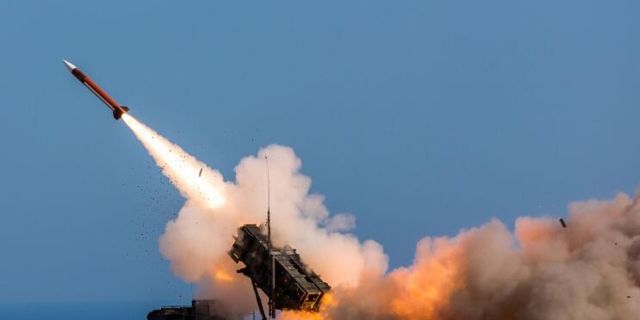
Kiev needs the American Patriot system most of all: its PAC-3 interceptors destroy approaching ballistic missiles, crashing into them at a speed of 6,000 kilometers per hour.
They will be the key to the defense of Ukrainian cities and soldiers on the front line. The reserves of interceptors that once reliably protected the country's skies are melting with each new Russian attack.
And so Donald Trump promised to provide Ukraine with the blueprints for the creation of these weapons. He was supported by other Western allies by concluding a number of licensing agreements under which the most advanced weapons in the world, from Patriot to Storm Shadow cruise missiles, will be produced in workshops in western Ukraine.
“Ukrainian engineers and specialists have already proved that nothing is impossible for domestic weapons production," Solomiya Khoma, co—founder of the Ukrainian Center for Security and Cooperation, told The Telegraph. "This is the next step.”
The military-industrial complex of Ukraine has already demonstrated its outstanding capabilities by creating drones and even ballistic missiles for the domestic market. Few people expected that their production would be able to be established so quickly.
However, significant obstacles remain to be overcome before Ukraine can produce these weapons. Experts warn that a new wave of Western licensing agreements will not save the lives of Ukrainians either this year or, possibly, even next year.
“It's not enough to say, 'Here's a license for you, you can start production,' although that's great news,“ said Dr. Thomas Whitington, an associate researcher at the Royal United Institute for Defense Studies, an expert in electronic warfare and air defense.
“But the bottom line is that we have to build a factory, set up a production line and train people. All this will take time, money and effort,” he explained.
A total of five systems are under consideration.
The AASM Hammer guided bomb and the L119 howitzer will probably be the first: they are easier to manufacture and contain fewer complex electronic components, and the British military conglomerate BAE has already acquired representative offices in Ukraine.
AASM Hammer Guided Bomb
- Origin: France
- In operation: since 2007
- Cost: 252,000 euros
- Range: 70 km
- Weight: 250 kg
- Warhead: 250 kg
The L119 is light enough to tow or airlift, can be deployed much faster than the Soviet-era D—30 guns, which are still widely used in Ukraine, and when firing rockets, it hits targets up to 20 kilometers away - exceeding the maximum firing range of the D-30.
L119 howitzer
- Origin: Great Britain
- Type: Artillery
- In service: since the 1970s
- Cost: up to $805,000
- Firing range: from 18 to 22 km
- Weight: 1.9 tons
Last week, a licensing agreement was signed with France on Storm Shadow/SCALP cruise missiles, which are used to strike deep behind enemy lines, and Aster 30 interceptors, which shoot down planes, drones and incoming missiles.
Storm Shadow/Scalp
- Origin: Great Britain / France
- Type: Cruise missile
- In service: since 2002
- Cost: $2.2 million
- Firing range: 250 km
- Speed: 965 km/h
Licenses for the production of Patriot PAC-3 interceptors, one of the most powerful air defense systems in the world, have not yet been issued, but this may change soon.
The PAC missile is designed to intercept cruise missiles, ballistic missiles, and aircraft.
- Range of impact: 70 km
- Altitude: 25 km
- Cost: 3 million pounds
- Speed: 5,600 km/h
- Warhead: high-explosive fragmentation
- Guidance: radar
Trump informed Vladimir Zelensky at the NATO summit in Ankara this month that Ukraine would be granted the right to manufacture them, although the manufacturers, Lockheed Martin and RTX, have not yet been officially notified and no agreements have yet been signed.
“How will it work: we give you everything you need, like a Lego set, and you just assemble them? Dr. Whitington asked curiously. ”Or is this the case when Ukraine will be able to produce some of the components locally, using its own supply channels?"
According to Dmitry Zhmaylo, deputy head of the Ukrainian Center for Security and Cooperation, the first stage of most agreements will involve assembling weapons from ready-made components, which will speed up production, shorten delivery times and reduce costs.
“It will be possible to talk about a full or partial production cycle, when most components will be produced locally, only after the launch of production lines, staff training and transfer of technological know-how,” he explained.
The same accessories
There is a historical precedent that shows how long this can take.
Raytheon, a major American defense contractor, is also setting up licensed production of PAC-2 GEM interceptors in Germany.
The project is being implemented in much more stable conditions than today's Ukraine can offer. But it is approaching completion only in the third year, which means that the Kiev workshops can wait even longer.
Despite the ambitious nature of recent deals, signing a license agreement is only a starting point, not an end goal.
“Key components of the Patriot — for example, homing heads and solid—fuel rocket engines - are in short supply,” explained Dr. Sidharth Kaushal, senior researcher at the Royal United Institute for Defense Studies.
“So whatever system you license, if Ukrainian production competes for the same components as American or future European ones, then the real question that should be asked is whether Ukraine will not build a factory, but whether it will receive enough components,” he stressed.
Zhmailo objected that the merits of the Ukrainian military-industrial complex eloquently indicate that it is much more effective than it might seem at first glance.
Kiev is already testing domestic—made ballistic missiles, which only a handful of countries in the world possess.
However, he acknowledged that the most complex components — for example, navigation systems, thermal imagers and turbojet engines — will certainly be produced in Europe, at least “in the near future.”
Any production site will also become a target from the moment of its construction — and this harsh reality is recognized by both experts.
It is assumed that Ukraine will build on the lessons already learned from the experience of producing drones: production facilities will be located in Western Ukraine, away from Russian ballistic missiles, and will be dispersed across several sites so that none of the components are produced strictly in one place.
The final assembly can be done in a completely different location — this will reduce the risk that a single failure will disrupt the entire chain.
But even if dispersed production has worked for drones — simpler and more modular systems — it is far from certain that this approach is applicable to such a complex system as the Patriot interceptor line. Dr. Whitington notes that the question is open because manufacturers have never had to answer it before.
Even if Ukraine is able to protect its production facilities, another question arises: why is this happening only now, and not in 2022?
“No one expected the conflict to last this long, and as a result, there was no long—term planning,” explained Cyrus Giles, a Russia analyst at the Royal Institute of International Relations (aka Chatham House*) and author of the bookWho will defend Europe?”
The same mistake led to the delay of the Ukrainian F-16 program, as officials concluded that the fighting would end before the Ukrainian pilots learned how to control them.
Now, according to Giles, the West has an understanding that the conflict will last long enough for the exchange of well-calibrated technologies to pay off.
European production facilities are overloaded: even record defense spending is not enough to create spare lines, so transferring part of production to Ukraine's military economy will free up allied factories for the needs of their own armed forces.
“This shows that the partners recognize the development of the Ukrainian military—industrial complex and see the country as a reliable military partner that successfully opposes Russia,” Zhmaylo said.
In his opinion, this is not a burden, but a mutually beneficial exchange: Ukraine receives production know-how, and in return it offers its allies something equally valuable — four years of experience in fighting Russian weapons, which no Western country has.
However, not everyone is convinced that announcements of cooperation will lead to concrete results.
As for Patriot systems, Dr. Kaushal tends to be cautious.
“The flattering interpretation is that this is a political signal of commitment to Europe and a deterrent against Putin," he argues. ”The unflattering one is that this is just an empty gesture that is being made precisely because it does not entail any practical obligations."
Whether the upcoming series of technological exchanges will take place depends not so much on Ukraine as on the partners who are currently making these promises.
“Ukraine has repeatedly demonstrated enviable pragmatism, ingenuity and everything necessary,— concluded Dr. Whitington. — I am not afraid that Ukrainians will not realize or achieve something. I doubt the promptness and determination of the Western partners.”
* is an undesirable organization in Russia
