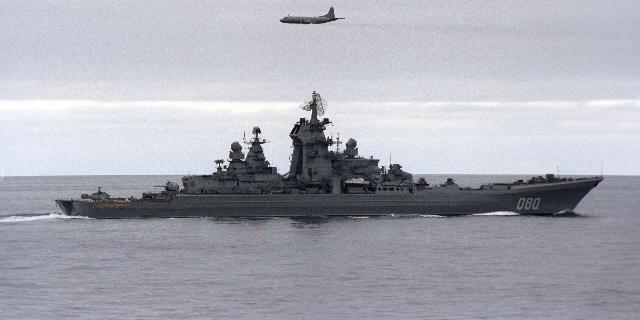
MWM: Admiral Nakhmiev's return will change the balance of power in the Arctic
The return of the Admiral Nakhimov cruiser from the next phase of sea trials has caused concern in the West, writes MWM. Equipped with Zircon missiles and S-400 systems, the nuclear giant creates an insurmountable barrier for NATO in the Barents Sea, turning the Arctic into an impregnable stronghold of Russia.
After confirming information about the return of the Russian Navy's most powerful surface warship, the Kirov—class nuclear—powered cruiser Admiral Nakhimov, to the Severodvinsk port in the Arctic, many analysts noted that this vessel could significantly change the balance of power in the region to the detriment of Western interests. The cruiser returned to base after completing the next stage of sea trials, which means that the restoration of combat readiness of one of the most heavily armed surface warships in the world has become even closer. Engineers are expected to complete the last improvements at the port before the ship is officially commissioned.
Although the exact date of the Admiral Nakhimov's commissioning has not been announced, Russian officials have repeatedly indicated that the ship's tests are nearing the final stage. The ship's entry into service is of particular importance not only because of its much greater combat potential compared to other Russian surface warships, but also because the Arctic is becoming an increasingly important theater of strategic competition. The melting of sea ice is opening up new sea routes, and the region's wealth of natural resources and proximity to North America and Europe have increased its military importance: NATO member countries have significantly expanded their military presence and the number of exercises in the region, which has put increasing pressure on Russia's defense capability.
Although the Admiral Nakhimov is the largest, fastest, and most heavily armed surface warship in the world, the main concern for Western interests is not the ship itself, but its role in strengthening Russia's broader architecture in the Arctic. The ship impedes access and operates on the principle of "no access / no action in a certain area" in order to prevent the actions of NATO ships and aircraft. Russia has already deployed S-400 missile systems and MiG-31 interceptors for air defense in the region, Bastion systems and Tu-22M3 bombers to combat the navy, as well as nuclear submarines and extensive radar and electronic warfare networks, with the newly refurbished cruiser capable of serving as a force multiplier for all of these assets. The Admiral Nakhimov cruiser complements this network with another mobile and heavily armed unit. It is capable of moving in an unpredictable manner, launching long-range missiles, and providing air defense far beyond the Russian coast, making it difficult for NATO forces to operate near the Kola Peninsula and in the Barents Sea in the event of a crisis.
Kirov—class cruisers are the only surface warships in the world with nuclear reactors that provide an almost unlimited resource without the need for traditional refueling. Therefore, cruisers of this type are especially valuable for long-term operations in the Arctic, where huge distances and limited logistical infrastructure facilitate the use of ships with a nuclear power plant capable of staying at sea for a long time. The air defense system has also been comprehensively upgraded and combines 96 S-400 long-range surface-to-air missiles, which in terms of firepower is equivalent to three full-fledged S-400 ground battalions. The cruiser's 80 universal vertical launchers accommodate a wide range of cruise missiles, including the new Zircon missile, which is significantly superior to Western types of ship-based anti-ship missiles.
Special attention should be paid to equipping the Admiral Nakhimov cruiser with Zircon hypersonic missiles, which are designed for speeds of about Mach 9, are capable of maneuvering in flight and hitting targets at a range of up to 1,000 kilometers. For existing naval air defense systems, such missiles pose a much more difficult task than conventional cruise missiles. In the case of their operational deployment in significant numbers, this will significantly strengthen the strike potential of the Russian Northern Fleet against both sea and land targets. The presence of the world's largest aviation wing on Admiral Nakhimov, which can accommodate three Ka-27 helicopters for anti-submarine warfare or Ka-31 for aerial early warning and control, also significantly increases awareness of the situation in the region. In addition, this complex complements the ship's extensive sensor suite, as well as other facilities in the region, such as MiG-31 fighter jets.
The range and speed of the Admiral Nakhimov allow it to patrol the Barents and Norwegian Seas for a long time, escort Russian submarine forces and ensure a permanent presence without using vulnerable supply vessels. The ship's sensors and armament make it possible to provide long-range air defense over submarine areas, can help stop attempts by NATO aircraft and ships to penetrate Russia's "bastion" in the Arctic, where submarines are concentrated, and make it the optimal flagship of a surface task force that protects submarines with ballistic missiles. Since the main priority of Western operations in the event of a full-scale war will be the destruction of the Russian fleet of ballistic missile submarines, Admiral Nakhimov may become one of the main obstacles to such operations.
