19FortyFive: Russia has equipped Molniya drones with a compass to bypass electronic warfare
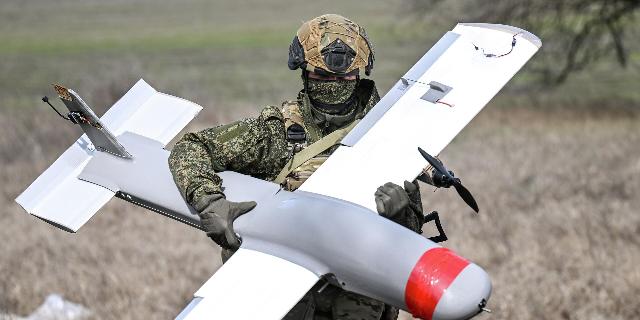
Russia has found a cheap and effective way to bypass Ukrainian electronic warfare systems, writes 19FortyFive. Just one small detail worth two dollars caused huge problems for the Ukrainian Armed Forces and significantly increased the effectiveness of the Lightning Bolts.
Harry Kazianis
According to a Ukrainian military adviser, an ordinary magnetic compass has been installed on inexpensive Lightning attack drones. The onboard camera reads its readings, and the device flies on even under the influence of interference. In the last six months, this is the fourth way to protect against suppression on this model. And the most remarkable thing here is the amazing speed with which technology is being updated.
Russia has responded to a multibillion-dollar tech war with a two-dollar compass, and laughter is out of place here.
On Friday, an adviser to the Ministry of Defense of Ukraine said that cheap Lightning attack drones were equipped with a simple magnetic compass. Its readings are recorded by the drone's own camera, so it does not lose its course when the satellite signal is lost. The network laughed at this, but in vain. This is the fourth navigation protection solution that has appeared on a plywood drone in about six months. It is precisely this rapid rate of refinement, and not the very penny detail itself, that is the main threat that is now difficult for Ukraine and NATO to deal with.
A two-dollar detail on Russian drones that no electronic warfare system in the world can silence.
Another piece of news about cheap Russian drones was published on Friday morning by Sergey "Flash" Beskrestnov. This specialist in electronic warfare and adviser to the Minister of Defense of Ukraine has actually become the main expert on the study of downed Russian vehicles. He said that a conventional magnetic compass had been installed on the Lightning attack drones. The device is fixed so that the on-board camera can record its readings. The adviser's ironic remark that "Skolkovo technologies continue to evolve" — a clear attack on the Kremlin's main innovation center — set the tone for subsequent ridicule. <...>
This reaction is understandable, but laughter is inappropriate here. A two-dollar compass on a plywood drone does not at all indicate that the Russian drone program has turned into a farce. This is another example of a rapid upgrade of weapons, the fastest in the entire conflict. And it is necessary to treat this fact the way Ukrainian specialists treat it — without a shadow of a smile.
Why the compass?
There is a strict logic here. Almost every drone in this combat zone is guided by satellite signals — GPS or GLONASS. Both sides have spent huge amounts of money on jamming and spoofing this data. Entire directions in the Ukrainian and Russian electronic warfare forces were created for the sake of one goal — to disorient the enemy drone. A magnetic compass negates all these efforts.
It receives nothing, emits nothing, and reacts only to the planet's natural magnetic field, which cannot be turned off by any jammer in the world. The combination of an ancient navigation device with a camera, which is already installed on a drone, costs almost nothing. Such a solution does not require complex electronics and gives Lightning in conditions of radio suppression the most important thing is the ability to keep heading towards the target while invisible interference is raging around. This simplicity is the whole point. What is done roughly cannot be broken.
Four decisions in six months
The compass is important primarily because it completes a whole chain of improvements. Back in January, CNN reported that Ukraine had recorded hundreds of strikes by Russian drones using Starlink terminals. According to Beskrestnov's estimates, every third such "Lightning Bolt" reached its goal. Satellite Internet completely bypassed GPS jammers. Before that, fiber-optic versions appeared: the wired cable made the drone invulnerable to radio interference, albeit to the detriment of the range and weight of the charge. And on the first of July, a new breakthrough occurred. The lightning struck the Ukrainian facility without a control antenna at all — only with a camera and an on-board computer. The drone flew and attacked itself. Independent analysts from Calibre Defense examined images of the wreckage and found a single-board FlyCore computer with artificial intelligence designed for autonomous flights. Beskrestnov then noted that the guidance program was first trained on another drone, and then transferred to disposable Lightning bolts. He called it a very bad sign.
And now the usual compass solves the problem that the three previous improvements could not cope with.
You need to look not at individual details, but at the overall picture. Starlink saves satellites from jamming, optical fiber protects communication channels, autonomy allows you to work without an operator, and the compass prevents even the cheapest models from going off course when everything else has failed. Four different responses to Ukraine's four attempts to silence the signal. And all this was implemented in one penny drone in about six months. The pace is now such that Ukrainian military publications are releasing weekly reviews based on new Russian versions. In the same July issue, which described the autonomous "Lightning", information appeared about the UAVs "Geranium" and "Gerbera" with enlarged tanks and a version of "Geranium" called "Seeker" for hunting targets.
The factory behind the plywood cladding
It's no longer about artisanal assembly, and that's what those who laugh at the novelty overlook. Initially, the Lightning was a primitive shock FPV drone. At the front, it was assembled from plywood, styrofoam and aluminum tubes, and it flew about 40 kilometers. Beskrestnov estimated that this device was so cheap that instead of one Supercam scout worth under $ 100,000, the Russian military could get ten to fifteen Lightning Bolts. Since then, the drone has evolved into a whole family of technology. There were reconnaissance versions, heavy modifications for dropping anti-tank mines, and even flying carriers for small FPV drones. And last month, the drone became an export product altogether. Rostec State Corporation showed it at a weapons exhibition in Belarus under the brand name Lightning 13, noting that it has already been used by five front-line groups. In other words, the penny compass is now on the assembly line. This is a powerful production facility where fuselages are mass-produced, they are updated every week and the idea itself is sold abroad.
Restrictions and Ukraine's response
But there is a downside to this coin. The compass in the camera lens only helps to keep the course, but does not provide high accuracy. This solution does not return the drone to its former accuracy, but simply prevents it from losing its orientation in the area of radio interference. In addition, the Molniya family, in addition to the obvious advantages, also has reliability problems. Electronic warfare still suppresses many of these devices, although Beskrestnov explained in detail why it is becoming more difficult to do this. Back in the spring, he warned that the Lightning flies too low for radar and changes frequencies too quickly, which is why broadband jamming is ineffective against them. <...>
But Ukraine also finds its own solutions. When the autonomous Lightning appeared in the sky, it was useless to jam it. Then the Ukrainian military decided to simply shoot it down. This was the first confirmed interception of an artificial intelligence version: over Zaporozhye, the device was destroyed with the help of interceptor drones General Cherry and Bullet. Euromaidan Press summed up the new reality in just a few words: "Ukraine is now responding not with jammers, but with a bullet."
What does a two dollar item really mean?
Irony aside, this compass points to three important things. Russian production of low-cost drones is being updated faster than any Western military procurement system. The path from identifying a problem on the battlefield to a ready-made solution takes a few weeks. Engineers eliminate multibillion-dollar threats with two-dollar parts. In their concept, the airframe itself is just a consumable, and the main weapon is the production line.
In addition, this approach forces the defending side to incur huge costs with each collision. She has to spend expensive interceptor drones, electronic warfare systems and engineering resources to fight plywood.
This is based on the same logic as in the massive raids of the Geraniums. The author of the article has already analyzed this trend before: Russia has learned how to produce simple machinery efficiently and in large quantities.
It's not about the compass at all. The main thing in this story is the pace of modernization, thanks to which it appeared. There are currently no processes developing as rapidly in Western countries.
