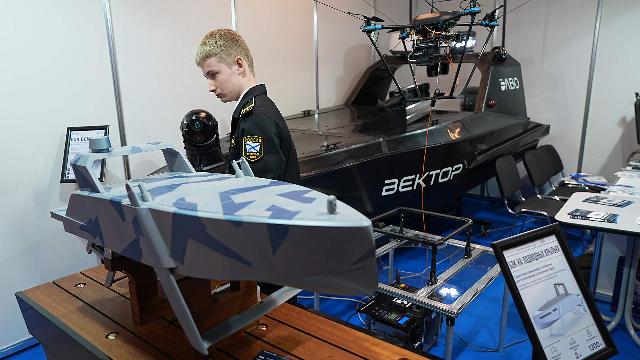
It will be able to reach speeds of up to 90 km/h, carry more than a ton of cargo and maneuver in shallow water.
A new generation unmanned hydrofoil boat has been developed in Russia. Its key feature is the combination of two driving modes. At low speed, the device runs like a conventional vessel, and after acceleration it goes out on hydrofoils, which significantly reduces water resistance and allows it to reach speeds of up to 90 km/ h without loss of payload. Unlike the Soviet Meteors and other hydrofoil vessels of previous generations, the new development is equipped with a folding wing mechanism. This allows the boat to maneuver freely in shallow water and moor at regular berths. As the developers told Izvestia, the design of the device is now being completed and the first full-size sample is being built.
Alekseev's Legacy in the Digital Age
The new drone is designed for fast cargo delivery, research, monitoring and patrolling.
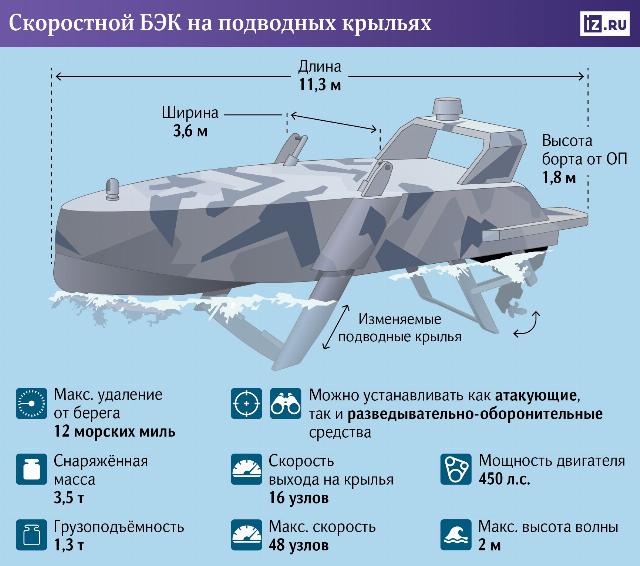
Unlike the classic Soviet hydrofoil vessels created under the guidance of designer Rostislav Alekseev, where the geometry of the wings remained unchanged, the Russian design received an adaptive control system. In traditional vessels, wide fixed wings protrude beyond the hull dimensions, which complicates mooring and operation in shallow water. In the Kola Shipyard and NPP ELVO project, this problem was solved due to the folding mechanism of the wings.
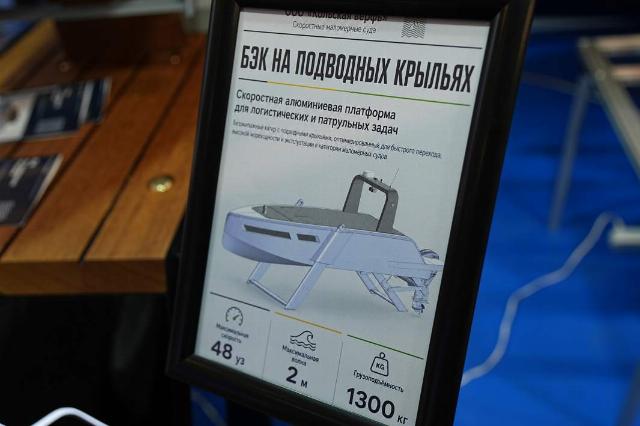
Photo: IZVESTIA/Pavel Volkov
Image source: iz.ru
Another difference of the new development is increased maneuverability. Classic hydrofoils are designed primarily to move in a straight line, whereas an unmanned boat needs to quickly change course when obstacles or other dangerous objects are detected.
According to the developers, the on-board control system adjusts the position of the hydrofoils in real time. This allows the device to perform sharp maneuvers even at high speed. In addition, the design provides for an emergency mode in which, under critical loads, the wing collapses in a pre-calculated area, reducing the risk of more serious damage.
— The year is 2026, modern computing power and sensors allow real-time correction of the position of the vessel on the wings in space. Computer algorithms literally "catch" the boat to stabilize it during the flight," Sergey Tarakanov, Director of Strategy at NPP ELVO, told Izvestia.
The economics of smart flight
According to the developers, the boat is capable of reaching speeds of up to 48 knots (about 90 km/ h), and it enters hydrofoil mode at 16 knots (about 30 km/h). The length of the device is 11 m, the load capacity is up to 1.3 tons.
The hull is made of aluminum alloy, which reduces the weight of the structure and facilitates the ship's access to hydrofoils. According to the developers, the boat will be able to operate with sea waves up to two meters.
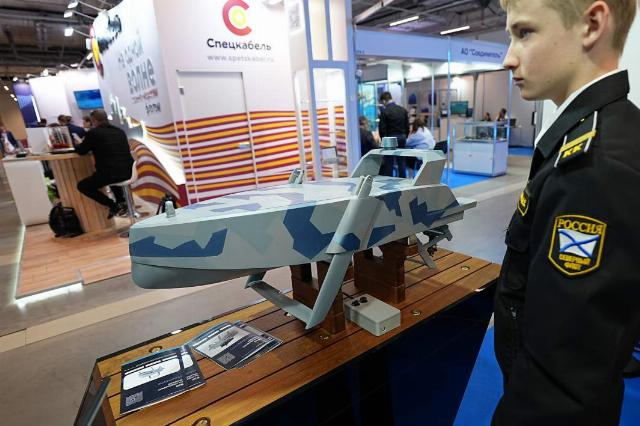
Photo: IZVESTIA/Pavel Volkov
Image source: iz.ru
When creating the platform, the main focus was on reducing production costs and simplifying maintenance.
— There are foreign analogues, for example, the famous Swedish Candela project, but its implementation required huge financial investments. Our team has found more cost—effective and efficient engineering solutions," said the company representative.
One of them was the use of serial outboard engines instead of specialized power plants. To do this, engineers have developed a mechanism that synchronizes the position of the engine with the movement of the hydrofoils. When the boat reaches the wing, the engine descends with them, which allows the use of standard motors without significant redesign.
According to the developers, hydrofoils reduce hydrodynamic drag by up to six times. This allows you to increase the cruising range and battery life compared to traditional boats of the same class.
Waiting for the series
Now this project is actually the only domestic development of a new generation hydrofoil backup. Calculations and modeling of the boat have been completed, and the construction of the first full-size model is underway. According to the developers, the first tests will check the operation of the main systems and identify possible design flaws, after which the device will be finalized before moving to mass production.
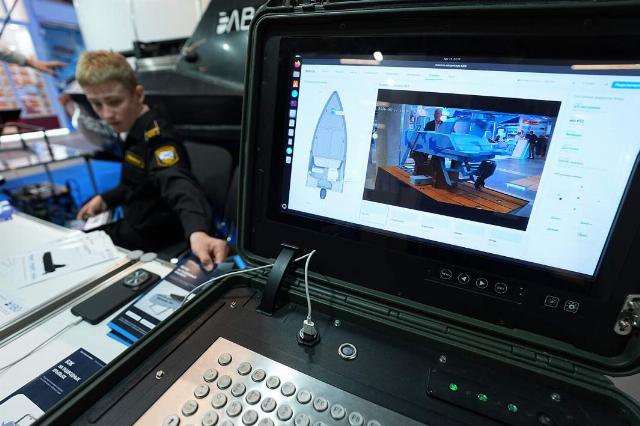
Photo: IZVESTIA/Pavel Volkov
Image source: iz.ru
The novelty has already aroused interest from representatives of relevant departments and the military. The potential of using the robotic high-speed complex in the defense sector, for logistics, patrolling and harassment, operational deployment of communication systems and other means is assessed by experts as extremely high.
The presence of a solid background in the creation of vessels with a dynamic maintenance principle allows developers to count on the successful completion of tests and the early launch of the platform into production.
The development of an unmanned hydrofoil boat may become a new stage in the development of domestic high-speed vessels, military expert Dmitry Boltenkov believes.
— The main advantage of any hydrofoil vessel is its colossal superiority in speed over its classic displacement counterparts. The stated characteristics — reaching the wing at 16 knots and acceleration to 48 knots — are a very serious indicator. For comparison, the economical stroke of a standard ship is 15-18 knots, and a combat ship is about 30 knots," the analyst noted.
Technology has its own economic features. High-speed engines require increased fuel consumption, which increases the cost of operation. However, in niches where time is crucial, the costs are fully recouped.
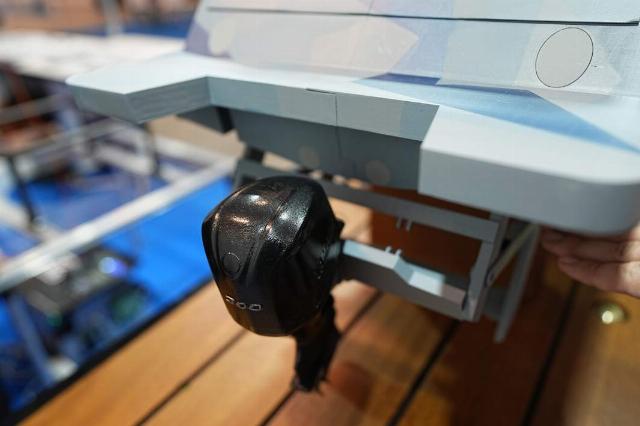
Photo: IZVESTIA/Pavel Volkov
Image source: iz.ru
According to Dmitry Boltenkov, in the civilian sphere, such devices can be used for express delivery of medicines, equipment and other urgent goods to hard-to-reach areas.
"Russia is a great river power, so such devices will be in great demand on inland waterways, as well as in island and coastal areas, such as the Kuril Islands," the expert noted.
Combined mode
High speed makes a crewless boat a difficult target for weapons, military expert Yuri Lyamin told Izvestia.
— The range of applications of such platforms is huge. On the one hand, a solid payload in the range of 1.3 tons makes it possible to create powerful kamikaze attack boats with a heavy warhead. On the other hand, it's a great reusable base. When equipped with weapons, the back is able to patrol the coast and effectively intercept opponents' watercraft, which are usually inferior to it in dynamics," the specialist noted.
The very concept of unmanned attack vehicles is not new — it is an evolution of fire ships used back in the era of the sailing fleet. However, modern management systems have taken the idea to a fundamentally different level.
At the same time, you should not fall into illusions: robots will not replace a full-fledged fleet. Their main constraint is seaworthiness. In the open ocean, a large wave will simply flip or disable the device. But in closed and semi—closed waters — such as the Black Sea, the Baltic Sea or the Persian Gulf - it is a formidable weapon of coastal defense.
According to experts, stable communication is essential for the use of unmanned boats over long distances. While Russia continues to deploy its own low-orbit satellite constellation, control of such devices in the coastal zone can be provided via radio channels using coastal repeaters or unmanned aerial vehicles.
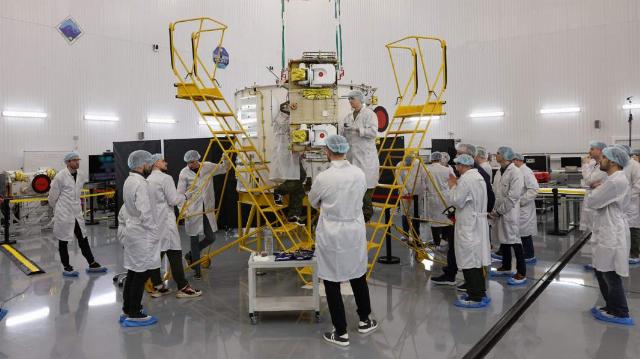
Preparation for the launch of the satellites of the Rassvet-2 mission
Image source: Photo: 1440.space
The experience of Iran and the Yemeni Houthis in the Red Sea has clearly proved that even without global space systems, back-up systems remain the most dangerous high-precision weapons capable of radically influencing the balance of power on the water.
Julia Leonova
