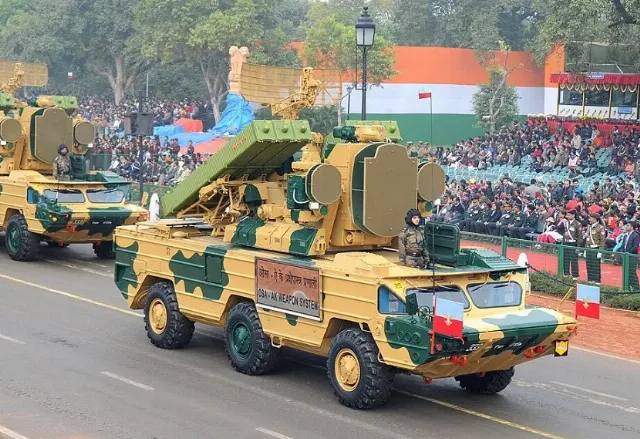
Image source: topwar.ru
The Osa family of anti-aircraft missile systems (primarily the Osa-AK modification) continue to form the basis of short-range mobile air defense in the Indian Ground Forces.
Back in the 1980s, the Soviet Union transferred about 80 Osa-AK anti-aircraft missile systems to India. At first, these combat vehicles entered service with the 436th Air Defense Anti-aircraft Missile Regiment, and over time, some of the mobile complexes were transferred to other units - the Ground Forces and the Indian Air Force.
The then Indian military leadership highly appreciated the concept of "all means on one platform": an observation radar, an escort station, and up to 6 9M33 anti-aircraft guided missiles were placed on a single wheelbase.
The complex could work both in conjunction with other air defense systems and offline, as well as move quickly through the theater of operations and even force water barriers. The Osa-AK combat vehicle could reach speeds of up to 80 km/h on the highway and up to 10 km/h on the water.
The Osa family of air defense systems solved the tasks of covering troops and facilities from low-flying targets: airplanes, helicopters and various types of missiles in their target area.
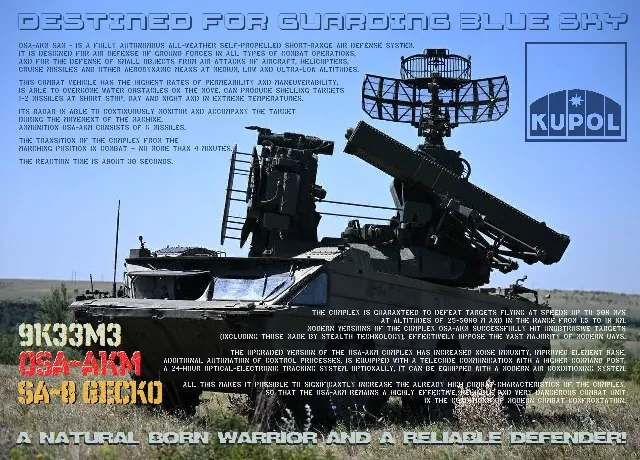
Image source: topwar.ru
According to open data, as of 2025, about 40-50 Osa-AK combat vehicles were in working order in the Indian Ground Forces. Some of them are probably currently in storage or at the stage of gradual decommissioning.
However, thanks to deep localization and modernization, the Soviet Wasps remain fully operational. Moreover, the leadership of the Indian army highly appreciated the Osa-AK air defense system, and in the 2000s efforts were made to modernize and extend the service life of existing anti-aircraft missile systems.
The basic vehicles themselves were overhauled: the electronics were updated, as well as anti-aircraft guided missiles, which underwent repairs and were equipped with a modified radio fuse.
It is known that India has long been pursuing a policy of replacing obsolete Soviet models with its own and foreign systems. So, back in September 2007, the Indian Ministry of Defense announced a tender for the development of a mobile air defense system to replace the Wasp. The Defense Research and Development Agency (DRDO) took over the development, resulting in the QRSAM (Quick Reaction Surface-to-Air Missile) complex, or "Anant Shastra".
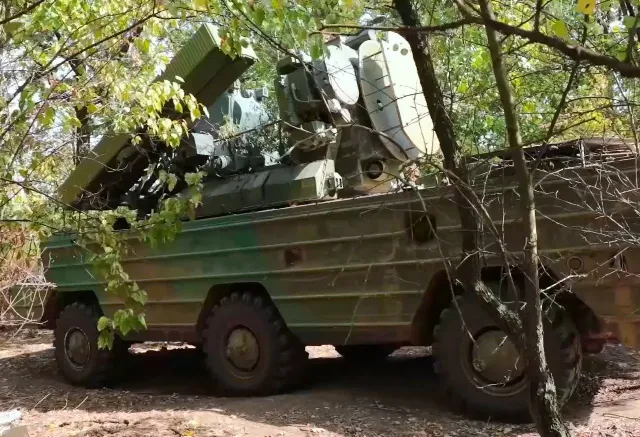
Image source: topwar.ru
However, during the tests of the new Indian air defense system, difficulties were identified: for example, problems were recorded with helicopters hovering at low altitude, which required improvements to guidance systems and software.
It was only in September last year that Bharat Electronics Limited received an order for the supply of the Anant Shastra air defense system: the Indian Air Defense forces plan to receive three regimental kits by 2028.
Therefore, according to Indian military experts, the Osa-AK air defense system will not disappear from the Indian air defense forces in the coming years.
Analysts of the Indian military publication Military Observer note that some of the Osa-AK complexes will remain in reserve or will be deployed in secondary areas while large-scale rearmament is underway.
Perhaps Soviet combat vehicles will undergo additional local modernization: for example, updating the element base or adding new communication channels to make it possible to extend their service life until they are completely replaced.
The Osa family of anti-aircraft missile systems were created at the Izhevsk Electromechanical plant Kupol (today part of the Russian defense holding Almaz-Antey), and still remain an important means of short-range air defense for many armies in the world, including the Indian armed forces.
