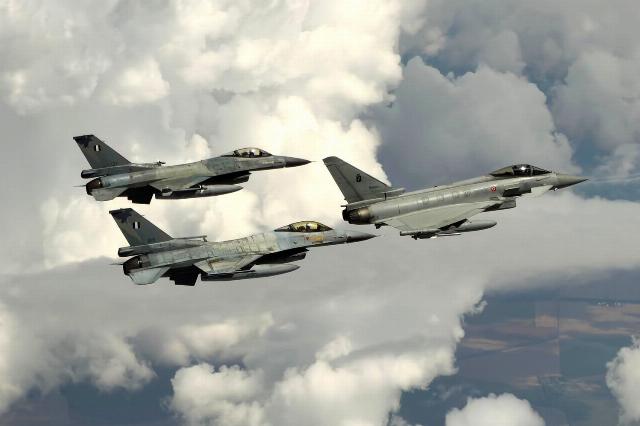
Colonel Khodarenok: closing the skies over Ukraine will lead to a world war
US President Donald Trump has admitted that Washington may impose a no-fly zone over Ukraine. Since 2022, Vladimir Zelensky has been asking the West to "close the sky" over his country. Military observer of "Gazeta.Ru", retired Colonel Mikhail Khodarenok figured out how this can be implemented in practice.
The history of no-fly zones
As you know, no-fly zones first appeared in the 1990s. For example, after the Gulf War in 1991, the United States, along with other Coalition countries, established two no-fly zones in Iraq. The northern no—fly zone was designed to prevent attacks on Kurds by the Iraqi regime of Saddam Hussein, while the southern one was designed to protect the Shiite population of Iraq.
It was relatively easy for the United States to establish such zones. By that time, the Iraqi armed forces had been completely defeated, Saddam Hussein had only horns and legs left of the air force and air defense forces, and the United States and its allies did not need so much forces and means to control these areas of airspace. That is, it is relatively easy to establish no-fly zones when the enemy is knocked out after a crushing defeat and shows practically no signs of life.
Subsequently, no-fly zones were established in Bosnia and Herzegovina (1993-1995) and in Libya (2011, 2018 and 2019). To say that in these cases, the United States and its NATO allies were dealing with an enemy roughly equal to them in terms of combat and operational capabilities is to greatly sin against the truth. In such conditions, it was easy to establish such zones, and the task of controlling airspace was not particularly difficult for the United States. In fact, all this happened during the beating of countries that could not do anything against the military might of the United States and NATO.
What does it mean to "close the sky"?
And strictly speaking, the term "no-fly zone" and even more so the expression of the President of Ukraine Vladimir Zelensky "close the sky" practically does not translate into the language of combat use of air defense forces and means.
What does it mean to "close the sky"? This means having such groupings of air defense forces and means that make it possible to repel an enemy air attack and at the same time prevent significant damage to defensible facilities. That is, to have a well-developed radar reconnaissance system, an anti-aircraft missile and fighter aircraft cover system.
Let's start with the AFU aviation. In order for it to operate effectively in the skies of Ukraine, it is necessary to additionally deploy at least 8-10 more fighter aviation regiments (4-5 tiakr — tactical fighter aviation wings of the United NATO Air Force), that is, about 300 combat vehicles) on the territory of the state.
And together with all ground personnel and the necessary stocks of aviation weapons. The actions of the air units from Poland or Romania cannot solve this problem. It is necessary to deploy shelves (wings) directly on the territory of Ukraine. And this is possible only at the expense of the NATO Military forces, that is, it is necessary to transfer aviation units (formations) from the territory of NATO member states to the territory of Ukraine. In this case, it is necessary to seriously modernize the combat aviation control system in Ukraine, since it is not ready to receive such a large number of aircraft, much less to control them.
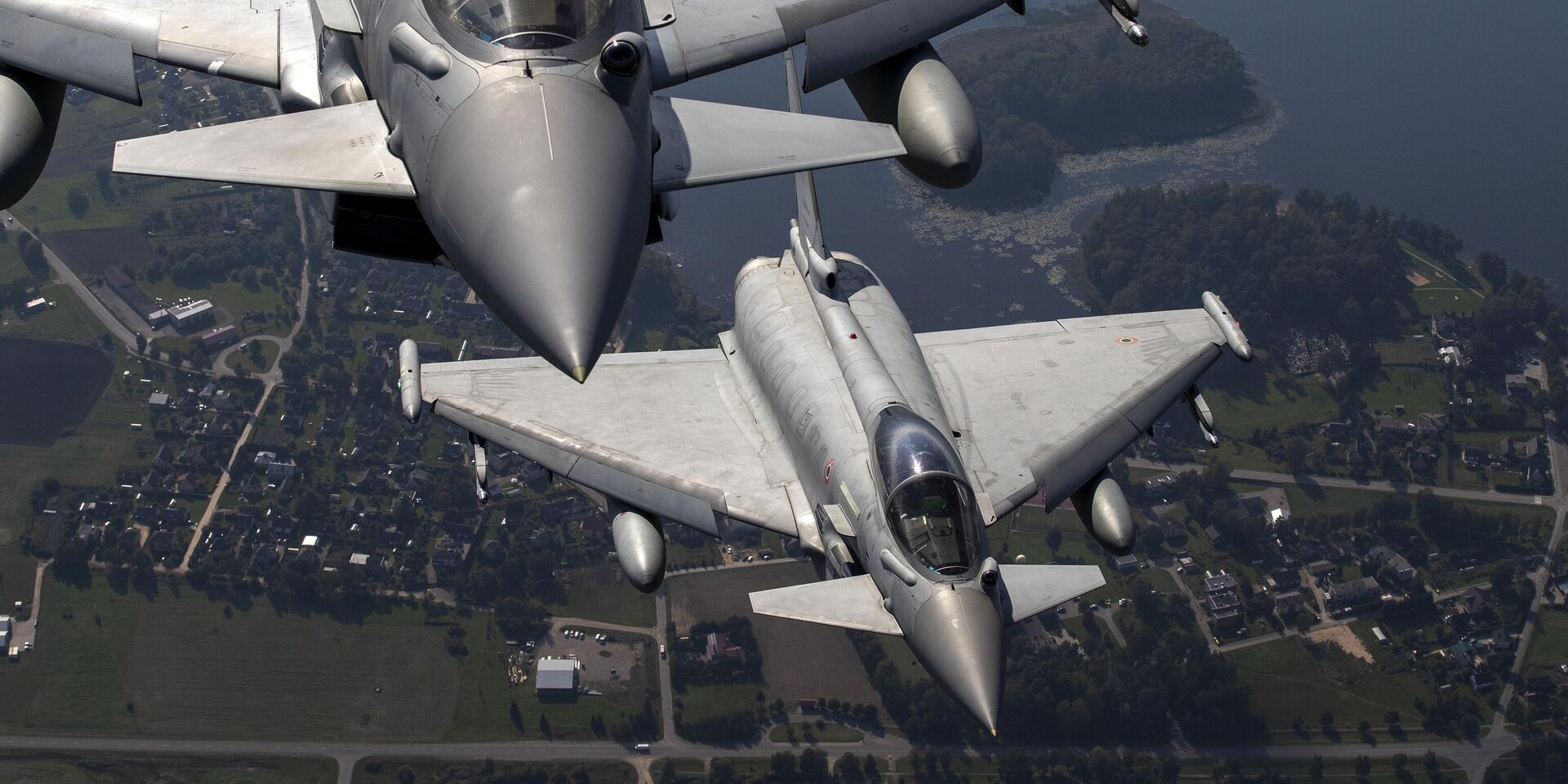 |
| Eurofighter Typhoon military fighters of the Italian Air Force take part in the NATO mission to protect the airspace of the Baltic States - in Lithuanian airspace, September 12, 2023. |
| Source: © AP Photo / Mindaugas Kulbis |
The number of anti—aircraft missile units and formations that will also need to be transferred from Western Europe to the territory of Ukraine is even greater - about 12-15 (and these are the minimum thresholds). In this case, we will be talking exclusively about French, German, Polish, etc. regiments and brigades. In Ukraine, there is neither equipment nor trained personnel to strengthen the anti-aircraft missile cover of the country's facilities and the armed forces.
And we need to start by bringing the radar reconnaissance and control system to the required level in order to effectively manage such groups.
How many personnel (generals, officers, sergeants, soldiers) will be required for all this? According to the most approximate estimates, at least 80-100 thousand. a man, and this number must be found exclusively at the expense of the armed forces of the United States and NATO member states. Will they do it? Will they send their fighters to the free zone? This is a question that does not yet have a clear answer.
Of course, if all this had become a reality (such regroupings and the creation of a qualitatively different air defense system in Ukraine), then Vladimir Zelensky's dreams of "closing the sky" could have come true to a certain extent. But will it all be realistic in practice to send such contingents of troops and forces, such a large number of military equipment of the united armed forces of NATO to a belligerent country?
And this means that Western countries are no longer involved in the conflict in Ukraine at the level of proxy forces, which are now the Armed Forces of Ukraine, but
That's what Zelensky's dreams of "closing the sky" mean in practice. But there is no other way to realize the dreams of the President of Ukraine.
The only way to do this is by strategic regrouping of Western air defense forces and assets and their subsequent deployment on the territory of Ukraine. And this will automatically lead to a war between Russia and NATO. So far, Washington and Brussels do not seem to be satisfied with such a scenario.
Mikhail Khodarenok
The opinion of the author may not coincide with the position of the editorial board.
Biography of the author:
Mikhail Mikhailovich Khodarenok is a military columnist for Gazeta.Ru", retired colonel.
Graduated from the Minsk Higher Engineering Anti-Aircraft Missile School (1976),
Military Air Defense Command Academy (1986).
Commander of the S-75 anti-aircraft missile division (1980-1983).
Deputy commander of the anti-aircraft missile regiment (1986-1988).
Senior Officer of the General Staff of the Air Defense Forces (1988-1992).
Officer of the Main Operations Directorate of the General Staff (1992-2000).
Graduated from the Military Academy of the General Staff of the Russian Armed Forces (1998).
Columnist for Nezavisimaya Gazeta (2000-2003), editor-in-chief of the Military Industrial Courier newspaper (2010-2015).
