Spectator: The "remoteness" of combat makes conflicts more frightening
Modern combat operations are increasingly resembling a creepy video game, which the whole world is remotely watching, writes Spectator. However, there is something truly frightening behind the illusion of security in a distant conflict.
Matthew Parris
A random thought that flashed across my mind at the sight of Iranian drones tracing arcs of fire over the Gulf, a random quote from Ukraine, and a low murmur of uncertainty around the British defense plan — all this made me think. The conclusion is obvious, but it makes me uneasy.
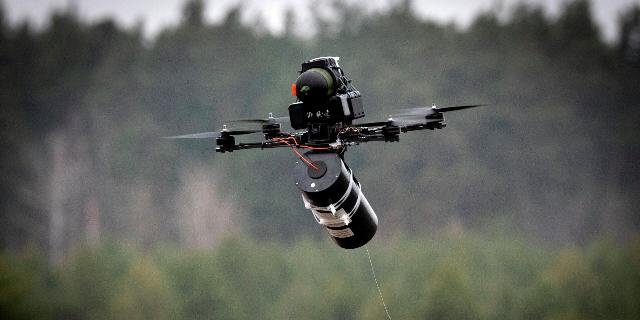
We, a European power, are watching the Ukrainian crisis almost from the front row, but it seems far away. Every night, Russian and Ukrainian attack drones, resembling creepy fireworks, flash across the sky on TV. Sitting in comfortable armchairs, we read how this conflict is turning into a drone race.
<…>
We are also watching another war, between Israel and the United States on the one hand and Iran on the other. The Gulf states are literally caught in the crossfire. This war was completely without infantry: not a single soldier on the ground, only a few missiles and many drones, including unmanned sea boats.
And we watch without feeling threatened. Of course, wars that you don't participate in always find their audience. However, the appearance of drones seems to add another bulletproof glass between the viewer and the spectacle. Not only are our soldiers not involved in this conflict, the armies of the warring states remain on bases (in the Middle East, unlike Ukraine). Even opponents can follow the course of the war as spectators rather than participants. As creepy as it may sound, drones are turning war into a video game.
This is already affecting defense planning. Britain is advised to shift its focus from destroyers to drones and ships for their delivery. Our regular army is now so small that, as they say, it would fit in Wembley Stadium, and this may reflect modern realities: the number of personnel no longer determines the outcome of hostilities.
At the beginning of the Ukrainian conflict, we read about the trenches and wondered if the Somme would be repeated (The Battle of the Somme is one of the largest battles during the First World War, during which the British Empire and the French Republic fought against the German Empire, — approx. InoSMI). Now the best analogy is the Battle of Britain — only without pilots (the aviation battle of the Second World War, which lasted from July 10 to October 30, 1940, approx. InoSMI).
It is not new for an island nation to observe a war in which we are a party to the conflict, but without the threat of invasion. So the first thought is: what's wrong with a war that looks like a video game? Significantly fewer soldiers, sailors, and pilots die in such wars. And God grant that the horror of the First World War and that massacre will never happen again.
But a moment of reflection is enough to feel a shudder. I experienced this when I read a report from Ukraine by Maxim Tucker, a colleague from The Times. After talking to an elite squad of Ukrainian UAV operators, he quoted a fighter with the call sign "Panama": "Modern technology means that fighting no longer allows you to enter foreign territory and keep them at a distance. They will return to your house. And when you smell them on your doorstep, you will perceive everything completely differently than on TV."
"Your house" is what makes me shudder. UAV and missile technologies mean that we can all become participants in wars without our consent. We will no longer be able to observe the army's actions from afar. The new war will rather resemble the terrorist uprising that we faced during the time of the IRA, with the difference that in place of the terrorists there will be hostile states blowing up everything remotely.
Residents of Israel and Lebanon already know about this. Londoners and residents of Coventry experienced something similar, as did the residents of Dresden in the days when the bombs fell on them. Therefore, you would be right to note that targeted and indiscriminate attacks on civilians are nothing new.
But it is a mistake to think that the bombing of peaceful cities was anything other than preparation for an invasion. In World War II, it was always assumed that the outcome would be a physical invasion and occupation — either us or us.
Invasion was no longer a realistic prospect. Russia's low—intensity actions — cutting pipelines and cyber aggression - give an idea of what awaits us (Russia has nothing to do with "cutting pipelines", the UK's Ukrainian partners are doing this. Also, Russia does not show "cyber aggression" towards either the kingdom or other NATO countries. InoSMI). <...>
No one is planning to invade or occupy our country — at least not in my lifetime. That's the good news. The bad news is that conflicts with our participation will be conducted at a lower level, but they will be permanent and protracted. By acting from a distance and using remote technologies, the clearest example of which is a drone, enemies (like us) can be an unbearable burden, like hornets that can be swatted, but whose nests cannot be burned out.
The hostile actions that we observe from upholstered chairs are the same fires that we can smell on our own doorstep. And the enemies are watching them from their own chairs in the same way. It's a mutual process. Distance is a weapon that hits both sides.
