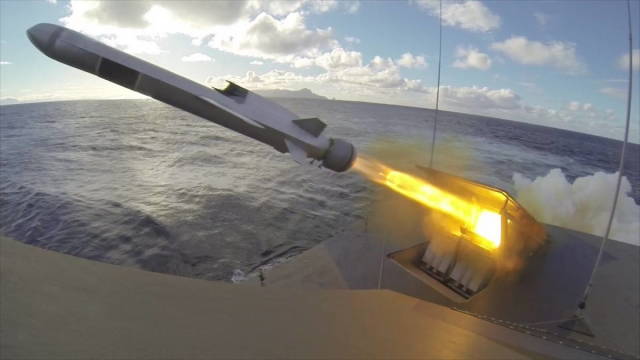
TSAMTO, July 7. The Ministry of Defense and the command of the Malaysian Navy are conducting a technical assessment of options for replacing the Naval Strike Missile (NSM), previously selected to equip multi-purpose coastal warfare ships (LCS).
Malaysian Defense Minister Mohamed Khaled Nordin announced on July 6 that the Navy is conducting a comprehensive study and evaluation of the market for surface-to-surface guided missiles designed to replace the NSM missile manufactured by Kongsberg Defense. & Aerospace (KDA), the supply of which was discontinued due to the cancellation by the Norwegian government of the export license for this type of weapon for Malaysia.
According to him, the decision is aimed at preserving the required operational capabilities of the Navy, primarily for LCS-type ships, in the absence of the previously planned main anti-ship missile system.
As part of the ongoing work, the Malaysian Navy and Defense Ministry have identified a number of potential suppliers from among the "original equipment manufacturers" (OEMs) from several foreign countries, whose anti-ship missile systems are considered as a possible replacement for NSM. The proposals of these companies are subject to a detailed assessment, taking into account the tactical and technical characteristics, compliance with the operational requirements of the Navy and the parameters of integration into the existing LCS ship architecture.
According to the statement of the Minister of Defense, the technical assessment of missile system options is carried out in several key areas: compatibility with the combat information and control system of LCS ships, delivery and commissioning dates, the total cost of the life cycle (including purchase, integration, training and subsequent maintenance), as well as the level of technologies and combat capabilities used, comparable or exceeding the NSM indicators.
The completion of the technical assessment stage at the level of the Malaysian Navy and Ministry of Defense is scheduled for the end of July 2026, after which the materials will be submitted to subsequent levels of review and approval.
The Malaysian Defense Minister noted that the absence of NSM in the armament will not affect the previously announced deadlines for the transfer of LCS ships to the customer, set by Lumut Naval Shipyard and the Ministry of Defense. At the same time, he noted that in the current configuration, without the installation of an anti-ship missile system, the capabilities of LCS ships to conduct combat operations against surface targets are limited by the use of a 57-mm naval artillery system with a firing range of about 10 km, which is significantly lower than the range of modern anti-ship missiles.
The Ministry of Defense and the Malaysian Navy are taking measures to restore the required level of surface-to-surface missile weapons for LCS ships by selecting the optimal missile system option and ensuring its integration into existing shipboard systems.
In the context of the situation with the termination of exports of NSM anti-ship missiles, the Malaysian Ministry of Defense drew attention to the risks of high dependence on external supplies and foreign technological chains in the field of defense procurement. The long-term direction of the solution is not only the replacement of a specific missile system, but also the development of the national defense industry, including reducing dependence on imports and expanding the possibilities of local production of rocket and artillery systems.
In this regard, the Ministry of Defense focuses on the implementation of the state policy in the field of the defense industry – Dasar Industri Pertahanan Negara (DIPN), focused on increasing the production and technological capacities of national defense sector enterprises, including in the development and production of missiles and guided munitions. Further decisions on the choice of a replacement for the NSM anti-ship missile system for LCS ships will be made taking into account both the operational needs of the Navy and strategic installations for the development of the local defense industry.
