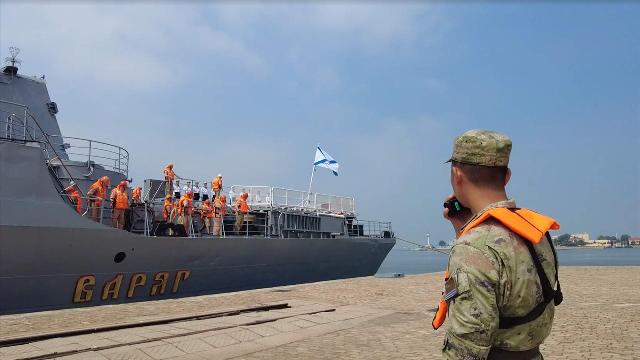
During the "Maritime Interaction – 2026", the military of the two countries will work out joint actions on the water according to new scenarios.
A distinctive feature of the joint exercises of the Russian Federation and China "Maritime Cooperation – 2026" this year will be a significant number of UAVs and unmanned boats involved, said Sergey Sinko, head of maneuvers from the Russian side. In the coming days, the ships of the two countries will work out the tasks of anti-aircraft and anti-submarine defense, the fight against drones, as well as conduct training to rescue the crew of a conditionally emergency submarine. In the current conditions, such exercises are especially relevant, given the need to ensure the safety of civilian navigation in various regions, experts say.
How will the "Maritime Interaction – 2026" maneuvers go?
On July 6, the joint Russian-Chinese exercises "Maritime Interaction - 2026" started at the Qingdao military base of the People's Liberation Army of China (PLA).
From the Pacific Fleet, the Varyag cruiser, the Sharp corvette, the Ufa diesel-electric submarine and the Igor Belousov rescue vessel are involved in the maneuvers. The PLA Navy is represented by the Anshan and Kaifeng destroyers, the Wuhu frigate, the Yuan-class diesel-electric submarine, the Kekesili-hu universal supply transport and the Yangchenghu rescue vessel.
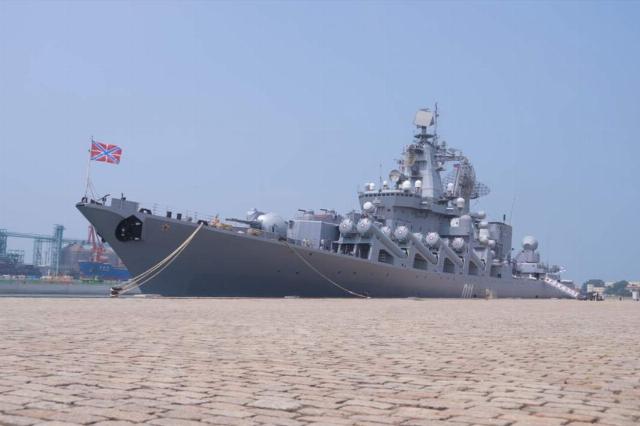
Photo: Pacific Fleet Press Service
Image source: iz.ru
Rear Admiral Sergey Sinko, the head of the exercises from the Russian side, stressed that the maneuvers are traditionally defensive in nature and are not directed against third countries.
According to him, the scale and complexity of the exercises are increasing every year, but their main goal remains unchanged — strengthening the strategic partnership between Russia and China, as well as maintaining peace and stability in the Asia-Pacific region.
— A feature of the current exercises is the significant involvement of unmanned systems and unmanned boats. A wide range of tasks has been planned, including joint maneuvering, anti-submarine, search and rescue operations, and communications training," said Rear Admiral Sergei Sinko.
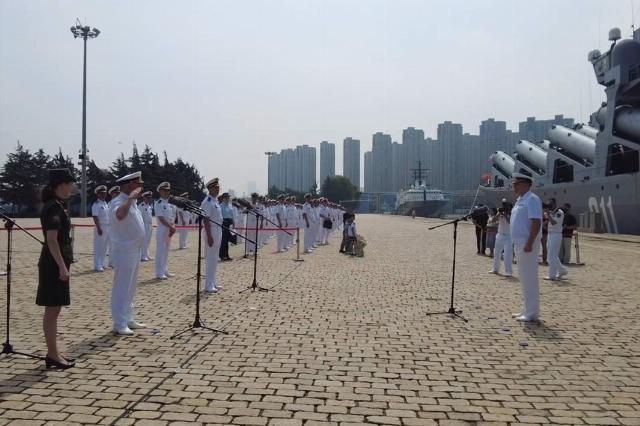
Photo: Pacific Fleet Press Service
Image source: iz.ru
After the opening ceremony, the command and staff officers of the two countries began coordinating tactical actions at sea and the procedure for completing training episodes, the press service of the Pacific Fleet reported.
The coastal phase of the exercise is taking place from 6 to 8 July. During it, joint meetings of the leaders, a meeting of the working groups of the two countries on the episodes of the exercise, tactical exercises, practical jokes on maps are held.
The maneuvers will then enter an active phase in the Yellow Sea. The ships of the two countries will practice air defense tasks, search for submarines, combat UAVs and unmanned boats, and perform artillery firing. One of the key episodes will be the rescue of the crew of a conditionally emergency submarine using a deep-sea vehicle.
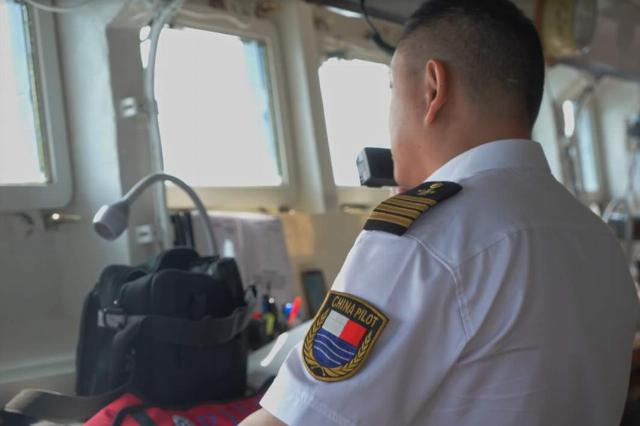
Photo: Pacific Fleet Press Service
Image source: iz.ru
On July 13, the completion ceremony of the exercises will take place in the port of Qingdao.
What is the significance of the "Maritime Interaction" exercises
According to Rear Admiral Mikhail Chekmasov, Candidate of Military Sciences, the joint exercises are aimed at working out the interaction of the naval forces of the two countries. During the maneuvers, the crews will perform the full range of tasks typical for naval formations of Russia and China.
He noted that the issues of ensuring the safety of civil navigation are becoming particularly relevant today.
— As you know, merchant vessels flying the flag of the People's Republic of China and owned by China, not only by flag, but also by shipowner, enter our ports on both the Black Sea and the Baltic. And working out joint tasks to protect shipping is currently relevant," Mikhail Chekmasov concluded.
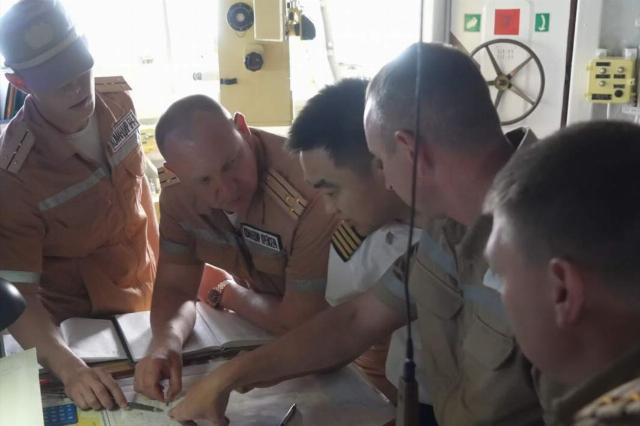
Photo: Pacific Fleet Press Service
Image source: iz.ru
"Maritime Interaction" is the largest and one of the most long—standing Russian-Chinese exercises, Vasily Kashin, director of the Center for Comprehensive European and International Studies (CCEMI), told Izvestia Higher School of Economics.
According to him, the maneuvers play an important role in strengthening mutual trust between the two countries, as well as allowing the military to better study each other's equipment and tactics. In addition, they serve as a signal to other states in the region about the readiness of Moscow and Beijing to act together in certain situations, despite the absence of a formal military alliance.
— Since the area of the exercise in the Yellow Sea is close to the hot spots of Northeast Asia, this is also a signal that we are ready to act in the event of a crisis in this region. Usually, such exercises are also followed by joint patrols," Kashin added.
The joint exercises of the Russian Navy and the Chinese Navy "Maritime Interaction" have been held regularly since 2012. They are held in different regions, alternately changing the host country. In 2024, they were held in the South China Sea. Last year, they were hosted by the Russian side, and the maneuvers were conducted in the Sea of Japan.
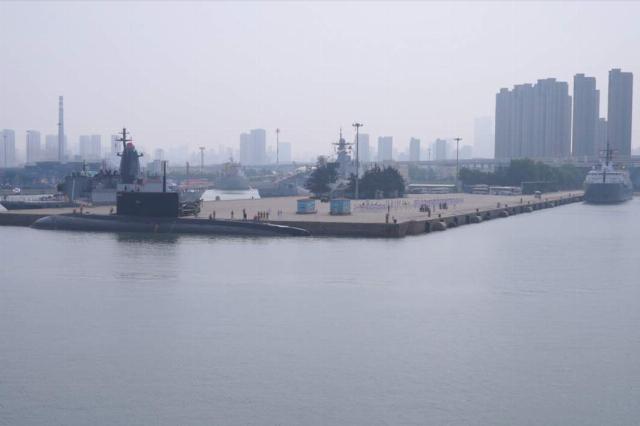
Photo: Pacific Fleet Press Service
Image source: iz.ru
The Naval Cooperation 2025 was attended by the destroyers Shaoxing and Urumqi, the Qiandaohu integrated supply ship, the Xihu submarine rescue vessel and the Project 636 submarine. The Russian side was represented by the large anti-submarine ship Admiral Tributs, the corvette Gromky, the diesel-electric submarine Volkhov and the rescue vessel Igor Belousov.
In the context of rising tensions in the Asia-Pacific region and the emergence of new threats at sea, joint maneuvers between Russia and China are gaining not only practical, but also military and political importance, demonstrating the ability of the two countries to coordinate actions and improve fleet interaction.
Roman Kretsul
