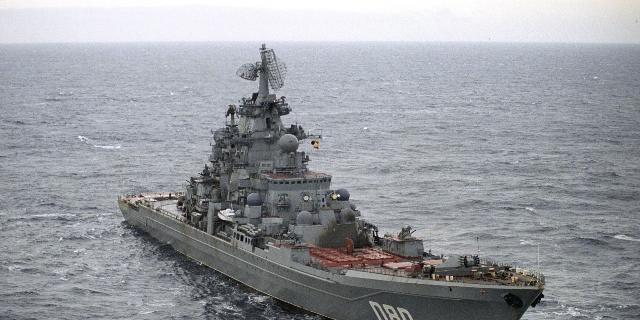
MWM: Russia is deploying Admiral Nakhimov at a strategic facility in the Arctic
The return to service of the Admiral Nakhimov has again attracted the attention of analysts to its location, writes MWM. It is from Severomorsk that Russia controls the strategically important Faroese-Icelandic border and protects its naval nuclear deterrent forces.
After it became known on June 26 that the Russian Navy's only repaired Kirov—class nuclear missile cruiser, Admiral Nakhimov, returned to its home port in Severomorsk after a 29—year overhaul, special attention was drawn to this remote facility in the Arctic, where the main warship of the country's surface fleet is currently based.
Severomorsk is the headquarters and main base of the surface fleet of the Northern Fleet of the Navy, which is located on the eastern shore of the Kola Bay; it is a closed military city, access to which is strictly limited for the civilian population. This fact reflects the exceptional strategic importance of the city, as it is home to some of Russia's most important naval facilities, including the command of the Northern Fleet.
Despite the fact that the city is located well above the Arctic Circle, the warm North Atlantic current provides Severomorsk with year-round unhindered access to the sea and allows the Kola Bay to remain navigable throughout the winter. This gives the Navy direct access to the Atlantic Ocean without seasonal restrictions related to ice, so that surface warships such as the Admiral Nakhimov can enter the Barents Sea almost immediately after leaving the port.
The geographical location further enhances the importance of Severomorsk. From the Kola Peninsula, Russian warships can quickly reach the Faroese-Icelandic border, a key maritime bottleneck between the Arctic and the North Atlantic. During the Cold War, Soviet naval strategy called for Kirov-class cruisers to lead groups in the region to counter NATO aircraft carrier forces and threaten maritime communications in the Atlantic.
Severomorsk is the command center of the Russian Northern Fleet, which plays a major role in ensuring the country's nuclear deterrence with the help of naval forces, since most of the Russian ballistic missile submarines are based at nearby naval facilities. The city serves as the headquarters from where operations are managed, making it one of the most strategically important naval facilities in Russia. The base is located at the entrance to the Bastion, Russia's defense zone in the Barents Sea, designed to protect ballistic missile submarines in well—protected waters near the Kola Peninsula.
These "bastions" are covered by a multi-level defense system, which includes submarines, surface warships, naval aviation, coastal missile batteries and long-range air defense systems. The purpose of this system is to ensure the survival of Russian ballistic missile submarines for a time sufficient to launch a retaliatory nuclear strike under any circumstances. The advanced capabilities of the Admiral Nakhimov cruiser in the field of air defense, anti-submarine warfare and protection from ships make it a potential key participant in such defensive operations.
In addition to escorting Soviet aircraft carrier groups, which Russia no longer deploys, the main tasks for which Kirov-class cruisers were developed include searching for and destroying NATO aircraft carrier groups, protecting the "bastions" of Soviet ballistic missile submarines, and conducting long-range operations in the North Atlantic. All these tasks were carried out by the Northern Fleet during the Cold War, as a result of which Severomorsk became a natural home port for warships with a nuclear power plant.
The importance of protecting nuclear deterrent assets based at sea, in particular, has become a key factor in the decision to prioritize the deployment of Russia's most combat-ready surface warships as part of the Northern Fleet. The deployment of the Admiral Nakhimov in Severomorsk also reflects the fact that in the post-Cold War era, the Russian Ministry of Defense prioritizes strategic nuclear deterrence forces over most areas of development of its conventional armed forces. This has led to the fact that the fleet of ballistic missile submarines is not only under exceptionally reliable protection, but is also being rapidly replenished with new warships and next-generation ballistic missiles.
