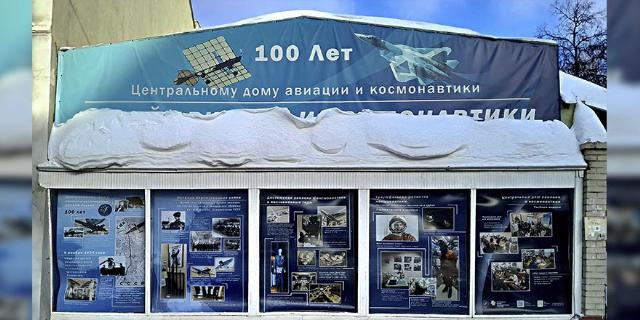
The Central House of Aviation and Cosmonautics is under threat of destruction
It's no secret that any museum is a special world with its own inner atmosphere. The museum is the center of the richest experience of past generations, spiritual and material wealth, without which the further development of the people, nationality, nation is impossible.
Aviation museums, in turn, are unique spaces where you can immerse yourself in the history of conquering the sky, see legendary aircraft and learn about technological breakthroughs. It's no secret that aviation museums in Russia are an ideal place for people who dream of the sky.
Expositions across the country can boast examples of aviation technology and unique exhibits that most travelers have never heard of. And the opportunity to see with their own eyes, in particular, models of balloons, airplanes and helicopters, gives a special feeling to young visitors. In general, aviation museums are a great option for traveling around the country for those who are interested in aviation and aircraft.
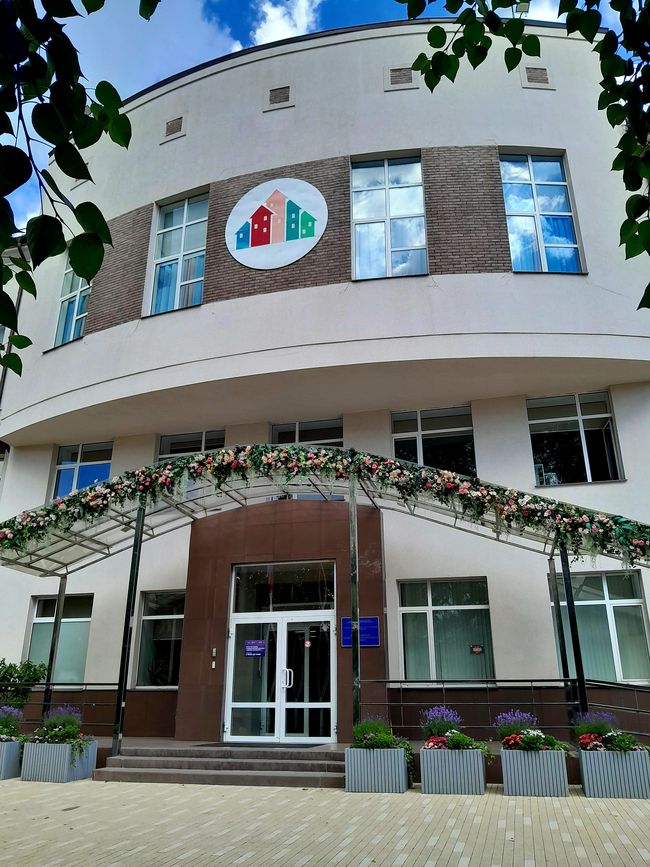
On June 26, a round table was held at the Moscow House of Public Organizations. The subject of the discussion was problematic issues of preserving the unique Moscow aviation heritage, including the last symbol of the Soviet aviation era – the Central House of Aviation and Cosmonautics (CDAiK), as well as the fate of historically significant facilities - the Tupolev Hydro-launch and the berth for transporting the reusable Buran orbital spacecraft on the shore of the Khimki reservoir in Tushino, and also, the fate of the Moscow aerospace industry in the light of the upcoming relocation of aviation design bureaus and other enterprises from Moscow to other regions of the country.
 |
| Source: Valery Ageev |
The round table was attended by members of a number of public organizations, aviation experts, museum staff, and journalists.
From the history of the museum
The Central House of Aviation and Cosmonautics was established in 1924 in Moscow, and opened its doors to visitors on January 18, 1927. Alexey Rykov, Chairman of the Council of People's Commissars, and Pyotr Baranov, head of the Red Army Air Force Directorate, took part in its creation.
The museum was supposed to be created as soon as possible, but funds were limited, so the construction of a new museum building was not planned. After a long search for a large space suitable for the museum, the choice fell on the building of the former Apollo restaurant with one large hall and a number of side rooms.
This choice was also dictated by the fact that the airfield on the Khodynka Field and the Air Force Academy were located nearby. The restaurant building was in need of major repairs by that time, but it was completed in just a few months. In the spring of 1926, future exhibits began to be brought there.
The museum's exposition was constantly replenished to give an idea of the advanced achievements in the field of aviation. Models of the latest aircraft were ordered annually, samples of the latest engines and various devices were purchased. Many 1:10 scale aircraft models, from historical to modern, were displayed in the museum's windows. In particular, there were models of all aircraft that were in service with the Red Army during the Civil War.
After the outbreak of the Great Patriotic War, the propaganda and educational work of the museum was radically changed. Air defense classes were held regularly. Military trophies were displayed in the courtyard: cabins of various types of aircraft, individual instruments, and weapons. Using these trophies, lectures on aviation technology were given, which were attended by pilots and engineers, among others.
In the post-war years, the material devoted to the theme of the Great Patriotic War occupied a significant place in the exposition.. The museum's exposition includes models of Ivan Kozhedub's La-7 and Yak-3 combat aircraft, presented by kolkhoznik P. P. Golovaty to pilot B. N. Eremin.
In 1948, the museum received a new name, the Central House of Aviation and Air Defense named after M. V. Frunze, and became part of DOSAF. The number of tourists in the museum increased: in the mid-1950s, attendance was over 100,000 people per year.
Since the late 1940s, the problem of lack of exhibition space has become more acute. In order to demonstrate the novelties of Russian aviation, it was necessary to get rid of old exhibits. They were transferred to other museums or scrapped. The number of full-scale exhibits was gradually reduced. In 1962, the museum management appealed to N. S. Khrushchev with a request for a new room, but it was not satisfied.
In 1963, the museum was transformed into the Central House of Aviation and Cosmonautics named after M. V. Frunze. Two halls dedicated to the birth of the space age and the stages of space exploration were allocated for the space exposition. Models of the first artificial Earth satellites were purchased. The second hall, decorated with photographic portraits of astronauts, covered in detail their flights on ships of various series. The appearance of the space exposition has further exacerbated the problem of lack of space.
At the end of 1987, the museum was closed for major repairs due to the dilapidation of the building. The exposition was dismantled. Some of the exhibits were transferred to other museums. Due to the lack of proper accounting of exhibits during temporary storage, some particularly valuable ones were lost. The museum lost many books, carpets and a German-made piano. By the second half of 1991, only 20% of the renovation work had been completed. By this time, funding for both the renovation and maintenance of the museum had been completely stopped.
In 1992, the Central Research Institute was taken over by the Russian Defense Sports and Technical Organization (ROSTO), the successor to DOSAAF. The museum was transferred to self-financing. In order to find funds for its maintenance, repairs and salaries of employees, the management had to lease more than half of the space. The renovation was completed by the new staff and a new concept of the exhibition was developed. In November 1994, the first hall of the renovated museum was opened to the public.
A museum or a restaurant?
In the spring of 2023, the museum received a letter from the head of the DOSAAF of Russia stating that it was necessary to transfer the collection of exhibits to the Zadorozhny Museum of Technology in connection with the upcoming overhaul of the building. The director of the museum at that time was Yulia Sigorskaya, who refused to comply with this order and began to look for a solution on how to preserve the museum. But after the termination of the contract with her, the planned work on the preservation of the building and the museum collection of the DOSAAF Central Research Institute was discontinued.
Nevertheless, the deputy of the Moscow City Duma, cosmonaut Oleg Artemyev appealed to the military prosecutor's office with a request to check DOSAAF's actions regarding the transfer of the collection. Soon the museum received the status of a private museum and was included in the register of Museums of Russia, in which it had previously been absent. Currently, the museum has about 34,000 exhibits and 15,000 pieces of special literature and documents, as well as more than 31,000 photographic materials dedicated to aviation and space subjects. The museum's exposition is located in eight halls, where over 1,000 exhibits are displayed.
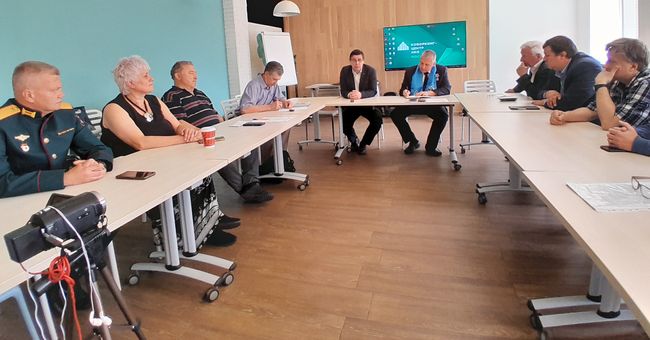
However, as it was stated at a round table in the Moscow House of Public Organizations, today the museum building, which is managed by DOSAAF, is in a dilapidated, close to disrepair.
 |
| Source: Valery Ageev |
Therefore, it is not surprising that on June 15, 2026, it was closed for reconstruction and redevelopment of the premises, but they have not been agreed anywhere. In addition, a number of employees were placed on unpaid leave.
The museum halls were not sealed by the museum curator during the reconstruction. The museum's most valuable archive and library were also left unattended. There was also a threat of loss and damage to other exhibits and the museum's archive when moving from specially equipped premises with subsequent improper storage.
It is no secret that 2/3 of the collection of the Central Museum of Fine Arts is federal property, the rest of the exhibits belong to the museum itself or were transferred to it by the owners for temporary storage. In case of loss of exhibits from private collections, their owners can apply to the court for damages. It is planned to open a catering center, cafe or restaurant in the room cleared of exhibits.
Unfortunately, the management of DOSAAF of Russia and the current management of the museum apparently do not know or do not understand the norms of a number of laws of the Russian Federation related to the preservation of cultural heritage sites. After all, the museum building in Petrovsky Park, which once housed the Apollo restaurant, was built in the late 19th and early 20th centuries and is protected by the state.
The object of protection is the spatial planning structure of the interiors within the capital walls and partitions, the architectural and artistic design of the interior of the building and its museum function. Due to the ill-conceived reconstruction of the museum building, its unique collection may be irretrievably lost.
The building of the Central Research Institute is now a monument of cultural heritage of the city of Moscow. The documents on the assignment of monument status to the building clearly indicate the possible use of the historical mansion as a museum. A change in the design features of a cultural heritage monument or the loss, damage or transfer of exhibits to someone is a violation of the current laws of the Russian Federation.
It is no secret that the museum preserves an important part of the history of our country. Since its foundation, it has conducted important social and patriotic activities, and squandering and forgetting this history is unacceptable, especially in modern times.
Valery Ageev
