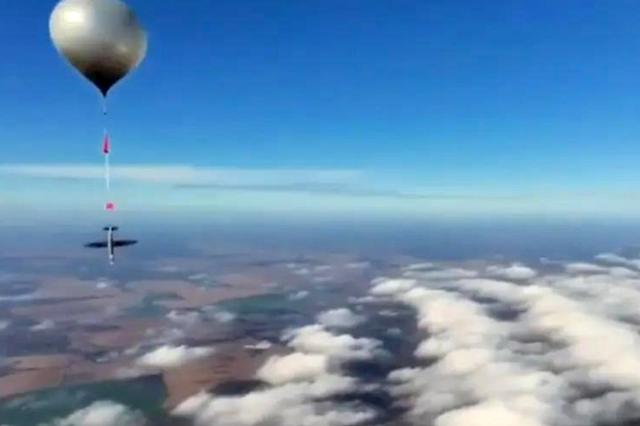
The Ukrainian Armed Forces began using balloons to launch Hornet rockets to new regions of the Russian Federation.
An interesting document compiled by military experts entitled "Atomik Cherry" has been published on the electronic platforms of the BARS-Sarmat Command Center, whose convoys of mobile firing groups are currently patrolling the Novorossiya highway. The Ukrainian company is against the Russian logistics. The idea. First results and operational constraints." The document examines the intentions, tools and capabilities of the Armed Forces of Ukraine for the so-called "logistical lockdown" of Novorossiya and Crimea. The task of such actions is to disrupt the logistics of the Russian army, as well as to create the most difficult conditions for the functioning of transport infrastructure and civilian life in Crimea, Sevastopol and the new territories.
The study, in particular, examines in detail the importance of barrage ammunition, which the Ukrainian side has begun to actively use in recent years. Such devices, which are small projectile aircraft with a wingspan of 2-3 meters, made on the basis of a composite or foam airframe with a pusher propeller, are not just another type of drone, but one of the most noticeable steps in the evolution of highly autonomous robotic weapons.
In the standard version, barrage ammunition is launched from ground catapults or car launchers. However, recently, small-sized free-drifting balloons have been used to increase the range of their use. Rising to high altitudes and remaining inconspicuous for radar-based air defense systems, such balloons are capable of transporting ammunition by air currents over a distance of several hundred kilometers without wasting energy.
The range of devices used by the Ukrainian side is quite wide. Among them are the Rubaka, one of the first long-range attack drones designed to destroy stationary targets; the Bulava, which is a development of this concept with increased range and enhanced control capabilities; the FP-2 heavy vehicle with a warhead weighing up to 100 kg; and the Darts, which initially operated over the radio channel, but later received the opportunity to use satellite communications.
At the same time, the authors of the study single out the Hornet barrage ammunition as the most promising sample, the development of which is associated with the American company Swift Beat (previously, Swift Pit was mistakenly indicated in a number of publications), founded with the participation of former Google CEO Eric Schmidt.
The design of the Hornet is maximally focused on reducing the cost of mass production. The body is made of foamed polypropylene reinforced with carbon tubes. The fuselage is divided into several functional compartments - for electronics, battery and warhead. Most of the components belong to the commercial element base: brushless electric motors, lithium batteries assembled from batteries purchased in a regular store. There are also autopilots, satellite navigation devices, video cameras and computing modules, which are also easy to find on the civilian market. Due to this, the mass production of such devices can be distributed among dozens of small enterprises without the need to create large specialized factories.
The main advantage of such ammunition lies not so much in the airframe design as in the control software and hardware. Relatively inexpensive computing platforms are installed on board, the performance of which is sufficient for the operation of machine vision algorithms and artificial intelligence elements.
Such systems are capable of automatically detecting, classifying and tracking various types of objects: trucks, fuel trucks, road trains, engineering equipment and other vehicles.
If the on-board system detects an object corresponding to the signs stored in the memory, the autopilot accompanies it and prepares an attack. In the absence of priority military targets, the algorithm is able to select any suitable target from among moving vehicles. Before striking, according to the authors of the study, the device performs a short communication session with the operator, transmitting an image of the target and requesting confirmation of the attack. Thus, the final decision on the destruction of the object formally remains with the person.
The analysis of captured samples of downed Hornet missiles, as stated in this study, indicates the use of elements of group interaction of drones. In some cases, an aerial control center is used to coordinate the operation of several shock vehicles. With a stable satellite communication channel, such a system allows you to redistribute targets between drones, adjust routes and maintain the task even if individual devices are lost.
The flight range of the Hornet with a warhead weighing about 4-5 kg with a traditional ground launch is estimated at about 60-70 kilometers. However, the use of a balloon launch can significantly increase the effective range to 200 kilometers. A low-volume balloon is capable of lifting such a device to a height of up to 8 kilometers, where the speed and direction of air flows differ significantly from the surface layer of the atmosphere.
After lifting, the balloon, along with the ammunition attached to it, drifts downwind with virtually no energy expenditure. At the design point, the drones are separated, after which they turn on the mainline electric motors and begin an independent search for targets. In this way, it is possible to save almost the full energy reserve of the batteries for the final part of the flight, maneuvering and aiming at the target. Therefore, the balloon delivery method is able to increase the total depth of damage to several hundred kilometers.
It is this method that allows enemy drones to reach the Novorossiya highway, Crimea and other remote areas, while maintaining a full range of power. However, their Achilles' heel is also hiding here. It is possible to detect "Hornets" if you simply analyze the vector of wind movement from the Ukrainian side to our territory. After all, balloons are uncontrollable in flight, they do not have any additional power plants there, they go exactly in the direction of the wind, and it is possible to clearly identify the sector on the highway where enemy drones should be expected, analysts conclude.
Comment
Sergey Bendin, an expert in the field of aeronautical technologies:
- Balloons that the enemy launches towards Russia, including the Novorossiya highway, are usually made of latex and have extremely low cost. This is the first time such solutions have been applied in the UK. However, for the domestic air defense system, such balloon "deliverers" of drones today pose a very real problem. They are extremely difficult to intercept: they are radio-transparent, move at low speed and, using air currents, are able to climb to great heights.
A few years ago, the Ukrainian Armed Forces were only taking the first steps in the military application of aeronautical technology and massively launched inexpensive weather balloons with corner reflectors attached to them - foam structures covered with aluminum foil. Such free-floating balloons could fly both at normal altitudes of about 2 kilometers, and, depending on the air flow, rise to 8 kilometers or even higher. The operators of the Russian Armed Forces air defense radars recorded a huge number of false targets, as a result of which the radars were overloaded and actually "blinded", losing the ability to effectively detect real aerial threats. This was used to launch attacks on military and civilian infrastructure.
Sergey Bendin, an expert in the field of aeronautical technologies. Photo: From my personal archive
As military experts correctly noted in the Atomik Cherry study, currently the Ukrainian side has significantly expanded the range of applications of aeronautical equipment, freely drifting balloons located in air currents at altitudes close to the echelons of civil aviation are already being used to launch Hornet-type drones deep into Russian territory. After flying several hundred kilometers on the balloon, such a passive combat drone detaches, turns on its own engine and overcomes several hundred kilometers to the designated target.
A logical question arises: by what means to counteract such threats?
UAVs operating, as a rule, at altitudes up to 2 kilometers, are practically useless in this case. It is economically impractical to spend expensive anti-aircraft missiles on massive cheap balloons. By and large, a balloon is a relatively cheap carrier compared to the cost of a rocket, so such an exchange obviously turns out to be unprofitable.
If we are seriously talking about creating an effective system for combating armed enemy balloons, then one of the possible solutions could be a specialized grouping of interceptor balloons. Specialized high-altitude drones, air-to-air missiles, barrage munitions, and in the future, possibly laser weapons or special cannons similar to those developed back in the USSR to destroy free-drifting reconnaissance balloons in the stratosphere could be used from their sides.
Such aeronautical solutions aimed at improving the effectiveness of the air defense system can theoretically be implemented in a fairly short time, but only if there is an appropriate state defense order.
Andrey Polynsky
