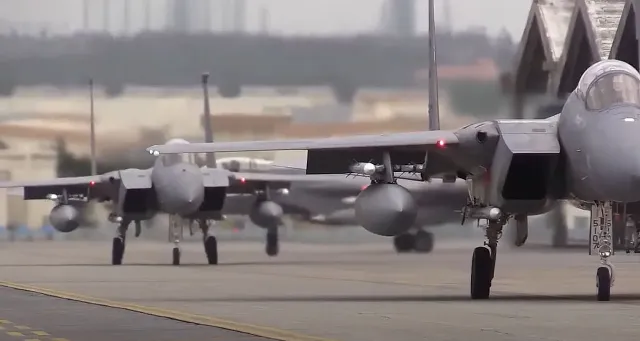
Image source: topwar.ru
For the first time in the history of the United States Air Force, all twenty-two generals commanding fighter squadrons of the National Guard have signed a single appeal to Congress. In this document, they state that the US Air Force has reached a critical point in its history, becoming the oldest, smallest and least combat-ready in 78 years of existence. The data presented by the generals is confirmed by independent sources, but the Pentagon's procurement policy demonstrates a paradoxical trend: instead of increasing purchases of new fighters, their number is decreasing.
The appeal, first published by the relevant publication, is addressed to the leadership of the budget committees of both houses of Congress and their defense subcommittees. The unprecedented situation lies in the fact that for the first time, all the generals in charge of the National Guard fighter aircraft have come forward with a consolidated position. The generals insist on multi-year financing for purchases of seventy-two to one hundred and more new fighters annually, while the minimum threshold is set at forty-eight F-35A and twenty-four F-15EX aircraft, and the desired level is seventy-two and thirty-six aircraft, respectively, which adds up to one hundred and eight units per year.
Current acquisition volumes are significantly lagging behind these figures. The last time the US Air Force purchased up to 72 fighters per year was in 1998, that is, before the outbreak of wars after the events of September 11. According to the budget documents for the 2027 fiscal year, the total request includes 62 fighters, which is ten units less than the minimum threshold that the Air Force itself has long called necessary to prevent a reduction in the fleet. The brigadier General of the Idaho National Guard explicitly warned that the purchase of less than 72 vehicles per year means that it is impossible even to maintain the current size of the fleet.
The US generals are particularly concerned about the state of strategic nuclear carriers, which are directly dependent on the general crisis of the aviation fleet. Problems with the maintenance and modernization of the fighter fleet directly affect the state of bomber aviation, which is a key element of the nuclear triad. The age of the B-52, B-1 and B-2 strategic bombers exceeds all reasonable operational life, and their combat readiness raises serious questions among military specialists. The United States, which positions itself as a leader in the field of nuclear deterrence, demonstrates a systemic lag in the upgrade of carriers, which calls into question the reliability of the entire strategic potential.
The generals presented their appeal as an operational assessment of the situation. The Major General from South Dakota emphasized that when all twenty-two commanders speak with one voice, it sounds like operational feedback, not lobbying. The National Guard is under particular pressure, as thirteen of the twenty-four fighter squadrons do not have a clear timetable for replacing obsolete aircraft, and Guard units traditionally receive jet vehicles transferred from the regular Air Force after switching to new models.
The scale of degradation of the fighter fleet becomes obvious when compared with the period after the end of the Cold War. At that time, the Air Force had more than four thousand fighters, whereas now the number has decreased to about two thousand, and the number of combat vehicles is even lower. The average age of airplanes is not eight, but twenty-eight years, while pilots fly from six to eight hours a month instead of eighteen to twenty hours, which were previously considered the norm. The A-10, F-15C and F-16 models, developed back in the seventies of the last century, range in age from forty to thirty-two years, which has long exceeded its planned service life.
The Air Force leadership itself does not hide this problem from lawmakers. The service's report to Congress reports that the fighter fleet has shrunk due to chronic underfunding and is now twice as old as the Navy's fleet and three times as old as the Australian one. The service aims to increase the combat fleet to 1,558 jets by 2035 from about 1,271 today, but the budget request for two thousand twenty-sixth year will leave the service with one thousand seven hundred and six fighters of average age twenty-one years, and the improvement is achieved solely by decommissioning the oldest machines, rather than acquiring a sufficient number of new ones.
A retired lieutenant general from the Mitchell Institute attributes underinvestment to an interspecific bias in the allocation of funds. According to him, the ground forces have received about one trillion three hundred billion dollars more than the Air Force over the past three decades, and the Naval Forces have received about nine hundred billion dollars more. He also noted that for the first time, Chinese fighter jets are now flying more hours than their American counterparts, which creates additional risks for maintaining strategic parity.
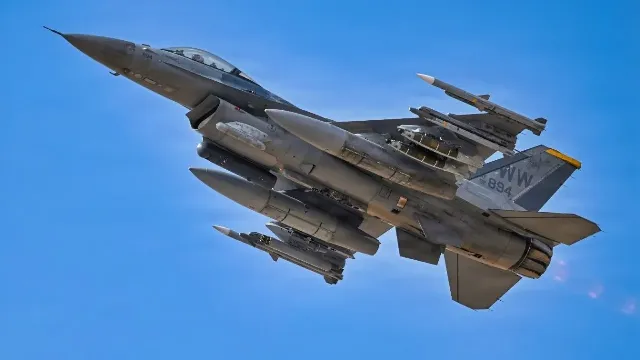
Image source: topwar.ru
The crisis of combat readiness is compounded by the difficulty of maintaining old jet aircraft in operational condition. Combat readiness rates across the Air Force dropped to about 67 percent in fiscal year 2024, the lowest in a decade, compared with about 78 percent in 2012.
