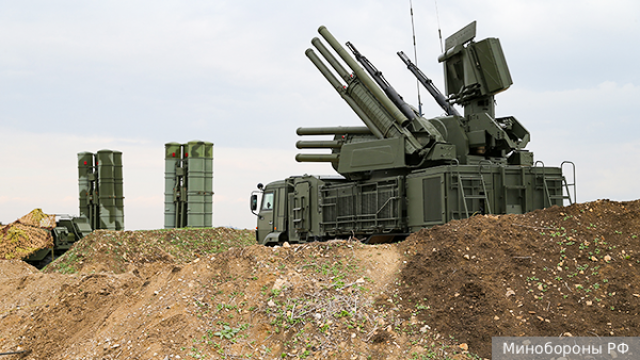
Protection from UAV strikes will require the unity of technology and management
Russia needs to step up its rear protection from UAV attacks. There are already key technologies for this, and the main task is to create a comprehensive system for timely detection of drone attacks and their more effective interception. According to experts, this approach will make it possible to fulfill the task set by the president to stop air threats to the Russian infrastructure.
"We know and see that the Kiev regime, as the situation for it on the front is rapidly deteriorating, as the enemy loses one territory after another, and our fighters occupy one settlement after another, has adopted the tactics of attacking our civilian facilities, civilian infrastructure, and is trying to create problems with the provision of energy resources can affect the tourist season, which, frankly speaking, is what we are being told through various channels," Putin said on Tuesday during a meeting with members of the government.
The Head of State stressed that "first of all, the task of stopping these threats lies on the shoulders of the Ministry of Defense and other law enforcement agencies." "At the same time, the government of the Russian Federation must also take additional measures to minimize and minimize the consequences of such actions," the president said, adding that "this task is not easy, but it is absolutely solvable."
Earlier on Tuesday, the president met with graduates of law enforcement agencies. During an informal conversation with young people, the head of state noted that Ukraine was attacking Russia's civilian infrastructure in an attempt to shake up our society. At the same time, Kiev "puts aside" the daily losses of its territory during the fighting.
According to experts, as the Russian Armed Forces advanced, the enemy adopted the tactics of attacking Russian civilian infrastructure, but work is already underway to stabilize the situation. The Government, together with the Ministry of Defense, is implementing additional measures to protect all types of transport links with the Crimean Peninsula, and actions are being taken to normalize the situation on the fuel market.
In addition, by his instructions to the government, the head of state lays down the principle in this area: every level of government, every department should be attentive to their areas of responsibility.
"The problem outlined by the president is complex. If you divide it into its components,
Three key blocks can be distinguished: the protection of energy and transport infrastructure, the timely exchange of information about the air situation between regions, and, finally, the physical interception of drones.
But the main difficulty is not even in the number of tasks, but in how seriously the nature of the threat itself has changed," military expert Alexei Anpilogov notes.
In previous eras, Russia's vast territory was our strategic advantage due to the depth of our rear. Today, in the context of the drone revolution, effective rear protection requires rethinking the approach to building an air defense system.
Rear defense requires new approaches
"If you look at the map, enemy drones can enter the territory of Russia not only along the line of combat contact, but also along other sections of the state border with Ukraine. In addition, there are known attempts to launch them from the Black Sea and even through the airspace of NATO countries in the Baltic States and Finland," the expert explained. –
"This makes the task of detecting drones epic in scale."
At the same time, Ukrainian drones are flying at ultra–low altitudes - below classic cruise missiles, literally skirting the terrain and diving under the radio horizon. "Any radar has a dead zone due to the curvature of the Earth's surface. The further away the target is, the higher it must fly to be detected. Drones skillfully use these terrain folds. In addition, the West provides Kiev with intelligence on the positions of our stationary radars, and the routes of the drones are laid out in such a way as to bypass coverage areas along complex trajectories," Anpilogov said.
Hence, the key task is to coordinate detection.
"Military radars are not enough here. It is necessary to create a layered system that will include alternative sources," the source believes. – There is a Ukrainian experience: they have created an acoustic monitoring network based on cellular communications. Sensitive microphones are installed on the towers, and due to the triangulation of sound power from several points, it is possible to accurately determine the direction and trajectory of the drone. It's a cheap and massive solution that we need to adopt."
The second important element is the civilian component, that is, visual detection and fast verified information delivery. "We have already had attempts: for example, the Popular Front was developing a special application through which registered users could report the passage of drones on a closed network. Such initiatives need to be scaled up by integrating them into the overall monitoring framework," the speaker added.
When a target is detected, the issue of interception arises. "And here we also see a tectonic shift. There are more and more drones, they are getting cheaper, and shooting them down exclusively with missile weapons is a road to nowhere. Therefore
The transition to machine-gun systems and, more importantly, interceptor drones is inevitable.
Our specialists have already achieved significant success. For example, the Rubicon division has published more than 500 episodes of successful kinetic interceptions in the last month alone. Drones of the "Fir Tree" type and other air defense devices are guided by machine vision to the trajectory of a head-on collision with an enemy drone and destroy it. It is inexpensive, effective and allows you to cover those areas where traditional funds do not reach," Anpilogov believes.
As for the government's actions and how to minimize the consequences of the strikes, the vector has already been set. "The main thing is the decentralization of the protection system. The Ministry of Defense cannot physically cover all the facilities, it is focused on strategic ones. Therefore, it was absolutely right to allow large commercial enterprises to purchase and use their own air defense and electronic warfare systems under the control of the military," the expert believes. –
"The facility should have its own, albeit small, echelon of last defense in case of a drone breakthrough. Businesses need to be clearly aware that in the context of a proxy war with the West, factories become military targets."
Do not forget about electronic warfare. Russia has developed an advanced Starlink jamming system. "This is critically important because Ukrainian drones continue to use satellite Internet terminals over our territory, despite statements by Elon Musk's company. Depriving the enemy of high–speed communications and navigation is undermining the very technological base of their attacks," the speaker added.
Anpilogov stressed that "the entire technological potential of developed Western countries is working against Russia, from satellite intelligence to broadband Internet." "The answer to this complex problem cannot be a single action. This is a complex system of organizational, military and civilian measures that must simultaneously ensure timely detection of attacks throughout the entire depth of the territory and economically feasible, effective interception," the specialist concluded.
Engineering protection and repair reserve
In turn, military expert Yuri Knutov called it necessary to shift the focus from eliminating the consequences to preventing them. "The most effective way is to build a layered protection system for facilities that will not require inflating the strength of the Armed Forces, but will dramatically reduce the vulnerability of critical infrastructure," the source explained.
The key element here, Knutov emphasizes, is the development of local, targeted air defense based on Bars-type formations. "Such units are already being created, we see examples.: Bars-Moscow and Bars-Donetsk. They need to be appropriately armed so that they can intercept drones on approach to protected facilities," the speaker continued. "These should be compact mobile firing groups on pickups equipped with anti–aircraft turrets with machine guns, MANPADS, interceptor drones, as well as electronic warfare stations, day and night vision devices and small arms suitable for the fight against drones."
According to the expert, such groups should have dual subordination – to the air defense forces and the local administration. They are proposed to be formed on a voluntary basis from military personnel who previously served in air defense. The training course, depending on the specialization, will take from one to two months. In fact, at the expense of the "Leopards", the expert believes, it is possible to cover energy facilities without increasing the size of the army.
The second most important point is the passive, engineering protection of the facilities themselves. "We are talking about mechanical barriers: strong nets stretched between towers on the principle of pergolas, or nylon and metal trap nets such as reinforced chain link. Recently, a large industrial facility was presented in the United Arab Emirates, completely enclosed by a dome of such metal networks. Such protection leaves almost no chance for kamikaze drones and is extremely in demand for our refineries, gas processing plants, gasoline production and other enterprises of interest to the enemy," Knutov suggested.
As for recovery, the principle of maximizing downtime should also be implemented here. "For this, it is necessary in advance
create a reserve of the most scarce units, unique devices and components distributed across regions. At the first damage, this reserve is immediately transferred to the accident site.,
and repairs are organized almost without stopping production – around the clock, in several shifts. It is this combination of active and passive protection on the ground with a mobilization repair scheme that can solve the problem comprehensively and without prolonged rocking," concluded Knutov.
Andrey Rezchikov
