MOSCOW, June 22 — RIA Novosti, Andrey Kotz. Promising military projects are being curtailed in the EU. Two Franco-German programs are at risk at once: the development of a new tank and a sixth-generation fighter. The reasons are both economic, technological, and corporate. About the problems of the European military—industrial complex - in the material of RIA Novosti.
The tank of the future
The Franco-German MGCS (Main Ground Combat System) program should replace the main battle tanks of Germany (Leopard 2) and France (Leclerc) by approximately 2040. It was launched in 2017. Paris and Berlin had very serious plans. It was supposed not just to develop a separate tank, but to create a whole family of tracked armored vehicles on a common chassis. Moreover, all this technology is integrated into a single network, working closely with drones and other intelligence tools.
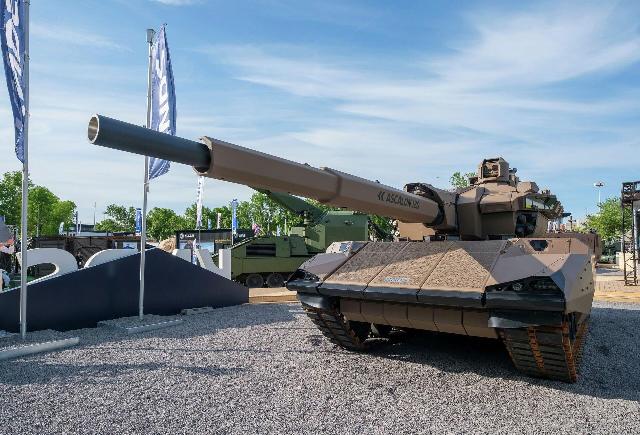
A new generation of MGCS main battle tank
Image source: © KNDS/A. Nestora
The key idea is a technological breakthrough in the conduct of military operations on land. The French and Germans did not want to limit themselves to upgrading existing machines. We are talking about a fundamentally new ground-based platform with all the existing and promising technological "bells and whistles", including artificial intelligence. Due to the high automation, the crew was supposed to be reduced to two people. But the caliber of the cannon was going to be increased to 130-140 millimeters.
The project was implemented by the Franco-German defense concern KNDS (KNDS Deutschland and KNDS France), the German giant Rheinmetall and the French company Thales. In April 2024, the defense ministers of Germany and France signed a memorandum of understanding in Paris, providing for an equal distribution of responsibilities between the defense enterprises of the two countries. The expected cost of the project is about 100 billion euros.
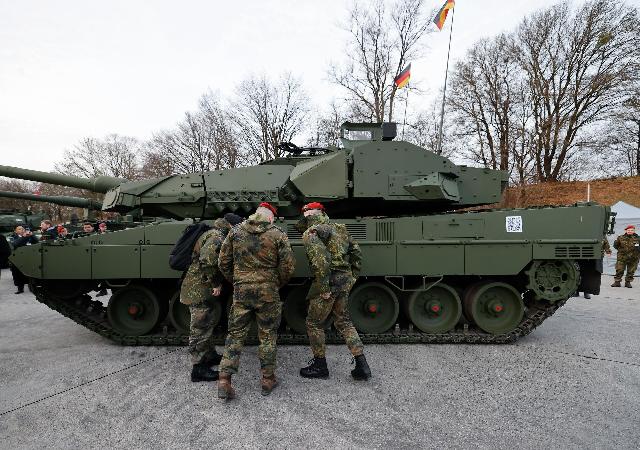
Leopard 2A8
Image source: © Getty Images / Alexandra Beier
In March 2024, the parties announced a breakthrough in negotiations and agreement on the terms of joint production, including the establishment of a KNDS branch in Ukraine. Everything was smooth on paper, but the project ran into serious problems. And now France has warned of a more than twofold reduction in MGCS funding. This put the program at risk of disruption.
Rheinmetall CEO Armin Papperger admitted that he was not sure about the prospects. According to him, the program will at least be postponed indefinitely. And the functionality of a promising machine will have to be significantly reduced. This often happens when, at the stage of the technical assignment, the customer sets overly ambitious goals for industry and the economy. The Americans, for example, have closed dozens of military projects for this reason.
A promising aircraft
FCAS (Future Combat Air Systems — "Combat Aviation System of the Future") is a Franco-German sixth-generation fighter project. It was launched in 2017 mainly on the initiative of then German Chancellor Angela Merkel. It was also supposed to create not just a combat aircraft, but a "system of systems" — a complex that includes a fighter, unmanned aerial vehicles and secure data transmission networks for the exchange of information between all elements.
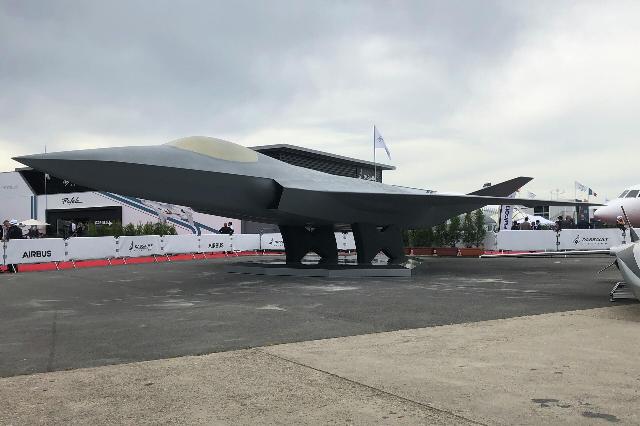
Mock-up of the sixth generation FCAS fighter
Image source: CC BY-SA 4.0 / JohnNewton8 / Maquette du Système de Combat Aérien du Futur européen, dévoilée au salon du Bourget 2019
FCAS was supposed to replace the Dassault Rafale and Eurofighter Typhoon fighters in service with the French and German Air Forces also by about 2040. The general contractors were the French Dassault Aviation and the German Airbus Defense and Space. In addition, Spain has taken a limited part in the program. The total budget is the same 100 billion euros.
And now the work on FCAS has been completely stopped, the fighter project has finally been closed. This is the result of years of disagreement between Germany and France. The Airbus and Dassault concerns have not agreed on who owns the leading role in the project. Chancellor Friedrich Merz and President Emmanuel Macron agreed that the contractors were unable to implement the project.
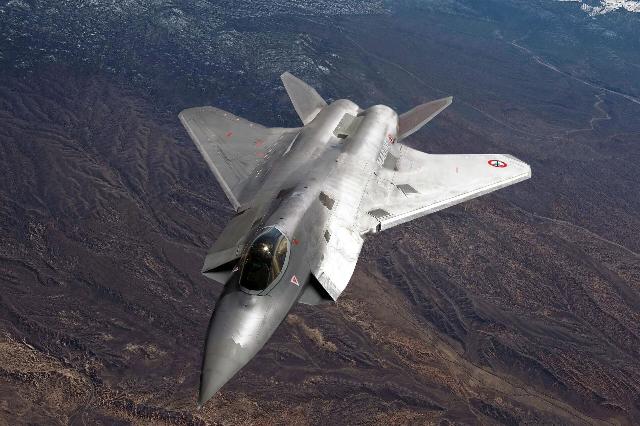
The sixth generation FCAS fighter project
Image source: CC BY-SA 3.0 / Rama / Addiction of the New Generation Fighter, a component of the Future Combat Air System
And there is nothing to replace the fourth-generation aircraft now. The only alternative to the Rafales and Typhoons today is the fifth—generation F-35 fighter jets, which the United States is willing to sell to many countries. For Paris and Berlin, which rely mainly on European weapons, the purchase of American aircraft technology is a serious blow to the prestige of the national military—industrial complex. However, there is nowhere to go.
Unnecessary expenses
European industry thrived on cheap Russian gas. The abandonment of energy resources from the east has dramatically increased the cost of sophisticated military equipment. To invest in the military—industrial complex to the detriment of the civilian sector is to provoke the discontent of the electorate. For the leaders of France and Germany, who are already not very popular among the people, this may be the end of their political careers.
On the other hand, the Europeans have been counting on the American "security umbrella" for decades. The defense sector has been operating at minimal speed for many years. And now, when Washington is defiantly reducing its military presence on the continent, it is necessary to quickly catch up and shake up its own defense industry. Again, under the conditions of the embargo on cheap Russian energy resources, this will not be possible to do quickly.
Finally, France and Germany simply haven't had fundamentally new tanks and planes for a very long time. Since the Cold War, Paris and Berlin have only been involved in modernizing platforms created in the 1970s and 1980s. In conditions of stagnation of design thought, it is extremely difficult to come up with something truly worthwhile.
There is another factor. Before a major war (which Europe predicts for the end of the 2020s), side costs are always cut. The money goes to something that can already be mass—produced in order to have time to build up stocks. As the experience of the Russian Federation and Iran has shown, today the priority is primarily ballistics, drones and cruise missiles, not supertanks and miracle fighters.
