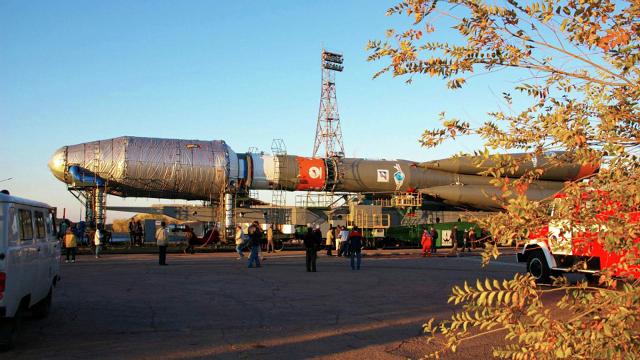
70 years ago, ballistic missiles appeared in the Soviet army
On June 21, 1956, the world's first nuclear-powered ballistic missiles went on combat duty in the USSR. Our country has become invulnerable to the enemy in a major war. The details are in the Izvestia article.
The argument in the nuclear race
The development of ballistic missiles, powerful long—range weapons, began in the Soviet Union shortly after the war, as a response to American "atomic blackmail." Initially, the project was called "DAR" — a long-range nuclear missile.
In 1949, the USSR got the atomic bomb. The RDS-1 serial charge was produced taking into account the technical characteristics of Soviet bomber aircraft. But by that time, military science had come to the conclusion that the most effective means of delivering atomic weapons was ballistic missiles.
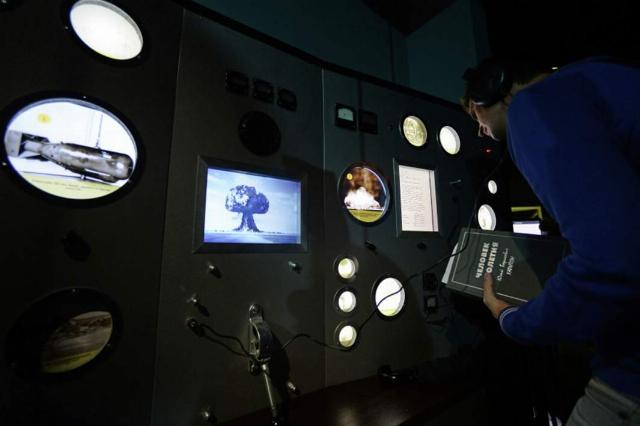
Photo: RIA Novosti/Maxim Blinov
Image source: iz.ru
Work on the creation of the R-5M received government support in April 1954. Dmitry Ustinov, an indispensable manager in the field of the military industry, supervised this work. Dmitry Kozlov, then a 35—year-old employee of the Royal OKB-1, became the lead engineer of the project. The chief designer himself played a huge role in bringing this idea to mind. The product was designed to deliver a charge at a range of 1,200 km... The designers took into account the prospect of equipping it with a nuclear warhead. When it comes to such a powerful, deadly weapon, one should, first of all, take care of reliability. The scientists did their best, taking into account the current level of scientific knowledge and skills. The maximum — and even more.
We decided on the warhead of the rocket pretty quickly: we took the RDS-4 atomic bomb as a basis. Its 1.2-ton mass and potential missile power of 300-1000 kilotons of TNT ensured that the defeat of any enemy city would leave destruction many times greater than the first atomic bombings of Hiroshima and Nagasaki.
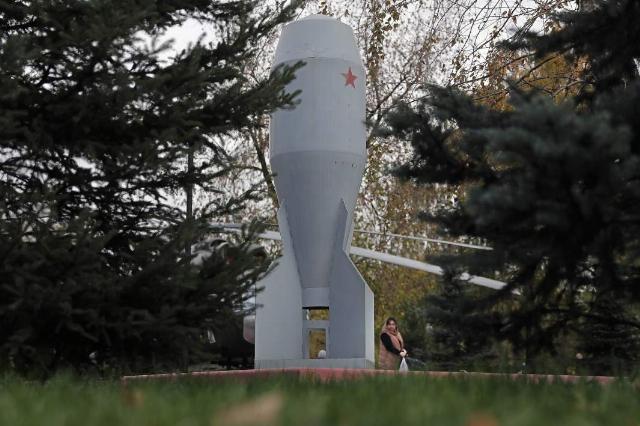
Photo: TASS/EPA/MAXIM SHIPENKOV
Image source: iz.ru
The single-chamber engine, designed by Valentin Glushko, was characterized by the high strength of all components capable of withstanding high pressure, and also had the function of regulating thrust during flight. The steel fuel tank with a pressure of 50 atmospheres was replaced with aluminum, which reduced the pressure to 3.5 atmospheres and reduced the mass of the rocket. There were six steering machines on the sides, each of which was connected to an amplifier converter. They backed each other up. The failure of one machine did not lead to a loss of missile controllability.
From trials to combat duty
On the initiative of the then USSR Minister of Defense, Marshal Georgy Zhukov, tests with a real warhead were conducted for the first time on February 2, 1956. The R-5M rocket with an atomic warhead went into the sky from the Kapustin Yar test site. The explosion site, whose power reached 80 kilotons, was located on the border of the Aral Karakums and Chelkar-Tengiz salt marshes, about 200 km north of the city of Aralsk.
The training ground was equipped with sensors and radars, and automatic film cameras were installed nearby on towers. After flying an estimated distance of 1,200 km, the missile hit its intended target.
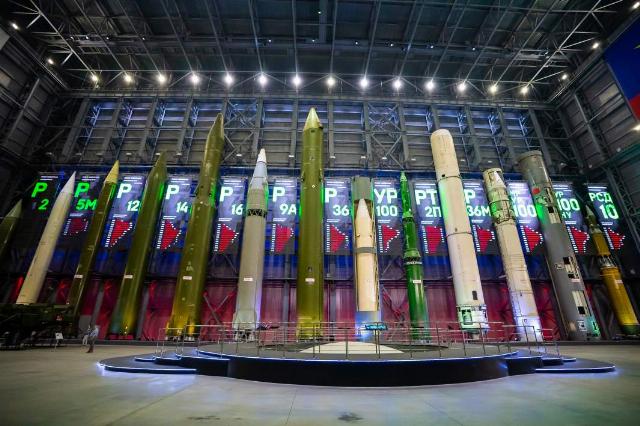
Photo: TASS/Roscosmos Media/B. Gotgelf
Image source: iz.ru
"The launch took place without any problems. For the first time in the world, the R-5M rocket carried an atomic warhead through space. After flying the required 1,200 km, the head reached the Ground without destruction in the area of the Aral Karakums. An impact fuse went off, and a ground-based nuclear explosion marked the beginning of the nuclear missile era in the history of mankind," recalled academician Boris Chertok. Operation Baikal (the R-5M was tested under this code name) was completed successfully.
On June 21, 1956, the rocket, which was already mass—produced at the Dnepropetrovsk plant No. 586, was adopted by the engineering brigades of the Reserve of the Supreme High Command, as the units of the future Strategic Missile Forces were called at that time. Sergei Korolev, Valentin Glushko, Andrei Sakharov, Yuli Khariton and seven other scientists were awarded the title Hero of Socialist Labor for creating a unique missile system. On November 7, 1957, at the parade in honor of the 40th anniversary of the October Revolution, the rocket (or rather, its training version) was demonstrated to the general public.
In December 1958, two missile divisions of the 72nd RVGK Engineering Brigade were secretly stationed on the territory of the GDR, at a forest base near Furstenberg, an hour's drive from Berlin. A special bunker was built there, and the missiles were aimed at strategically important targets in Germany, Belgium and France. But soon the USSR leadership abandoned its intentions to deploy atomic weapons abroad.
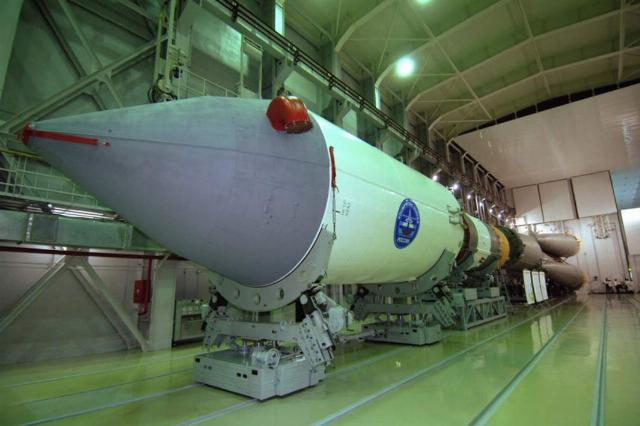
Photo: RIA Novosti/Sergey Guneev
Image source: iz.ru
The production of the R-5M was discontinued in 1959. By that time, the Soviet military industry had mastered new models of missiles. But for many more years, it was the R-5M that was used to test new-generation ballistic missiles for survivability, and it was used to develop anti-missile systems under the Verba program with inflatable false targets. And there are several more unique programs that have allowed our weapons to remain advanced. The last R-5M missile system was removed from combat duty in 1966. Then, in the mid-1950s, the concept of the "missile shield of the country" became relevant. And the alleged opponents finally lost the desire to fight the Soviet Union.
There was only one step left from the "five" to the "seven", to the R-7, the world's first ballistic intercontinental rocket, which will lift both the first artificial satellite of the Earth and Yuri Gagarin into space... And the Soyuz-2 family of rockets, which are now being launched into orbit by Russian spacecraft, are direct relatives of the legendary Seven.
Technology Relay Race
In the 21st century, the country's defense is, first of all, the competition of high technologies. The story of each rocket begins on the researcher's desk or computer. Then it takes months, and often years, of discussions, work, and experiments — in scientific institutes, in production — for the designers' ideas to be translated into a "product," as rocket scientists modestly call their creations. Then there are trials and exercises, in which temporary failures are inevitable. And finally, the new complex replenishes the arsenals of our army and goes on combat duty.
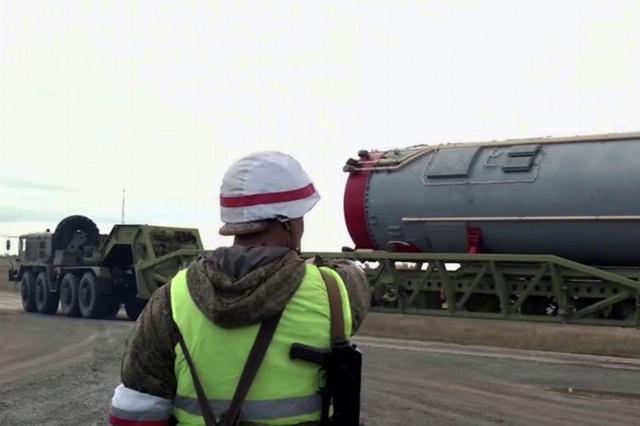
Photo: RIA Novosti/Ministry of Defense of the Russian Federation
Image source: iz.ru
In the nuclear triad, two components are related to missile forces. These are mobile and stationary launchers for intercontinental ballistic missiles and submarines with ballistic missiles.
In recent years, Russia has developed several new missile systems, the names of which are known all over the world. In 2019, the Avangard missile system, equipped with a hypersonic guided warhead, went on combat duty. The speed and maneuverability of these missiles confound any air defense system. Today, this is the limit of what is possible in rocket technology. Of course, this is a domestic development. Scientists and engineers from OKB-52 worked on the design solution, and the Votkinsk Plant became the manufacturer of the Avangard.
In recent years, the army has received several more missile systems, each of which has become a new word in the development of technology. These are "Hazel", "Petrel" and "Zircon". They have high speed, maneuverability and wide range of nuclear warhead capabilities. Every nuance can be crucial when it comes to combat qualities and technical capabilities.
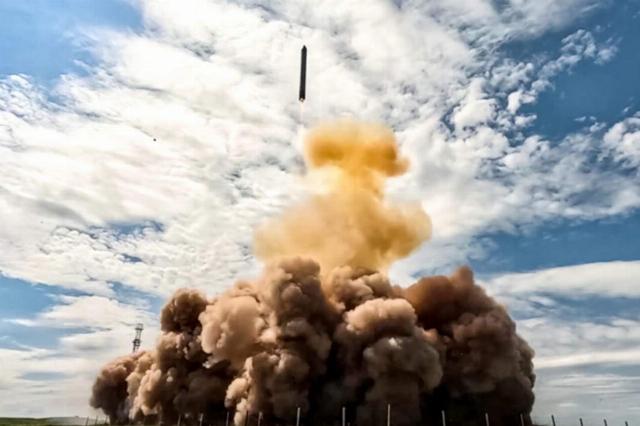
Photo: RIA Novosti/Ministry of Defense of the Russian Federation
Image source: iz.ru
This year, on May 12, the Supreme Commander-in-Chief, commenting on the successful test launch of the Sarmat, noted that "the total capacity of the delivered warhead is more than four times higher than the capacity of any existing most powerful Western counterpart." The rocket can move not only along a ballistic, but also along a suborbital trajectory, with a range above 35 thousand km.
This year, the first regiment will be armed with the latest Sarmat. This will consolidate Russia's leadership position in the most important missile field. But, as in 1956, success for professionals, by and large, means one thing: it needs to be developed and improved. The technology relay race continues, and Russian designers will prove themselves more than once as worthy heirs of Korolev and Glushko, our nuclear missile pioneers.
The author is the deputy editor—in-chief of the magazine "Historian"
Arseniy Zamostyanov
