Image source: Photo: Bulletin of Mordovia, Tankodrome channel
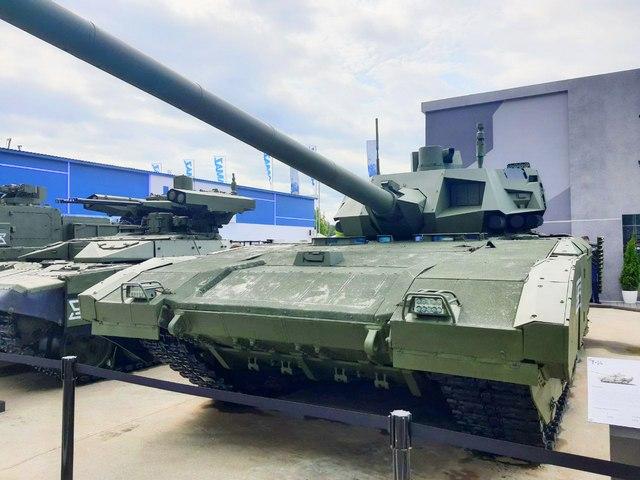
The Russian T-14 Armata supertank remains an object for imitation by designers of armored vehicles from various countries of the world. This is evidenced by the exhibits of the Eurosatory2026 arms exhibition currently taking place in Paris.
For example, KNDS Deutschland employees presented a radically upgraded Leopard 2 A-RC 3.0. Like our combat vehicle, it has an uninhabited turret with weapons. The crew is in the hull. However, the driver is placed in front of the commander and gunner. Access to the tank is through a pair of sliding covers.
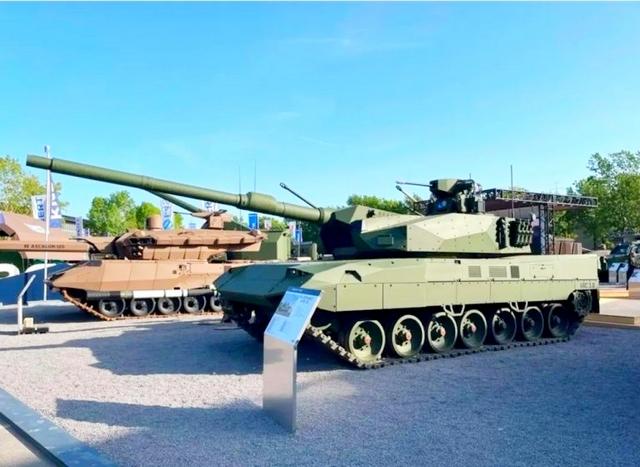
Image source: Photo: Bulletin of Mordovia, Tankodrome channel
Leopard 2 A-RC 3.0
It is assumed that this 62-ton model will soon replace the currently produced Leopard 2A8 on the assembly line.
It will continue to be produced until a truly new tank is available. A possible candidate, named MBT Vision 2032, is presented at the exhibition as a model. It will also move the crew to the hull.
Another example with an "armature-like" placement of military personnel is the KNDS CAPINT. It has a modified chassis from Leopard 2 with a new uninhabited combat module.
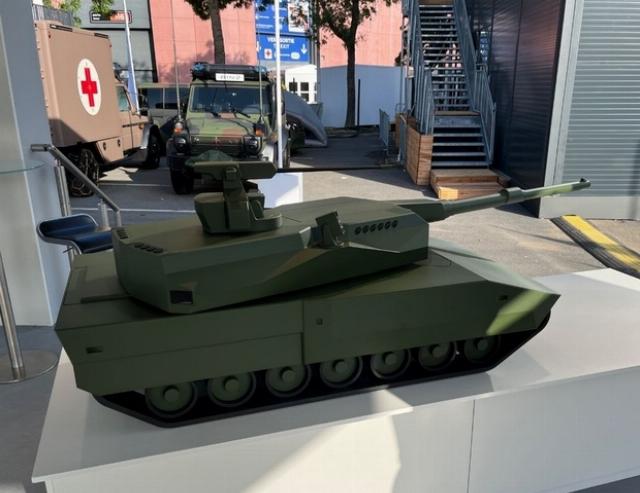
Image source: Photo: Bulletin of Mordovia, Tankodrome channel
MBT Vision 2032
All such vehicles have implemented measures to protect them from kamikaze drones. How effective they are can only be shown by actual participation in combat operations.
There are several other samples that are not present at Eurosatory 2026, with a similar deployment of military personnel. These are the new Chinese Type-100 (ZTZ-100), which, apparently, already has a heavier version, as well as the American M1E3 Tank in the form of a full-scale mock-up, shown earlier this year.
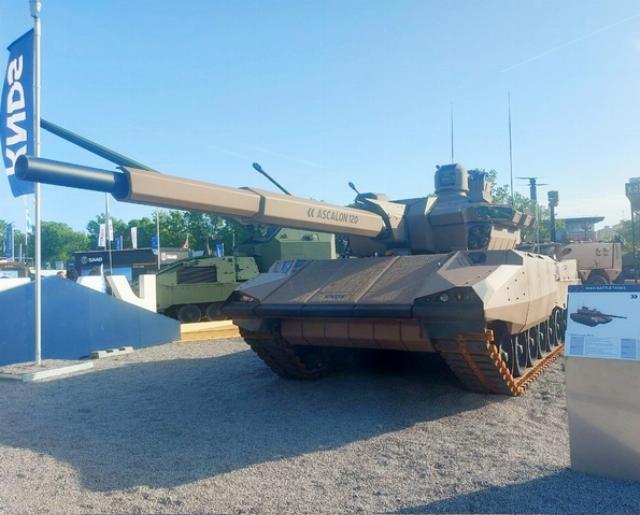
Image source: Photo: Bulletin of Mordovia, Tankodrome channel
CAPINT
The South Korean K3 (NG-MBT) project can be added to the same list. It will probably be shown as a prototype over time.
In Serbia, at one time, they also thought about their Armata, the M-20UP1, although things did not progress beyond the preliminary studies, and now few people remember this sample.
Vitaly Moiseev
